Few things are more annoying than your phone ringing all day with numbers you don’t recognize, only to hear a recorded voice when you answer. These unwanted interruptions aren’t just frustrating — they can also be dangerous if they’re part of a scam. Understanding the true robocall meaning, why they’re so common, and how to stop them is essential for protecting your time, privacy, and money.
What Is a Robocall?
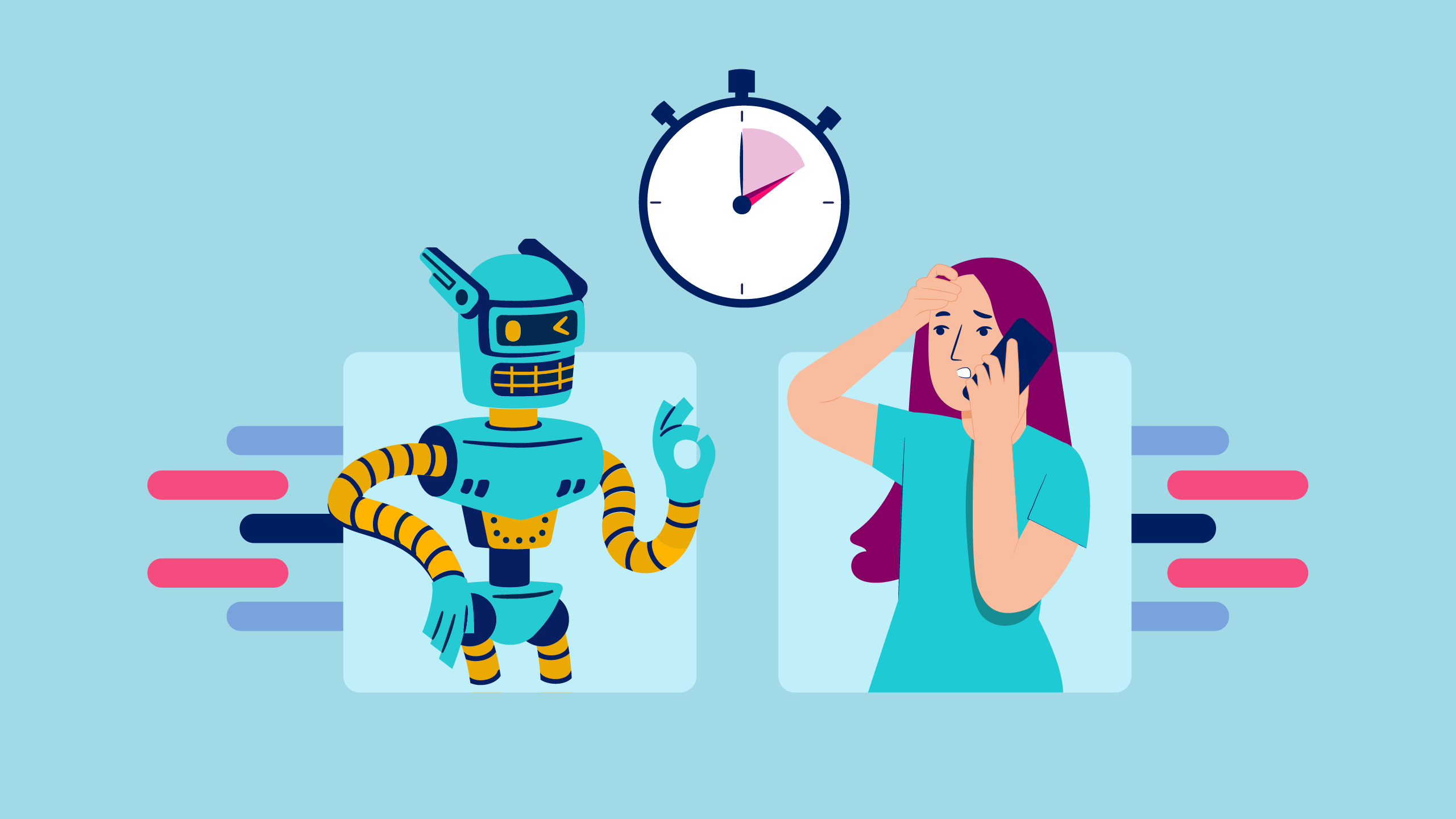
To put it simply, a robocall is any phone call that uses an automated dialing system and usually delivers a pre-recorded or synthetic voice message instead of a live person. When you pick up the phone and hear an immediate recording, you’ve likely experienced a robocall.
The core robocall meaning is tied to automation. Rather than a human manually dialing each number, a computer system automatically calls thousands or even millions of numbers in a short period of time. These systems can:
- Dial large lists of phone numbers in seconds
- Play pre-recorded messages or interactive voice responses
- Route calls to live agents only when someone answers
- Use caller ID spoofing to display fake phone numbers
Not all robocalls are illegal or harmful. Some are legitimate and even helpful, like appointment reminders or emergency alerts. The problem arises when robocalls are used to deceive, scam, or harass people.
Common Types of Robocalls You’re Likely to Receive
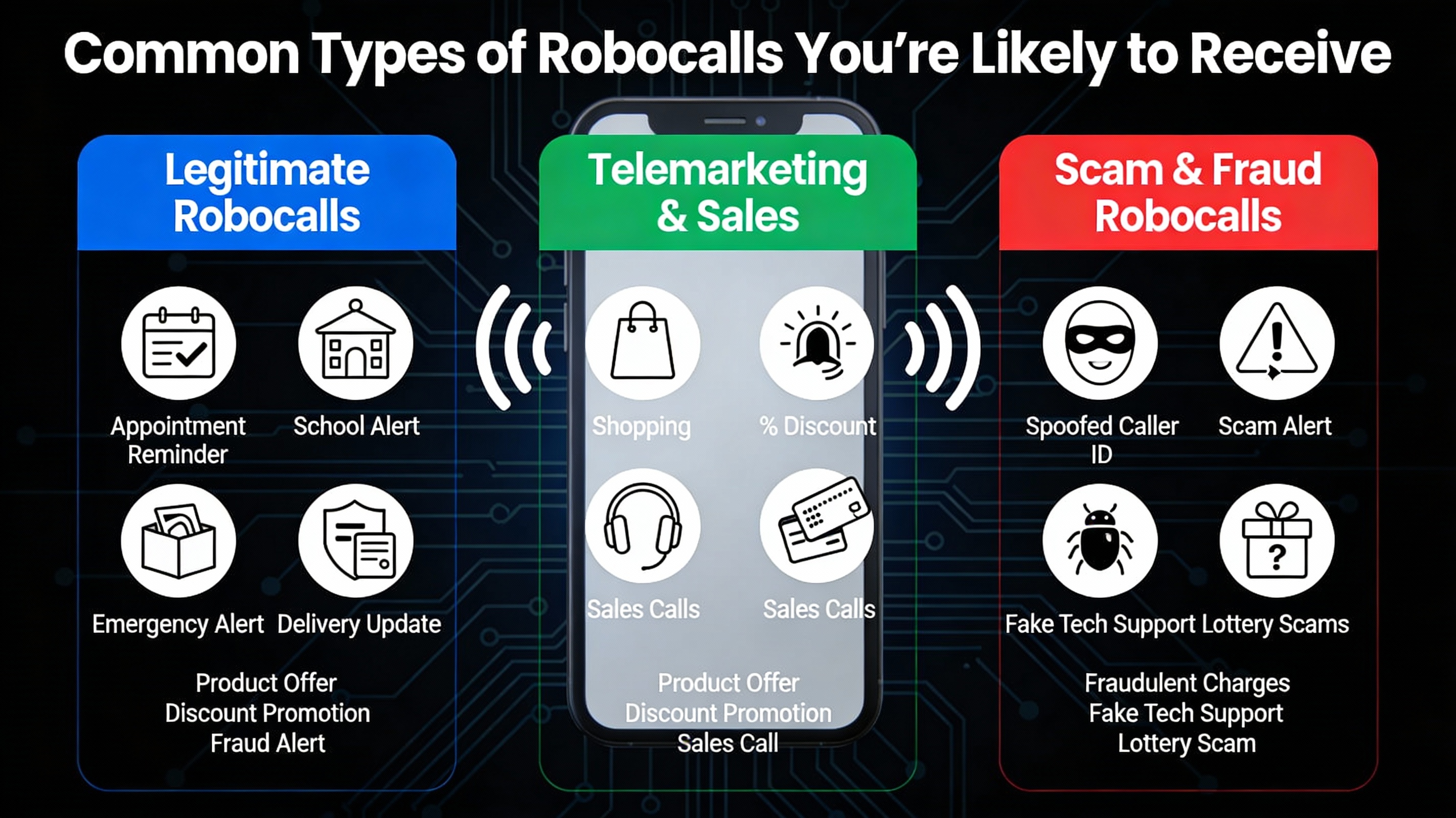
Once you understand the robocall meaning, it becomes easier to recognize different types of robocalls. They generally fall into two big categories: legal (permitted under certain rules) and illegal (often used for scams).
Legitimate Robocalls
Some robocalls serve important purposes and are allowed by law, especially if you have given prior consent or if they fall into special exempt categories. Common examples include:
- Appointment reminders: Calls from your doctor, dentist, or hair salon reminding you about an upcoming visit.
- School notifications: Automated calls about school closures, emergencies, schedule changes, or important announcements.
- Emergency alerts: Weather warnings, public safety alerts, or evacuation notices from government agencies.
- Package or delivery updates: Automated calls from delivery companies about a scheduled delivery or required signature.
- Bank or fraud alerts: Notifications about suspicious activity on your account, potential fraud, or important account changes.
These calls still use automated systems, but they’re generally useful and often expected. In many cases, you may have agreed to receive them when signing up for a service or opening an account.
Telemarketing and Sales Robocalls
Telemarketing robocalls are automated calls that promote products, services, or special offers. In many regions, such as the United States, telemarketing robocalls are heavily regulated. Businesses typically must:
- Obtain your prior express written consent before calling you with a prerecorded marketing message
- Provide a clear opt-out method within the message
- Honor do-not-call requests and national Do Not Call registries
When a telemarketing robocall ignores these rules, it often crosses the line into illegal territory.
Scam and Fraud Robocalls
This is where robocalls become truly dangerous. Scam robocalls try to trick you into revealing personal information, handing over money, or granting access to your accounts. Typical scam robocalls include:
- “Government agency” calls: Fake calls pretending to be from tax authorities, immigration services, or law enforcement, claiming you owe money or are under investigation.
- “Bank or credit card” scams: Calls claiming to be your bank, saying your account is locked or compromised, and asking for PINs or passwords.
- “Tech support” scams: Automated messages stating your computer or phone is infected and instructing you to call a number or install software.
- “Prize” or “lottery” scams: Messages telling you that you’ve won a prize, but you must pay a fee or share personal data to claim it.
- “Lower your interest rate” offers: Robocalls promising to reduce your credit card interest, often asking for full card details.
These scam robocalls are illegal in many jurisdictions and can cause serious financial and emotional harm if you fall victim to them.
How Robocalls Work Behind the Scenes
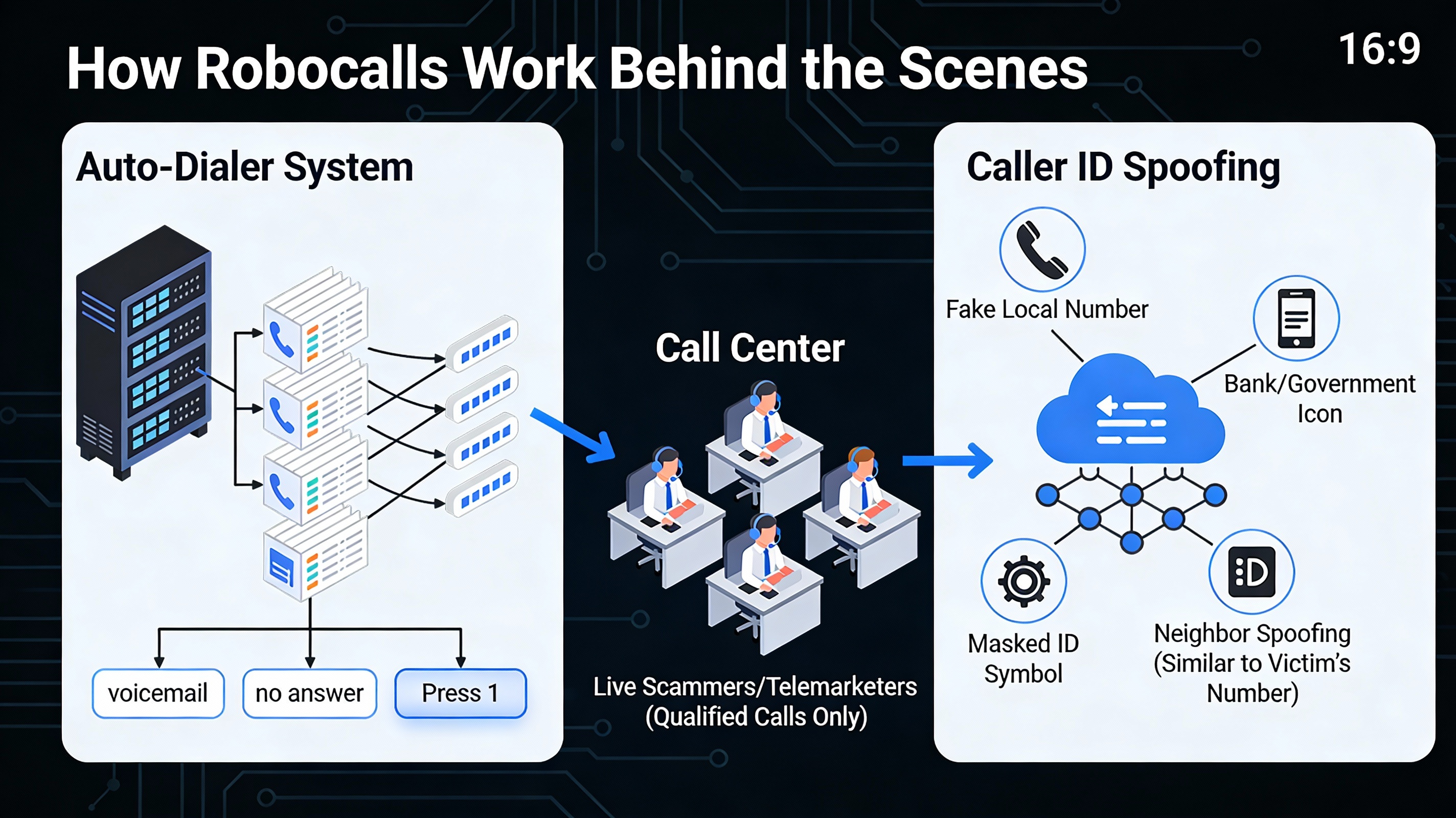
To fully grasp robocall meaning, it helps to understand how they operate technically and why they are so cheap and effective for scammers.
Auto-Dialers and Call Centers
Robocalls are driven by auto-dialer software, which can:
- Generate or import long lists of phone numbers
- Dial multiple numbers at the same time
- Detect when calls are answered by humans, voicemail, or not answered
- Play different pre-recorded messages based on input (such as “Press 1 to speak to an agent”)
When a call is answered and the recipient follows prompts, the system may transfer the call to a live agent in a call center. This allows scammers or telemarketers to handle only “qualified” calls, saving time and money.
Caller ID Spoofing
One reason robocalls are so effective is caller ID spoofing — the practice of disguising the number that appears on your phone. This is often done to:
- Make the call look local, increasing the chance you’ll answer
- Impersonate a trusted organization, such as a bank or government office
- Hide the true origin of the call
For example, your phone might show a nearby area code or even a number that looks similar to yours. This tactic, known as “neighbor spoofing,” is specifically designed to trick you into picking up.
Why Robocalls Are So Common
The explosion of robocalls is driven by two major factors:
- Low cost: Internet-based calling (VoIP) allows scammers to place millions of calls for very little money.
- High return: Even if only a tiny fraction of people fall for a scam, the scammer can still make a substantial profit.
This combination has turned robocalls into a massive global problem, leading regulators, phone carriers, and technology companies to search for better solutions.
The Legal Side: When Are Robocalls Allowed?
Many people assume all robocalls are illegal, but the robocall meaning in law is more nuanced. Certain automated calls are allowed under specific regulations, while others are outright banned.
Consent and Opt-In Requirements
In many countries, laws require businesses to obtain explicit consent before sending you automated marketing calls. For example, in the U.S., the Telephone Consumer Protection Act (TCPA) generally requires:
- Prior express written consent for telemarketing robocalls to cell phones
- Clear disclosure that you consent to receive prerecorded or auto-dialed calls
- An easy opt-out method such as pressing a key or calling a toll-free number
If a company is calling you with a recorded sales pitch without your permission, there’s a strong chance the call is illegal.
Exempt Robocalls
Certain robocalls may be exempt from some rules because they are informational, not promotional, or serve public interest purposes. Generally exempt calls may include:
- Emergency alerts from government agencies
- School closing or safety notifications
- Appointment reminders and confirmations
- Prescription refill notifications
- Critical airline or travel notifications, like flight cancellations
Even with exemptions, these callers are usually expected to identify themselves and provide a callback or opt-out method.
Enforcement and Penalties
Regulators such as the Federal Communications Commission (FCC) and the Federal Trade Commission (FTC) in the U.S. can impose substantial fines on companies that violate robocall regulations. However, many illegal robocalls originate from overseas or use fake information, making enforcement challenging.
How Robocalls Put You at Risk
Understanding the robocall meaning also means knowing the risks they pose. Robocalls can be more than a nuisance; they can be a gateway to serious problems.
Financial Fraud and Identity Theft
Scam robocalls often try to trick you into handing over sensitive data, such as:
- Social Security numbers or national ID numbers
- Bank account and credit card numbers
- Online account usernames and passwords
- One-time passcodes or verification codes
Once scammers have this information, they can empty your accounts, open new lines of credit in your name, or sell your data on the dark web.
Emotional Manipulation
Many fraudulent robocalls use high-pressure tactics designed to cause panic, urgency, or excitement. For example:
- Threats of arrest if you don’t pay a “tax debt” immediately
- Claims that your immigration status is at risk unless you act
- Fake emergencies involving family members
These emotional triggers can cloud judgment, increasing the odds that someone will follow instructions without stopping to verify the caller’s identity.
Privacy Invasion and Harassment
Even seemingly harmless robocalls can erode your privacy. Frequent calls at all hours are disruptive, stressful, and may violate your reasonable expectation of privacy. In extreme cases, constant robocalling can feel like harassment.
How to Stop Robocalls: Practical Strategies That Work
You may not be able to eliminate robocalls completely, but you can significantly reduce them and protect yourself from harm. Below are key steps you can take, from simple actions to more advanced tools.
1. Don’t Answer Unknown Numbers
One of the simplest defenses is to ignore calls from numbers you don’t recognize. If it’s important, the caller will usually leave a voicemail or send a text. By not answering, you:
- Avoid engaging with potential scammers
- Reduce the chance that your number is marked as “active” and targeted more often
If you do accidentally answer and hear a recording, hang up immediately without pressing any numbers.
2. Never Provide Personal Information Over the Phone
Legitimate organizations will not ask you to share highly sensitive information through an unsolicited call. As a rule:
- Do not share passwords, PINs, or one-time codes
- Do not confirm full account or card numbers
- Do not send money or buy gift cards based on a phone request
If a call claims to be from your bank, doctor, or a government agency, hang up and call back using a verified number from an official website, card, or statement.
3. Use Your Mobile Carrier’s Robocall Protection Tools
Most major mobile carriers now offer built-in tools to help identify and block likely spam or robocalls. These services may:
- Label calls as “Spam Risk” or “Scam Likely”
- Block known fraudulent numbers automatically
- Allow you to customize blocking levels and whitelists
Check your carrier’s website or app for details. Some tools are free; others may be part of a paid upgrade.
4. Enable Built-In Phone Features
Modern smartphones include settings that help reduce unwanted calls. Depending on your device, you may be able to:
- Silence unknown callers: Route calls from numbers not in your contacts directly to voicemail.
- Block specific numbers: Manually block any number that frequently calls you.
- Filter spam calls: Use native spam detection features built into the phone’s operating system.
These settings may not completely stop robocalls, but they can make them far less disruptive.
5. Install Third-Party Call-Blocking Apps
There are many reputable apps designed to help reduce robocalls. These apps typically:
- Use large databases of known spam numbers
- Apply advanced algorithms to detect suspicious patterns
- Let you report numbers to help improve the system
Look for well-reviewed apps from trusted developers. Be sure to review privacy policies to understand what data the app may collect.
6. Register Your Number with Do Not Call Lists
In some regions, like the U.S., you can add your number to a national Do Not Call registry. This:
- Requires legitimate telemarketers to stop calling you
- Does not stop all robocalls, especially from scammers, but can reduce legal marketing calls
Registering your number won’t stop scams, but it can make it easier to identify unlawful calls. If your number is on the list and you still receive sales calls, those callers are more likely breaking the law.
7. Report Robocalls to Authorities
Reporting unwanted or suspicious robocalls helps regulators track patterns and take enforcement actions. You can typically report:
- To consumer protection agencies or telecom regulators in your country
- Through official online complaint forms
- By including as much detail as possible (time, number, message content)
While your single report may not stop all calls, combined reports from many consumers help build cases against repeat offenders.
8. Be Cautious About Sharing Your Phone Number
The more often you share your number online or with companies, the more likely it is to end up on marketing lists. To limit exposure:
- Avoid posting your phone number publicly on social media
- Decline to provide your number to retailers unless truly necessary
- Review marketing consent boxes when signing up for services
- Consider using a secondary number for online forms or sign-ups
While this won’t eliminate robocalls completely, it can reduce how many new lists your number lands on.
Advanced Protections: How Technology Is Fighting Robocalls
The battle against robocalls isn’t just on your shoulders. Phone carriers and regulators are deploying new technologies specifically designed to verify caller identity and reduce spoofing.
STIR/SHAKEN and Caller Verification
Many networks are rolling out protocols known as STIR/SHAKEN (in the U.S. and some other regions). These technologies:
- Help verify that a call is actually coming from the number it claims to be
- Make it harder for scammers to spoof caller ID
- Allow carriers to label calls as verified or potentially suspicious
While these systems don’t block all robocalls, they are a significant step toward restoring trust in caller ID information.
Network-Level Blocking and Analytics
Carriers also use analytics to identify patterns of illegal robocalls and block them before they reach your phone. For example, they look for:
- Extremely high call volume from a single source
- Unusual call patterns or behavior
- Complaints and reports from customers
This network-level defense is constantly evolving as scammers change tactics, but it provides an important layer of protection beyond individual user settings.
How to Recognize and Handle a Robocall in Real Time
Knowing the robocall meaning is just the first step; you also need to know what to do in the moment when your phone rings.
Warning Signs You’re Dealing with a Robocall
Look out for these common indicators:
- A noticeable pause or click before someone speaks
- A recorded voice greeting you instead of a live person
- Instructions to “Press 1” to speak to an agent or remove yourself from a list
- Generic greetings like “Dear customer” rather than your name
- High-pressure tactics, threats, or claims of urgency
If you recognize any of these signs, treat the call with caution.
Safe Responses to Robocalls
When you realize you’re on a robocall, follow these guidelines:
- Hang up immediately — do not engage with the message.
- Do not press any keys, even if instructed to opt out; this may confirm your number as active.
- Do not call back numbers provided in suspicious messages.
- If the call pretends to be from a legitimate organization, hang up and contact the organization using an official number instead.
Staying calm and refusing to engage is one of the best defenses you have.
Protecting Vulnerable Family Members from Robocalls
Robocall scammers often target vulnerable populations, including older adults, new immigrants, and people facing financial difficulties. Helping loved ones understand the robocall meaning and risks can prevent serious harm.
Educate and Prepare
Take time to talk with family members about:
- Common robocall scams and scripts
- The importance of not sharing personal information
- How to recognize spoofed or suspicious calls
- What to do if they feel pressured or threatened by a caller
Encourage them to hang up and contact a trusted family member if they receive a call that worries them.
Set Up Technical Protections
For relatives who are frequent targets, you might:
- Enable “allow calls from contacts only” on their phone
- Install robust call-blocking apps and configure them appropriately
- Regularly review their call logs for suspicious numbers
A combination of education and technology can greatly reduce their risk of becoming victims.
Conclusion: Taking Control of Your Phone Again
Robocalls are more than a modern annoyance. Understanding the true robocall meaning reveals a complex ecosystem of automated systems, aggressive marketing tactics, and sophisticated scams. While you may not be able to stop every unwanted call, you can dramatically reduce their impact by:
- Knowing how robocalls work and recognizing common scams
- Using built-in phone features and carrier tools to block or filter calls
- Installing reputable call-blocking apps for an extra layer of defense
- Refusing to share sensitive information over the phone with unknown callers
- Educating family members, especially those who may be more vulnerable
By combining awareness, technology, and a cautious approach to unsolicited calls, you can protect your privacy, your finances, and your peace of mind — and finally start to reclaim your phone from robocallers.
FAQs
What is the exact robocall meaning?
The robocall meaning refers to any phone call made using an automated dialing system, usually delivering a pre-recorded or synthetic voice message instead of a live person. These calls can be used for legitimate purposes, like reminders and alerts, or for illegal activities, such as scams and fraud.
Are all robocalls illegal?
No. Many robocalls are legal, especially those that are purely informational or when you have given prior consent. Appointment reminders, school alerts, and emergency notifications are common examples of legal robocalls. Sales and marketing robocalls are often legal only if you have explicitly agreed to receive them.
Why do I get so many robocalls on my mobile phone?
The low cost of internet-based calling and the ability to auto-dial huge lists make robocalls cheap and scalable for both marketers and scammers. Once your number appears on certain lists or databases, it may be sold or shared, increasing the volume of calls you receive.
Is it safe to press numbers to “opt out” of robocalls?
Generally, no. Pressing numbers on an unsolicited robocall can confirm to the caller that your number is active and may lead to more calls. It is safer to hang up immediately and consider blocking the number or reporting it.
Can answering a robocall infect my phone with malware?
Simply answering a call does not install malware. However, scammers may try to trick you into visiting malicious websites, installing apps, or sharing security codes. The real risk lies in following their instructions, not in answering the call itself.
What should I do if I gave personal information to a robocall scammer?
If you shared sensitive information, act quickly:
- Contact your bank or card provider to alert them and monitor your accounts
- Change passwords and enable two-factor authentication on key accounts
- Consider placing fraud alerts or credit freezes with credit bureaus (where applicable)
- Report the incident to relevant consumer protection or law enforcement agencies