Cyber threats have evolved dramatically over the years. From simple viruses that caused minor disruptions to highly sophisticated malware capable of evading modern security systems, today’s digital landscape presents serious risks for individuals and organizations alike. Among the most complex and dangerous forms of malware is the metamorphic virus. This type of virus is designed not only to infect systems but to constantly transform itself, making detection and removal extremely difficult.
Understanding what a metamorphic virus is, how it works, and why it poses such a serious threat is essential for anyone who uses a computer, accesses the internet, or manages digital systems. This guide explores metamorphic viruses in depth, explaining their behavior, risks, and how users can protect themselves against them.
What Is a Metamorphic Virus?
A metamorphic virus is a type of malicious software that can rewrite, recompile, and restructure its own code every time it infects a system. Unlike traditional viruses that rely on a fixed code signature, a metamorphic virus changes its internal structure with each new iteration while maintaining the same malicious intent.
This ability to transform makes the metamorphic virus one of the most advanced and difficult malware types to identify. Because antivirus tools often rely on known signatures to detect threats, a virus that never looks the same twice can easily slip past conventional security defenses.
Metamorphic viruses are considered highly infectious and dangerous because they are capable of spreading across multiple systems while continuously evolving, increasing the likelihood of prolonged undetected activity.
Also Read: Is Incognito Mode Safe to Use? Pros and Cons of Using Incognito Mode
How a Metamorphic Virus Works
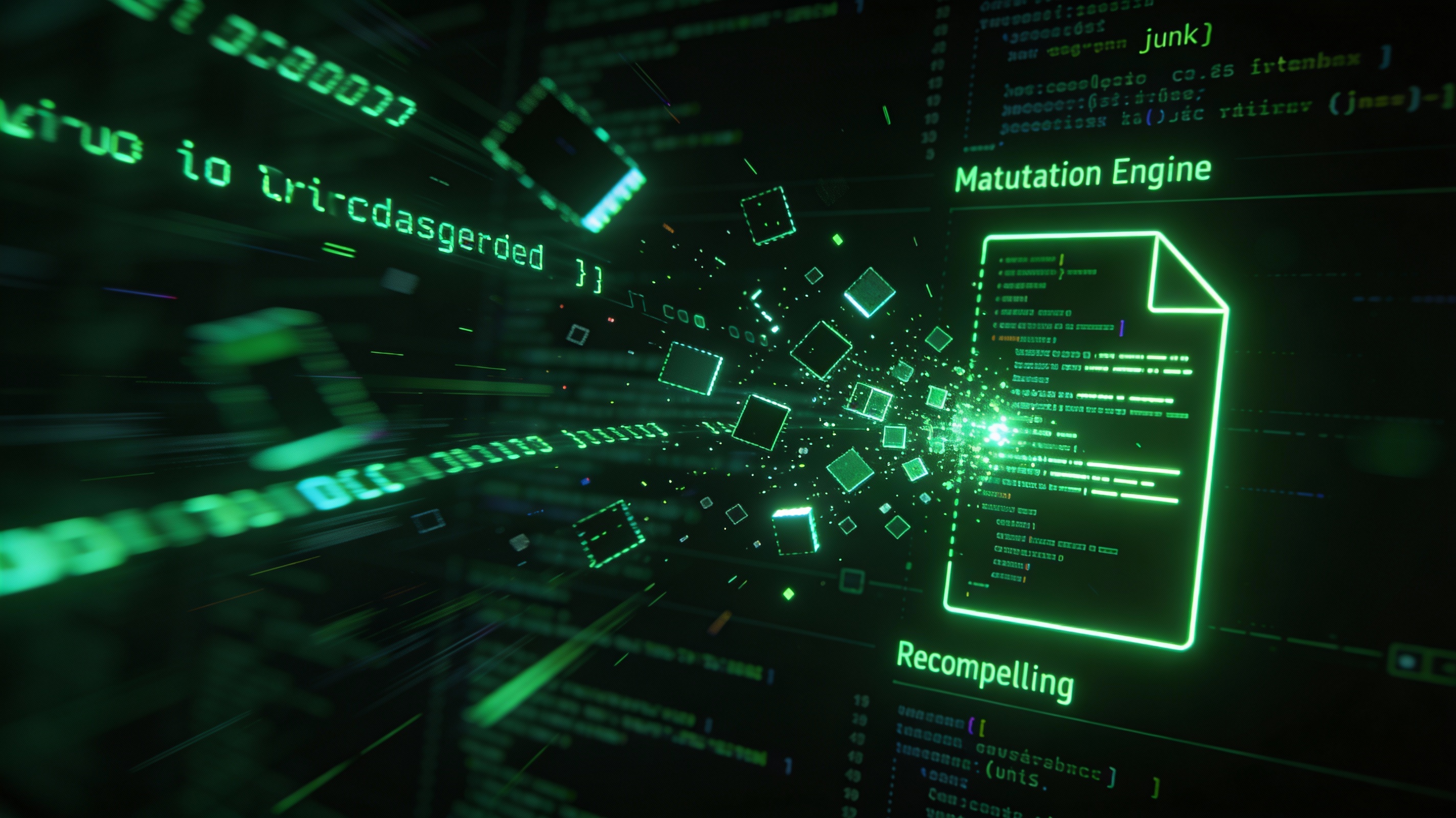
The defining feature of a metamorphic virus is its ability to rewrite its own code. Each time it spreads or executes, it modifies its structure using advanced programming techniques. These changes do not alter the virus’s function but make it appear entirely different at the code level.
A metamorphic virus typically includes a specialized engine that performs the following actions:
- Disassembles its own code
- Reorders instructions
- Replaces code segments with equivalent alternatives
- Inserts unnecessary or misleading operations
- Recompiles itself into a new version
This process ensures that every copy of the virus is unique. While the payload remains the same, the appearance of the virus is constantly changing, making it extremely difficult for traditional detection systems to identify.
Metamorphic Virus vs Traditional Computer Viruses
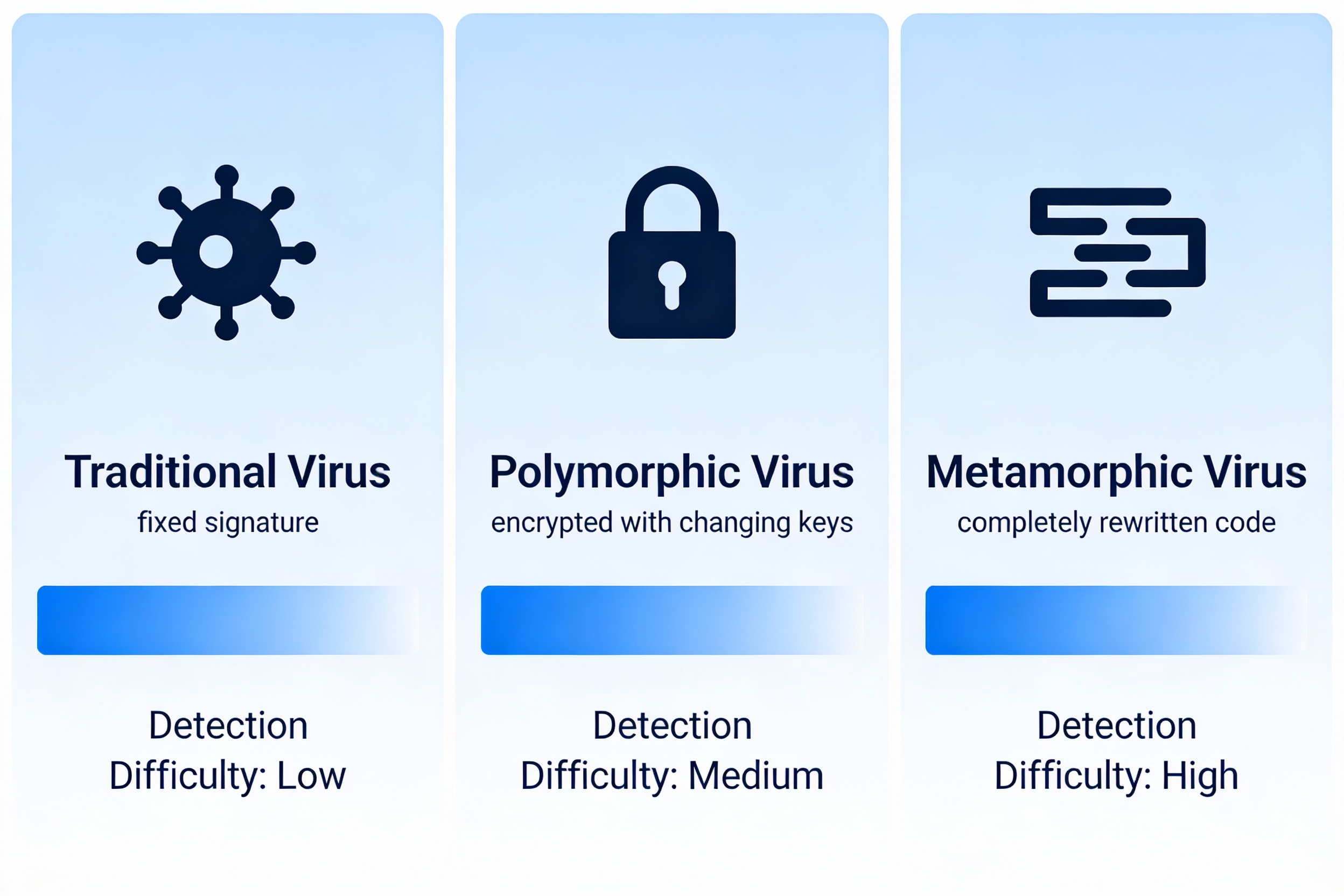
Traditional computer viruses usually rely on static code. Once discovered, security software can identify and block them by matching their signature. Even if they spread widely, their predictable structure makes them easier to eliminate once recognized.
A metamorphic virus operates differently. Because it never retains a fixed structure, no single signature can reliably identify it. This allows it to evade detection tools that depend heavily on known malware patterns.
While older viruses may be removed quickly after identification, a metamorphic virus can persist for extended periods, producing new variants and increasing the damage it causes over time.
Metamorphic Virus vs Polymorphic Virus
Metamorphic viruses are often compared to polymorphic viruses, but there are important differences between the two.
A polymorphic virus encrypts its original code and changes its encryption key each time it spreads. While the encryption changes, the underlying code remains largely the same. Advanced scanners can sometimes detect polymorphic viruses by analyzing their behavior or decryption routines.
A metamorphic virus, on the other hand, rewrites its actual code. There is no original version hidden beneath encryption. Each new version is a fully transformed copy, making behavioral and signature-based detection far more challenging.
This fundamental difference is why metamorphic viruses are considered more advanced and more dangerous than polymorphic variants.
Why Metamorphic Viruses Are Difficult to Detect
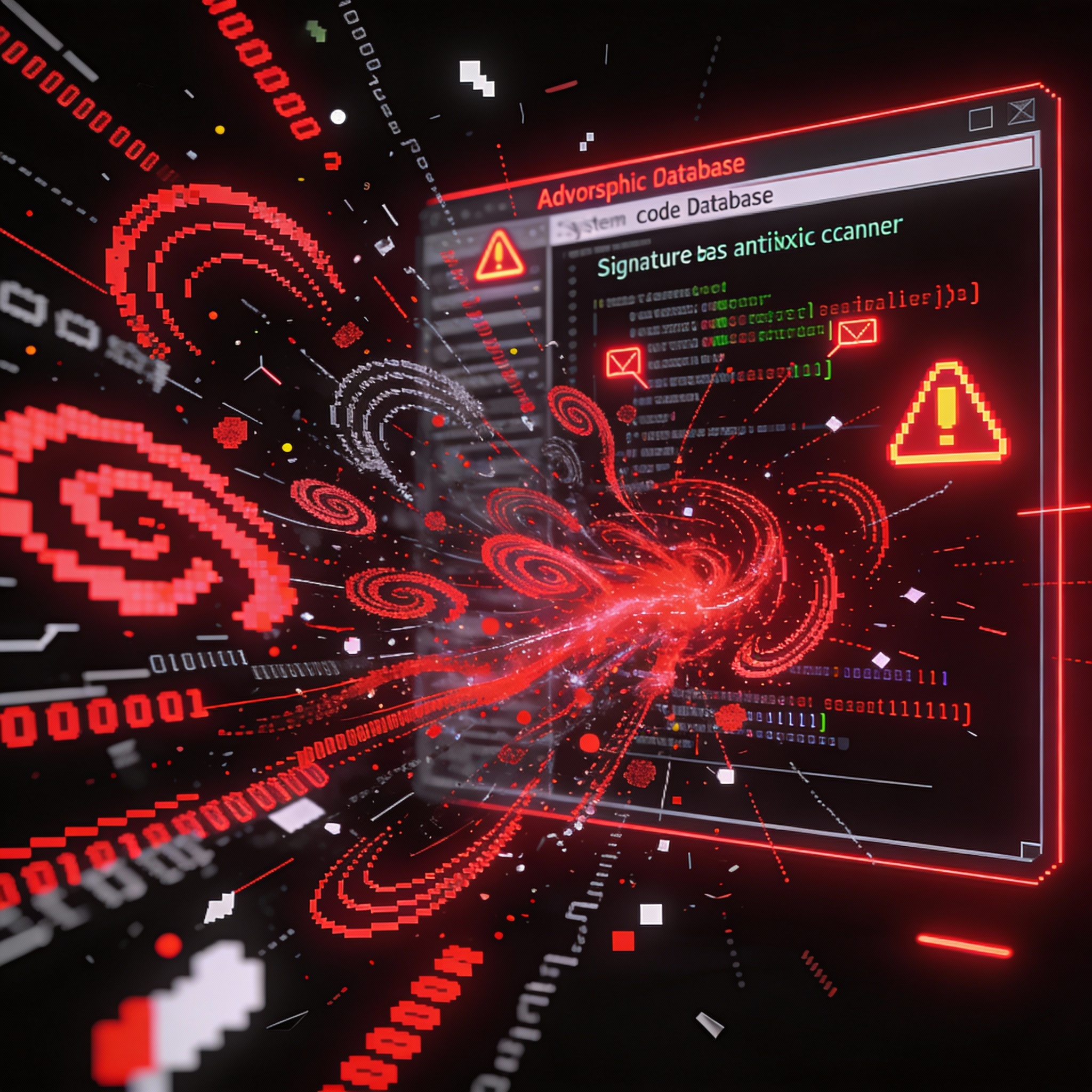
Most antivirus tools rely on signature-based detection. This method works by comparing files against a database of known malware signatures. While effective for many threats, this approach struggles with metamorphic viruses.
Because a metamorphic virus constantly changes its structure, signature-based scanners cannot rely on fixed patterns. Even if one version is detected, future versions may appear completely unrelated at the code level.
Additionally, metamorphic viruses can disguise their activity by mimicking legitimate system processes, further reducing the likelihood of detection. Over time, they may generate thousands of unique variants, overwhelming basic security systems.
Impact of a Metamorphic Virus on Systems
A metamorphic virus can cause serious and long-lasting damage to infected systems. Its effects often extend beyond immediate performance issues and can compromise overall system integrity.
Common impacts include:
- Significant data loss due to corrupted or deleted files
- Reduced system performance and increased crashes
- Lowered security defenses that allow other malware to enter
- Unauthorized access to sensitive information
- Network-wide infections when spreading across connected devices
Because metamorphic viruses can remain hidden for long periods, damage often accumulates gradually, making recovery more complex and costly.
Common Distribution Methods
Like many other malware types, a metamorphic virus relies on user interaction or system vulnerabilities to spread. Common distribution methods include:
- Malicious email attachments disguised as legitimate documents
- Compromised websites that automatically deliver infected files
- Infected software downloads from unverified sources
- Removable storage devices such as USB drives
Once introduced into a system, the virus may quietly propagate, producing new variants with each infection.
Goals of Metamorphic Virus Attacks
The objectives behind a metamorphic virus attack can vary depending on the attacker’s intent. In many cases, the virus is designed to remain undetected while carrying out harmful activities such as:
- Stealing private and corporate data
- Facilitating financial fraud or identity theft
- Enabling long-term espionage
- Weakening system defenses for future attacks
- Supporting extortion or blackmail schemes
Because the virus can adapt and evolve, attackers may continue exploiting an infected system long after the initial breach.
Detecting a Metamorphic Virus
Detecting a metamorphic virus requires more advanced techniques than traditional scanning methods. Behavioral analysis plays a critical role in identifying suspicious activity that signature-based tools may miss.
Indicators of infection may include:
- Unexplained system slowdowns
- Unexpected file modifications
- Irregular network traffic
- Unknown background processes
- Security settings changing without user input
Because no single symptom guarantees infection, consistent monitoring and layered security approaches are essential.
Preventing Metamorphic Virus Infections
Prevention is the most effective defense against a metamorphic virus. Since these viruses exploit both technical vulnerabilities and human behavior, a combination of awareness and security practices is required.
Key prevention strategies include:
- Keeping operating systems and applications updated
- Avoiding downloads from untrusted websites
- Exercising caution with email attachments and links
- Limiting administrative privileges on devices
- Regularly backing up important data
By reducing exposure to common infection vectors, users significantly lower the risk of encountering a metamorphic virus.
The Role of Malware Research and Analysis
When a metamorphic virus is discovered, analyzing its behavior is critical for improving future defenses. Security researchers study these viruses to understand how they rewrite code and evade detection.
This research helps develop more effective detection techniques, including heuristic analysis and machine-learning-based threat recognition. Over time, these advancements improve global cybersecurity resilience against evolving malware threats.
Why Awareness Matters
Many users underestimate the risks posed by advanced malware. A metamorphic virus demonstrates how cyber threats have become more sophisticated and persistent. Awareness empowers users to recognize suspicious behavior early and take proactive steps to protect their systems.
Understanding how these viruses operate reduces reliance on assumptions and encourages better digital hygiene across personal and professional environments.
Conclusion
The metamorphic virus represents one of the most advanced threats in modern cybersecurity. Its ability to transform itself with every infection makes it exceptionally difficult to detect, remove, and contain. Unlike traditional malware, it thrives on complexity and persistence, often remaining hidden while inflicting long-term damage.
As cyber threats continue to evolve, understanding sophisticated malware like the metamorphic virus is no longer optional. Awareness, proactive security practices, and responsible digital behavior are essential defenses in a world where malware adapts as quickly as the technology it targets.
Frequently Asked Questions
What is a metamorphic virus?
A metamorphic virus is a type of malware that rewrites and restructures its own code each time it spreads, making detection extremely difficult.
Why is a metamorphic virus dangerous?
Its ability to constantly change allows it to evade traditional detection methods and remain active for long periods, causing extensive damage.
How does a metamorphic virus spread?
It commonly spreads through email attachments, compromised websites, infected downloads, and removable storage devices.
Can traditional antivirus software detect metamorphic viruses?
Basic signature-based tools often struggle. Advanced behavioral analysis and heuristic detection are more effective.
How can users protect themselves from a metamorphic virus?
Maintaining updated systems, practicing safe browsing habits, avoiding suspicious downloads, and monitoring system behavior help reduce risk.

Debabrata Behera is a passionate blogger who writes about digital trends, personal growth, and practical insights, helping readers stay informed, inspired, and ready to achieve success in life.