Hotels today operate in an environment where security, convenience, and guest experience are equally important. Traditional access methods like key cards, PINs, or physical keys are increasingly seen as inconvenient and insecure. Lost cards, duplicated keys, and unauthorized access create operational challenges and negatively affect guest trust. As hotels move toward smart and contactless solutions, biometric access control systems are emerging as a reliable and future-ready alternative. By using unique human characteristics for identity verification, biometrics helps hotels improve security, streamline operations, and deliver a more seamless guest experience.
What Is a Biometric Hotel Access Control System?
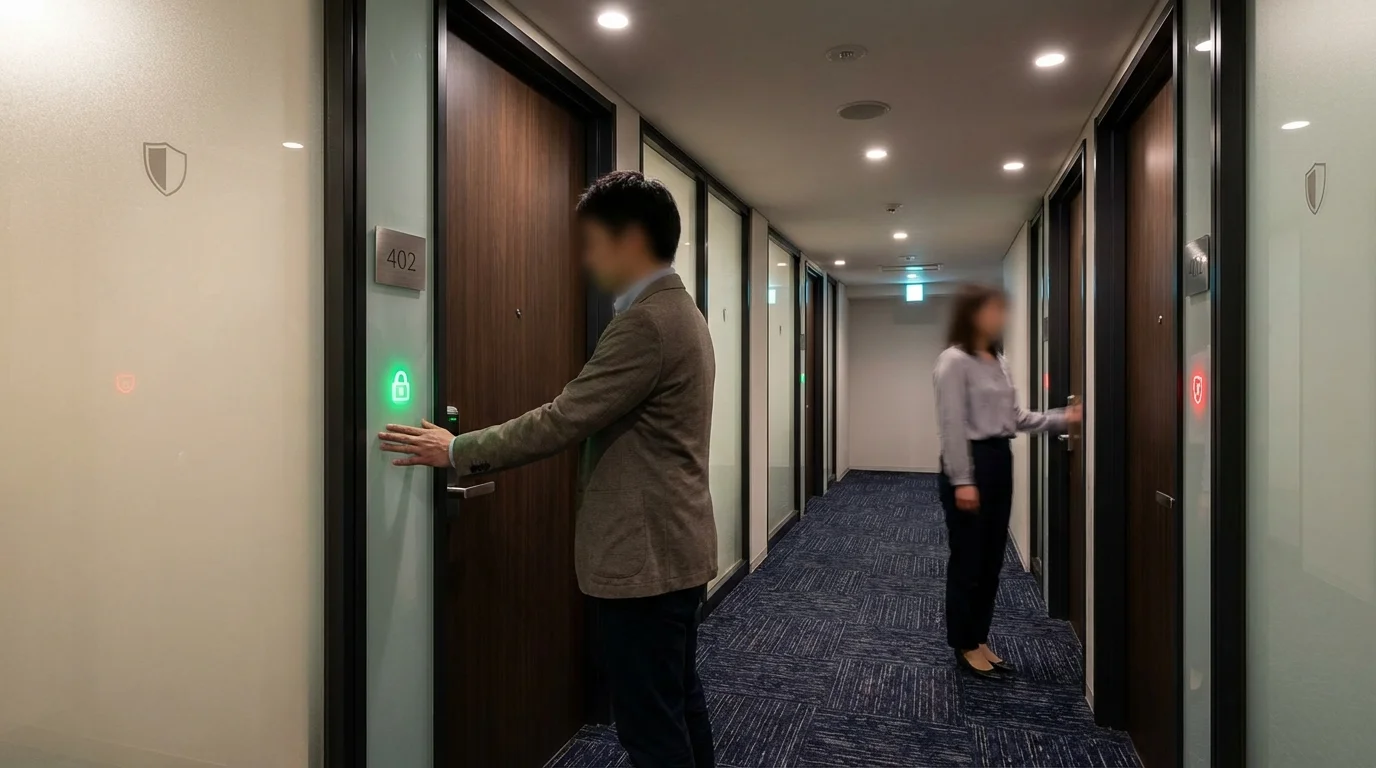
A biometric hotel access control system is a security solution that uses unique biological traits of individuals to grant or deny access to hotel rooms and facilities. Instead of relying on something a guest carries or remembers, such as a key card or password, the system verifies who the person is based on their physical or behavioral characteristics. These systems are designed to be accurate, fast, and difficult to misuse, making them suitable for modern hospitality environments where both safety and convenience matter.
- Uses unique human identifiers for authentication
- Replaces or complements traditional access methods
- Designed for secure and frictionless access
How Biometric Access Control Works in Hotels
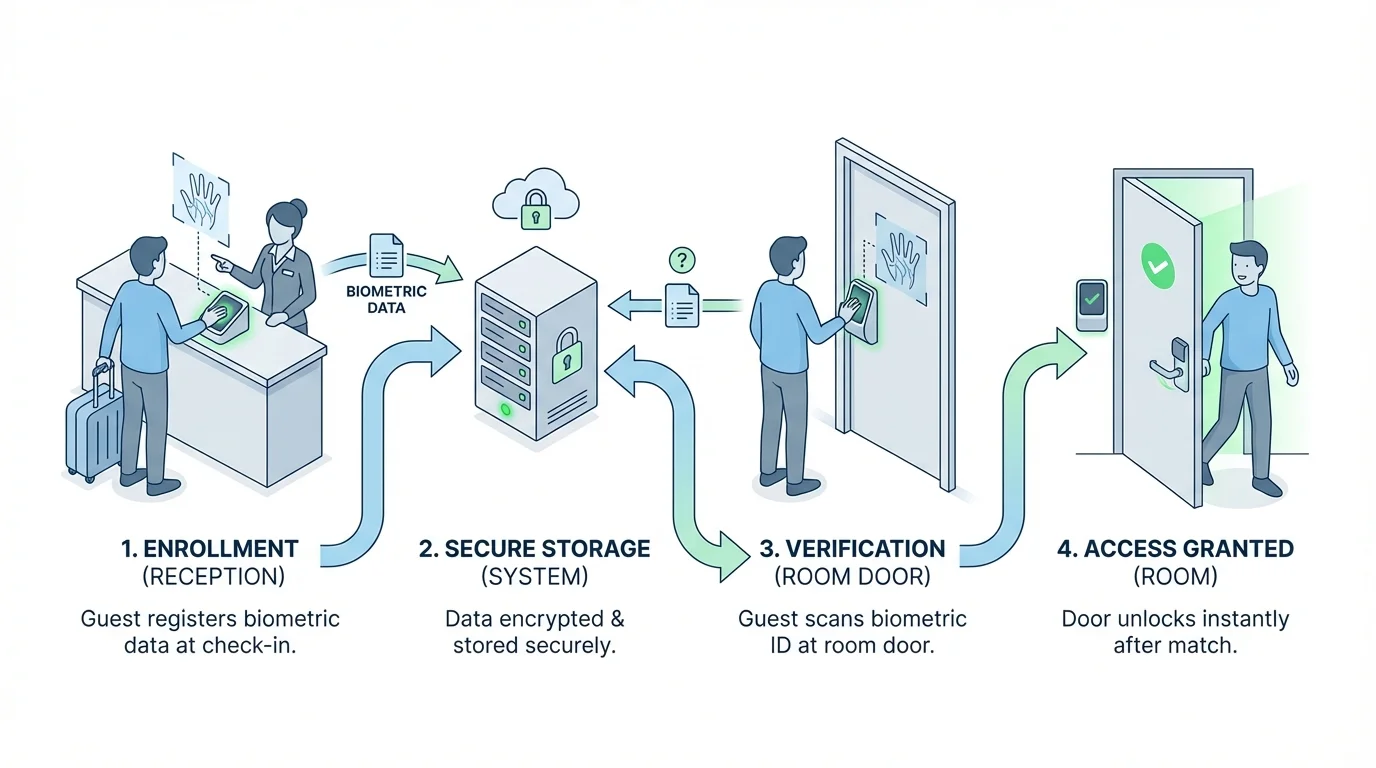
Biometric access control in hotels follows a structured process that begins with enrollment and ends with real-time access verification. When a guest or staff member is registered, their biometric data is securely captured and converted into a digital template. This template is stored in an encrypted format. During access, the system scans the biometric trait again and matches it with the stored template to confirm identity before unlocking doors or granting access.
- Enrollment of guest or staff biometric data
- Secure storage of encrypted biometric templates
- Real-time verification during access attempts
- Integration with hotel access points and systems
Why Hotels Are Shifting Toward Biometric Security
Hotels are increasingly adopting biometric security to meet growing expectations around safety, speed, and personalization. Guests want faster check-ins and hassle-free access, while hotel operators seek better control over security and operations. Biometrics addresses both needs by offering a reliable way to verify identity without adding friction to the guest journey. It also reduces dependency on physical items that can be lost, shared, or stolen.
- Rising concerns around unauthorized access
- Demand for contactless and seamless experiences
- Need for better operational efficiency
13 Key Benefits of Biometrics in Hotel Access Control Systems
1. Enhanced Guest Security
Biometric systems significantly improve guest security by ensuring that only authorized individuals can access rooms and restricted areas. Since biometric traits are unique to each person, the risk of duplication or misuse is extremely low. This makes unauthorized entry far more difficult compared to key cards or PINs.
- Prevents access using lost or stolen credentials
- Ensures one-to-one identity verification
- Reduces chances of room break-ins
2. Contactless and Hygienic Access
Contactless access has become an important consideration in hospitality. Biometric systems such as facial recognition allow guests to access rooms without touching shared surfaces. This helps maintain better hygiene standards and reassures guests about their safety.
- Minimizes physical contact points
- Supports improved hygiene practices
- Enhances guest confidence
3. Faster Check-In and Check-Out
Biometric access reduces the time spent at the front desk by simplifying identity verification. Guests can be enrolled quickly and access their rooms without waiting for physical keys or cards. This results in smoother check-in and check-out processes.
- Reduces queues at reception
- Speeds up guest onboarding
- Improves overall efficiency
4. Eliminates Key Card Management
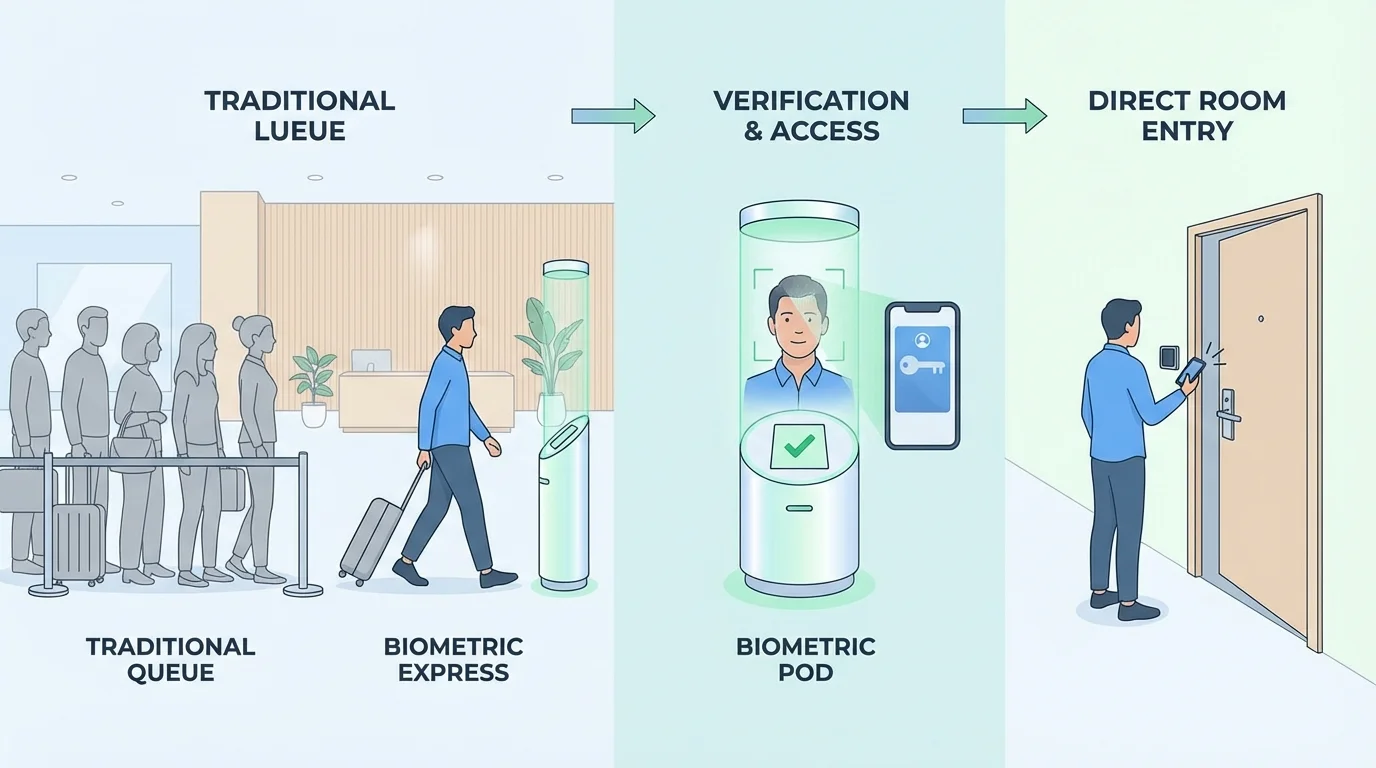
Managing key cards involves recurring costs and administrative effort. Cards can be lost, damaged, or require reprogramming. Biometrics removes the need for physical cards, reducing both costs and operational complexity.
- No need to issue or replace cards
- Reduces inventory management
- Lowers long-term operational expenses
5. Personalized Guest Experience
Biometric systems can be linked with hotel management systems to enable personalization. Once a guest is identified, the system can trigger personalized services such as preferred room settings or access to specific facilities.
- Enables customized services
- Supports loyalty and VIP programs
- Enhances guest satisfaction
6. Higher Accuracy and Reliability
Biometric authentication is highly accurate because it relies on unique human traits. This reduces errors commonly associated with manual checks or shared credentials. The reliability of biometric systems ensures consistent performance across different access points.
- Unique identifiers reduce false access
- Consistent authentication results
- Minimizes human error
7. Improved Staff Access Management
Hotels need to manage staff access carefully to maintain security and accountability. Biometric systems allow role-based access control, ensuring employees can only enter areas relevant to their responsibilities.
- Role-based access permissions
- Clear accountability for access events
- Better internal security control
8. Real-Time Access Monitoring
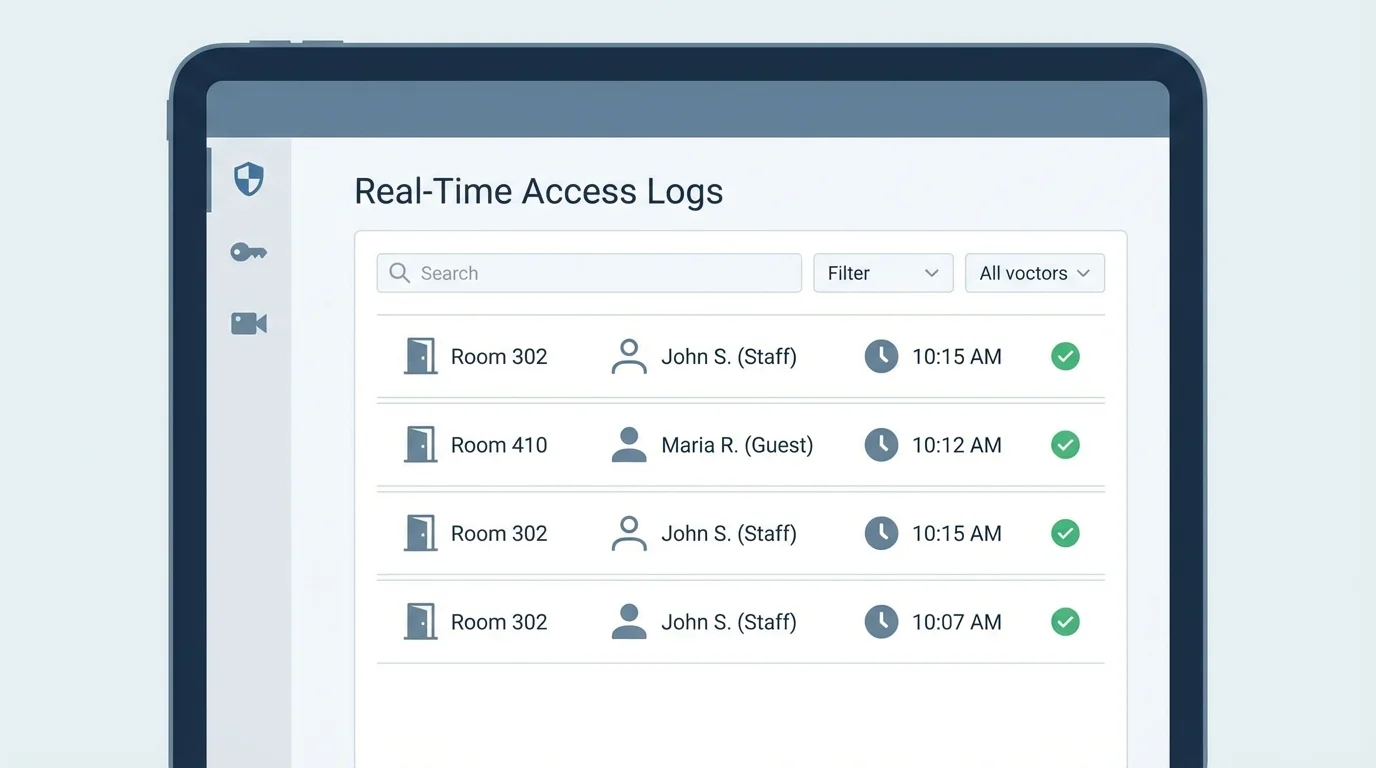
Biometric access systems provide real-time visibility into who is accessing which areas and when. This helps hotel management monitor activity, investigate incidents, and maintain accurate records for security and compliance purposes.
- Centralized access logs
- Real-time monitoring capabilities
- Improved audit readiness
9. Reduced Operational Costs
Although biometric systems may require initial investment, they help reduce long-term operational costs. Savings come from reduced card replacements, fewer security incidents, and lower administrative overhead.
- Lower spending on physical access tools
- Reduced manpower for access control
- Long-term cost efficiency
10. Seamless Integration with Smart Hotel Systems
Biometric access control can integrate with other smart hotel technologies. This allows hotels to create automated workflows where access control works alongside energy management, elevators, and room automation.
- Compatible with smart locks
- Supports automation and IoT systems
- Enhances overall hotel efficiency
11. Scalability for Multi-Property Hotels
For hotel chains and multi-property operators, biometric systems offer scalable access management. Centralized control makes it easier to manage access across multiple locations without duplicating effort.
- Centralized access management
- Easy expansion across properties
- Consistent security standards
12. Fraud Prevention and Identity Protection
Biometric verification reduces the risk of identity fraud by ensuring that access is granted only to verified individuals. This helps prevent room sharing fraud and unauthorized use of hotel facilities.
- Prevents impersonation
- Reduces fraudulent access
- Strengthens identity verification
13. Strong Brand Image and Competitive Advantage
Adopting biometric access control positions a hotel as modern and technology-driven. Guests often associate advanced security and convenience with higher quality service, which helps strengthen brand perception.
- Builds trust with guests
- Enhances brand reputation
- Differentiates from competitors
Types of Biometric Technologies Used in Hotels
Hotels can choose from different biometric technologies depending on their needs and environment. Each technology offers a balance between convenience, accuracy, and implementation complexity.
- Fingerprint recognition
- Facial recognition
- Iris and retina scanning
- Palm and vein recognition
Key Areas Where Biometrics Are Used in Hotels
Biometric access control is not limited to guest rooms. Hotels use it across multiple areas to improve security and streamline access management.
- Guest room access
- Elevator and floor access
- Staff-only zones
- Gyms, spas, and premium facilities
Challenges and Considerations Before Implementation
Before adopting biometric systems, hotels must carefully evaluate certain challenges. These include ensuring data privacy, obtaining guest consent, and planning for backup access methods in case of system issues.
- Data privacy and regulatory compliance
- Guest consent and transparency
- Initial setup and infrastructure costs
- Backup access options
Best Practices for Implementing Biometric Access in Hotels
Successful implementation requires careful planning and clear communication. Hotels should focus on choosing the right technology, securing biometric data, and training staff to manage the system effectively.
- Selecting suitable biometric technology
- Ensuring strong data encryption
- Training hotel staff
- Offering alternative access options
Conclusion
Biometric access control systems are transforming how hotels manage security and guest access. By replacing traditional keys and cards with identity-based authentication, hotels can improve security, reduce operational costs, and deliver a smoother guest experience. While implementation requires careful planning and consideration of privacy concerns, the long-term benefits make biometrics a strong choice for modern hotels. As guest expectations continue to evolve, biometric access control is becoming an essential component of smart and secure hospitality operations.
FAQs
What is a biometric hotel access control system?
A biometric hotel access control system is a security solution that uses unique human characteristics, such as fingerprints or facial features, to verify identity and grant access to hotel rooms and facilities. It replaces or supports traditional access methods like key cards and PINs, offering more secure and convenient access.
Are biometric access systems safe for hotel guests?
Yes, biometric access systems are designed with security in mind. They use encrypted biometric templates rather than storing raw biometric images. This helps protect guest identity while ensuring that only authorized individuals can access rooms and restricted areas.
What types of biometric technologies are commonly used in hotels?
Hotels typically use fingerprint recognition, facial recognition, iris scanning, or palm and vein recognition. The choice of technology depends on factors such as guest convenience, hygiene requirements, and the hotel’s security needs.
How does biometric access improve guest experience?
Biometric access removes the need for physical keys or cards, making room access faster and more convenient. It also reduces waiting time at check-in and helps create a seamless, contactless experience that many guests prefer.
Can guests choose not to use biometric access?
Most hotels offer alternative access options for guests who prefer not to use biometrics. This ensures inclusivity and respects guest comfort and privacy while still maintaining secure access control.
Is biometric data stored securely by hotels?
Yes, biometric data is typically stored in an encrypted format as a digital template. Hotels follow data protection practices to prevent unauthorized access and misuse of biometric information.
What happens if biometric authentication fails?
If biometric authentication fails, hotels usually provide backup access methods such as manual verification at the front desk or temporary access credentials. This ensures that guests are not locked out due to technical issues.