The Internet of Things, commonly known as IoT, describes a world where everyday objects are enhanced with sensors, computing power, and connectivity so they can sense their environment, exchange data, and act on insights with minimal human involvement. IoT turns physical things into digital participants. A wristwatch can become a health monitor, a streetlamp can become an energy-aware node in a city grid, and a tractor can become a data source that helps a farmer make better decisions. This convergence of the physical and digital worlds is shaping how we live, work, produce, transport, heal, and govern.
At its core, IoT is about visibility and action. By collecting data from the world and analyzing it quickly, organizations and individuals gain the ability to improve safety, reduce waste, cut costs, personalize experiences, and automate routine tasks. The impact ranges from small conveniences in a smart home to large-scale transformations across factories, hospitals, and entire cities.
What is the Internet of Things?

The Internet of Things is a system of interrelated computing devices embedded in physical objects that can collect data and transfer it over a network without constant human input. Any object that can be assigned an IP address and transmit data can be part of IoT. This includes obvious devices like smartphones and tablets, but also thermostats, lighting systems, utility meters, industrial robots, connected cars, medical wearables, agricultural sensors, and countless other “things.”
An IoT device typically has four capabilities: it can measure something about its environment, communicate what it measured, be identified on a network, and either act directly or help a human make a decision. When many such devices work together and share information with cloud platforms and applications, the result is a living system that learns from data and continually improves.
How the Internet of Things Works
An end-to-end IoT solution involves four essential elements: sensors or devices, connectivity, data processing, and a user interface. Each element can be simple or sophisticated depending on the use case, but the pattern remains consistent.
Sensors and Devices
Sensors are the sense organs of IoT. They capture raw signals from the physical world such as temperature, motion, pressure, location, humidity, proximity, light, sound, vibration, chemical presence, and more. A single device might include multiple sensors. A smartphone, for example, combines GPS for location, accelerometers and gyroscopes for orientation and movement, microphones for sound, and cameras for vision. Industrial equipment may add load cells, flow meters, or ultrasonic sensors to monitor processes.
The choice of sensor depends on what needs to be measured and how accurately. Considerations include power consumption, calibration requirements, durability in harsh environments, and cost. Increasingly, devices integrate microcontrollers or system-on-chip modules that allow local processing and power management so sensors can run for months or years on small batteries.
Connectivity
Once data is captured, it must move to a place where it can be stored, analyzed, and acted upon. Connectivity options vary widely, each with trade-offs in power, range, bandwidth, latency, and cost.
Common approaches include Wi-Fi for high throughput within buildings, Bluetooth for short-range and personal area connections, cellular networks for wide-area coverage including 4G and 5G, low-power wide-area networks (LPWAN) such as LoRaWAN and NB-IoT for long-range, low-bandwidth transmissions, satellite for remote or maritime use, and Ethernet for fixed, reliable, wired connections. The best option depends on the environment, energy constraints, and data volume. For battery-powered sensors that send small messages periodically, LPWAN is often ideal. For video or real-time control, Wi-Fi, 5G, or wired links are more suitable.
Data Processing
Data typically flows to the cloud, an edge gateway, or both. In the cloud, data is ingested, cleansed, and stored, then analyzed by software services and machine learning models. Processing can detect anomalies, predict failures, calculate trends, and trigger alerts or automations. In some scenarios, processing happens closer to the source at the edge, which reduces latency and bandwidth use and increases resilience when connectivity is intermittent. Edge processing is common in industrial control, autonomous vehicles, and healthcare monitoring where timely response is critical.
Modern IoT platforms provide pipelines for stream processing, analytics dashboards, device management, and integration with enterprise systems. They also handle lifecycle tasks like firmware updates, authentication, and access control.
Also Read:What is Data Encryption?
User Interface
A human enters the loop through dashboards, mobile apps, and notifications. The interface lets people view real-time status, explore historical data, receive alerts, and issue commands. A building manager might use a tablet to adjust HVAC zones; a farmer might view soil moisture maps; a driver might see tire pressure warnings; a clinician might review a patient’s heart rhythm trend. The feedback path flows from user to cloud or edge and then down to the device to enact changes, closing the loop between sensing, understanding, and acting.
Applications of the Internet of Things
IoT is a general-purpose technology with applications across nearly every sector. A few illustrative areas show the breadth of impact.
Wearables
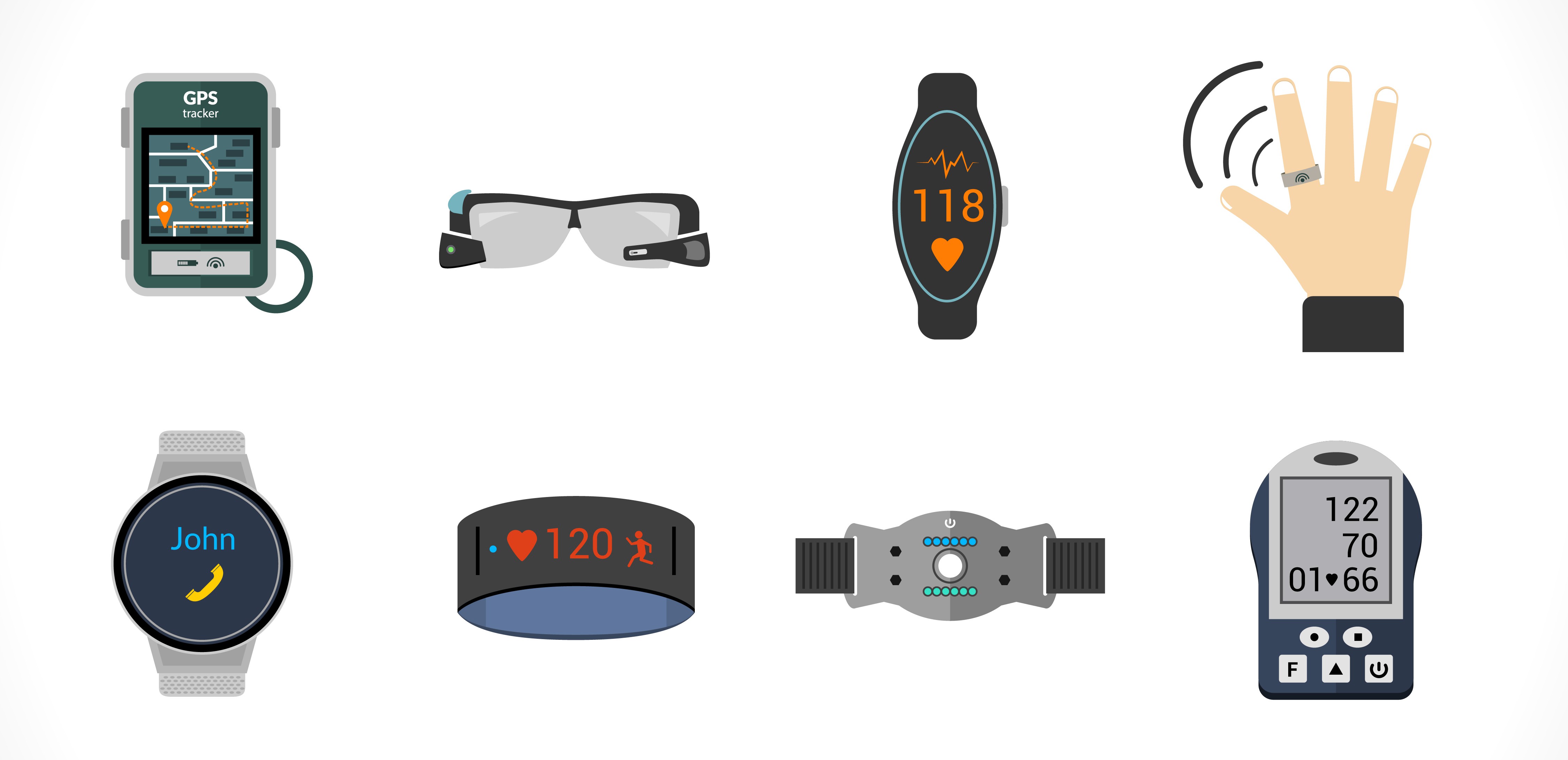
Wearable devices bring continuous sensing into daily life. Fitness trackers and smartwatches measure heart rate, sleep patterns, and activity to provide personalized coaching and early warnings. Smart glasses overlay digital information onto the physical world. In occupational settings, wearables can measure worker fatigue, detect hazardous exposures, or enable hands-free communication. The value lies in turning passive data into actionable recommendations that improve wellness and productivity.
Smart Homes

Smart home ecosystems connect lighting, climate control, security systems, entertainment, and appliances. Residents can automate routines such as lights that adjust with daylight, thermostats that learn schedules, and door locks that grant temporary access. Connected smoke detectors, leak sensors, and security cameras enhance safety. Energy use can be optimized through real-time monitoring and device coordination. The most successful setups integrate devices through a central hub or platform so rules work consistently across brands.
Smart Cities

Cities deploy connected sensors and actuators to manage infrastructure more efficiently. Parking meters can reduce congestion by guiding drivers to available spaces. Traffic lights can adapt to real-time flows. Environmental sensors can monitor air quality and noise. Smart grids balance energy demand and integrate renewables. Connected streetlights dim or brighten based on activity, cutting energy costs while improving safety. Open data portals allow residents and developers to build services on top of municipal IoT data, increasing transparency and civic engagement.
Self-Driving and Connected Vehicles
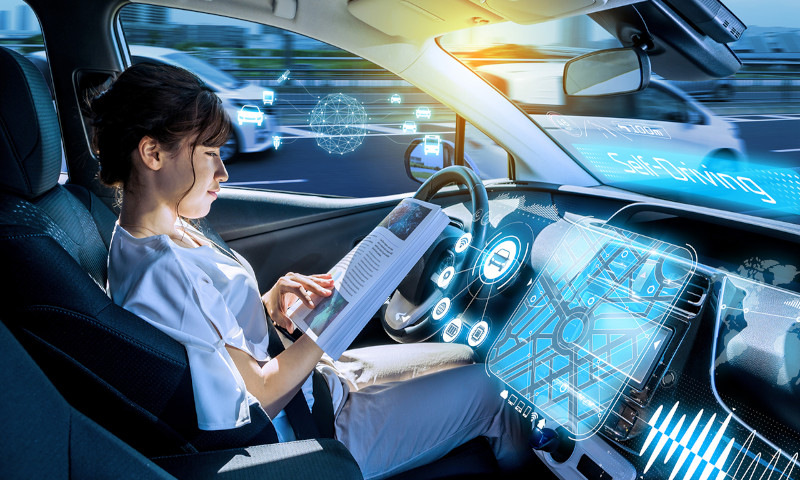
Vehicles are rich IoT platforms with hundreds of sensors and electronic control units. Even before full autonomy, connected cars gather data on performance, location, driver behavior, and surrounding conditions to enable features such as predictive maintenance, collision avoidance, adaptive cruise control, and over-the-air updates. As vehicles communicate with one another and with roadside infrastructure, transportation systems can become safer and more efficient.
Retail
Retailers use IoT for inventory accuracy, shopper experience, and supply chain visibility. Smart shelves detect low stock and send replenishment requests. Computer vision enables frictionless checkout experiences in which items placed in a bag are automatically recognized and billed. Beacons can tailor in-store promotions, while temperature and humidity sensors ensure product quality for perishables. Connecting stores, warehouses, and logistics creates a near real-time view of demand and fulfillment.
Telehealth and the Internet of Medical Things
Healthcare is undergoing a shift from episodic visits to continuous, remote care. Connected blood pressure cuffs, glucose monitors, pulse oximeters, and ECG patches allow clinicians to monitor patients at home. Hospital assets such as infusion pumps and beds can be tracked for availability and maintenance. Teleconsultations are enhanced with live device data, and analytics can detect deteriorating conditions earlier. These capabilities extend care to rural and underserved communities while easing pressure on clinical staff.
Smart Farming
Agriculture benefits from precise, data-driven operations. Soil moisture probes, weather stations, and plant health cameras guide irrigation and fertilization. Livestock wearables monitor animal well-being. Drones and autonomous tractors perform field tasks with high accuracy. The result is improved yields, reduced inputs, and better stewardship of land and water. At scale, connected farms contribute to food security and sustainability.
Other Domains
Manufacturing uses IoT for predictive maintenance, quality assurance, and just-in-time production. Energy companies monitor pipelines and wind turbines across vast distances. Building owners manage occupancy, air quality, and energy across portfolios. Environmental agencies deploy sensor networks to track water quality and protect habitats. The same architectural pattern—sense, connect, analyze, and act—adapts to each context.
A Brief History of IoT
The vision behind IoT emerged over decades of progress. Early notions of pervasive or ubiquitous computing from the 1970s imagined computers woven into everyday life. In the early 1980s, students at Carnegie Mellon connected a campus vending machine to a network so they could check stock and temperature remotely, an early prototype of a connected device. In 1990, an internet-connected toaster appeared as a playful demonstration that physical objects could go online. A year later, a webcam at the University of Cambridge watched a coffee pot so researchers would know when fresh coffee was available.
The term “Internet of Things” is credited to Kevin Ashton, who used it in 1999 while working on supply chain innovations that relied on sensors and radio frequency identification. Throughout the 2000s, consumer electronics companies experimented with connected appliances. By the early 2010s, smartphone proliferation, inexpensive sensors, cloud computing, and advances in wireless networks catalyzed mainstream adoption. Major acquisitions, developer ecosystems, and standards efforts accelerated the trend. By the early 2020s, tens of billions of devices were connected, with projections of many more to come as costs continue to fall and capabilities grow.
Advantages and Disadvantages of IoT
As with any powerful technology, IoT brings notable benefits and meaningful challenges that must be managed.
Advantages
Efficiency improves when machines interact directly and workflows are instrumented end to end. Data replaces guesswork, enabling smarter decisions and faster responses. Automation reduces manual effort and can standardize quality, which is especially valuable in repetitive tasks. Cost savings arise from reduced downtime, optimized energy use, better asset utilization, and predictive maintenance. Visibility across operations increases transparency, allowing organizations to detect problems earlier and demonstrate compliance.
Disadvantages
Compatibility problems arise when devices from different vendors use different protocols or lack interoperable data models. This can trap users in closed ecosystems and complicate large deployments. Automation can displace certain job roles, especially those focused on monitoring, routine inspection, or manual logging. System complexity grows as device counts scale; dependencies become intricate, and a failure in one layer can ripple outward. The most significant concerns relate to privacy and security. Connected devices collect sensitive data about homes, workplaces, vehicles, and bodies. Without strong protections, this data can be misused or exposed.
Privacy and Security Issues in IoT
Security in IoT is challenging because devices vary widely in capability, operate in uncontrolled environments, and may remain deployed for years.
Excessive data collection increases risk. The more data a device gathers, the more attractive it becomes to attackers and the more carefully its storage and transmission must be governed. Vulnerabilities in device firmware, weak default passwords, and unsecured communications are common root causes of breaches. Once compromised, a device can leak data, be used for eavesdropping, or join botnets that conduct large-scale attacks.
The data economy introduces further concerns. Many devices share information with service providers. If terms of service are accepted without scrutiny, users may expose behavioral data such as driving patterns, household routines, or health metrics. Even anonymized datasets can sometimes be re-identified when combined with other information.
Mitigation demands a defense-in-depth approach. Best practices include secure boot to ensure only trusted firmware runs, regular over-the-air updates, strong device identity and mutual authentication, encrypted data at rest and in transit, least-privilege access controls, network segmentation to contain incidents, and continuous monitoring for anomalies. Clear privacy notices, granular consent, and local processing where feasible help minimize unnecessary data sharing.
The Future of IoT
Several trends are shaping the next phase of IoT.
A stronger emphasis on security is driving adoption of hardware roots of trust, end-to-end encryption, and automated vulnerability management at scale. Security will become a built-in property rather than an optional add-on.
Healthcare will continue to expand its use of connected devices for remote diagnostics, long-term condition management, and hospital operations. Integration with electronic health records and clinical workflows will turn raw device readings into timely interventions.
Smart cities will broaden deployments that coordinate transit, public safety, utilities, and citizen services. Edge computing will allow faster local decisions, while shared data models will encourage collaboration across agencies.
Artificial intelligence and machine learning will move closer to the edge, allowing devices to classify events, spot anomalies, and make decisions without constantly relying on the cloud. This reduces latency and bandwidth and improves privacy by keeping sensitive data local.
The growth of 5G networks will unlock new applications that require high bandwidth and low latency, such as high-definition video analytics, advanced robotics, and vehicle-to-everything communication. As more devices connect directly over wide-area networks, new security patterns will evolve to protect them at scale.
Conclusion
The Internet of Things connects the physical world to digital intelligence. By equipping everyday objects with sensors, connectivity, and compute, IoT enables continuous awareness, faster decisions, and automated action. Its patterns are consistent across domains: sense what matters, communicate securely, analyze to understand, and act to improve. The opportunities are vast, from healthier lives and safer streets to efficient factories and resilient supply chains.
Realizing this promise requires thoughtful design. Interoperability must be prioritized to avoid fragmentation. Privacy must be respected with transparent data practices and minimal collection. Security must be engineered from silicon to cloud, maintained throughout the device lifecycle, and supported by strong governance. With these principles in place, IoT can deliver lasting value and help solve pressing challenges in energy, health, mobility, and sustainability.
FAQs
What is the Internet of Things in simple terms?
It is a network of physical objects enhanced with sensors, software, and connectivity so they can collect and exchange data and act on insights, often without human intervention.
How does an IoT system work from end to end?
Devices measure conditions, send data through a network to the cloud or edge, software processes the data to detect patterns or trigger actions, and users interact through apps or dashboards to monitor and control the system.
What are common examples of IoT devices?
Examples include smart thermostats, connected lights, fitness trackers, smart speakers, security cameras, industrial sensors, connected vehicles, medical wearables, and agricultural probes.
Where is IoT used most effectively today?
Strong use cases exist in smart homes, manufacturing, logistics, agriculture, healthcare, retail, energy management, and city infrastructure.
What are the main benefits of IoT?
Benefits include improved efficiency, automation of routine tasks, cost savings through predictive maintenance and optimized operations, better quality control, and increased transparency.
What are the biggest risks with IoT?
The top risks involve security vulnerabilities, privacy concerns due to extensive data collection, interoperability challenges between different vendors, and the complexity of managing large fleets of devices.
How can IoT security be improved?
Security improves with secure device identity, encrypted communication, strong authentication, timely firmware updates, network segmentation, continuous monitoring, and clear data governance policies.
What role do AI and machine learning play in IoT?
AI and ML analyze sensor data to detect anomalies, forecast failures, personalize user experiences, and make automated decisions. When models run at the edge, they enable real-time responses and preserve privacy.
How will 5G impact IoT?
5G offers higher bandwidth and lower latency, enabling new applications like advanced robotics, immersive video analytics, and real-time vehicle communication. It also supports massive numbers of devices per square kilometer.
Is IoT only for large organizations?
No. Consumers use IoT in homes every day, and small businesses benefit from affordable sensors, cloud services, and ready-made platforms that reduce the complexity of deployment.

Debabrata Behera is a passionate blogger who writes about digital trends, personal growth, and practical insights, helping readers stay informed, inspired, and ready to achieve success in life.