Airports around the world are handling a growing number of passengers every year. To manage this volume efficiently, airports and airlines have increasingly adopted self-service technologies. One of the most widely used solutions is the airport self-check-in kiosk. These kiosks allow passengers to complete key check-in steps on their own, reducing queues and speeding up airport processes.
Airport self-check-in kiosks have become a standard feature in both domestic and international terminals. They help airports improve passenger flow while giving travelers more control over their journey. This guide explains what airport self-check-in kiosks are, how they work, their benefits, technologies, challenges, and best practices for implementation.
What Are Airport Self-Check-In Kiosks?
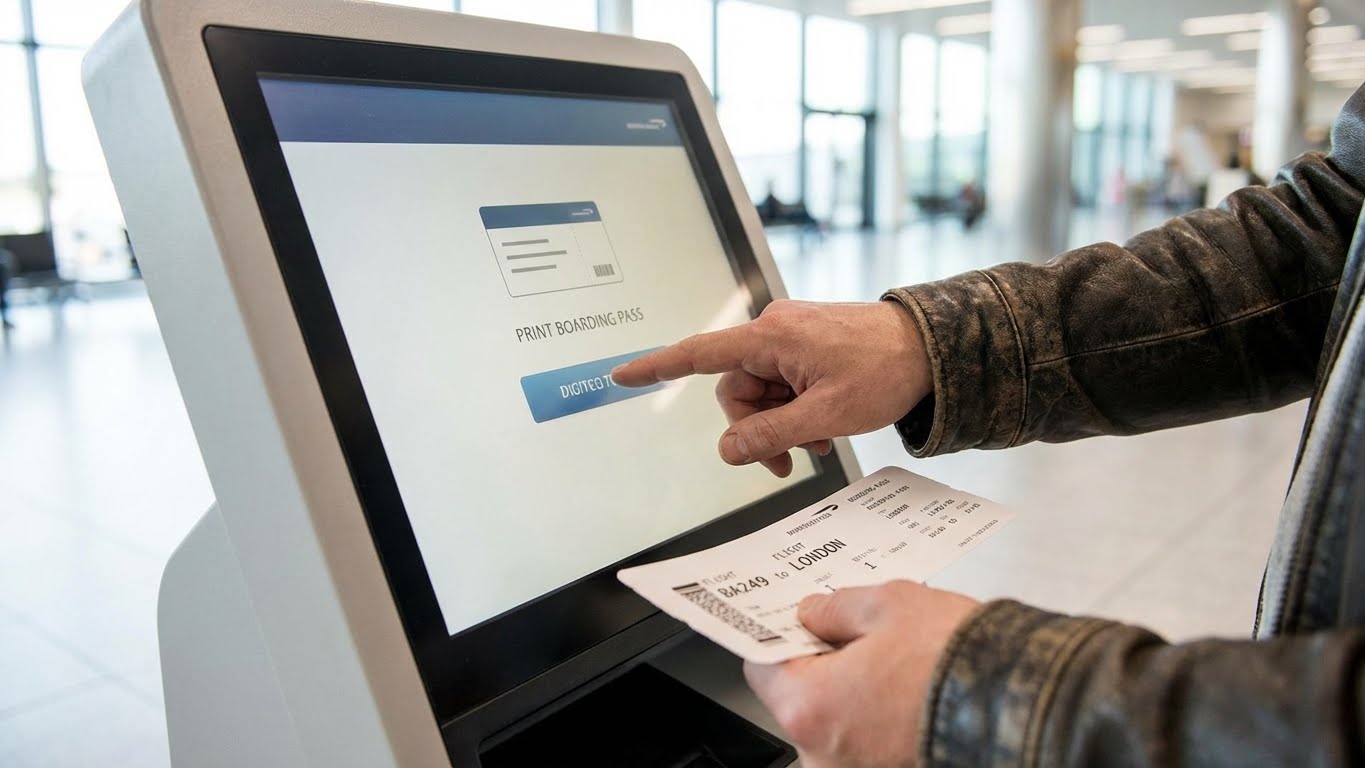
Airport self-check-in kiosks are automated machines installed in airport terminals that allow passengers to check in for their flights without direct assistance from airline staff. These kiosks perform many of the same tasks as traditional check-in counters but in a self-service format.
Their main purpose is to streamline the check-in process and reduce congestion at staffed counters. By using kiosks, passengers can complete routine tasks quickly, while airline staff can focus on special cases or customer service needs.
How Airport Self-Check-In Kiosks Work
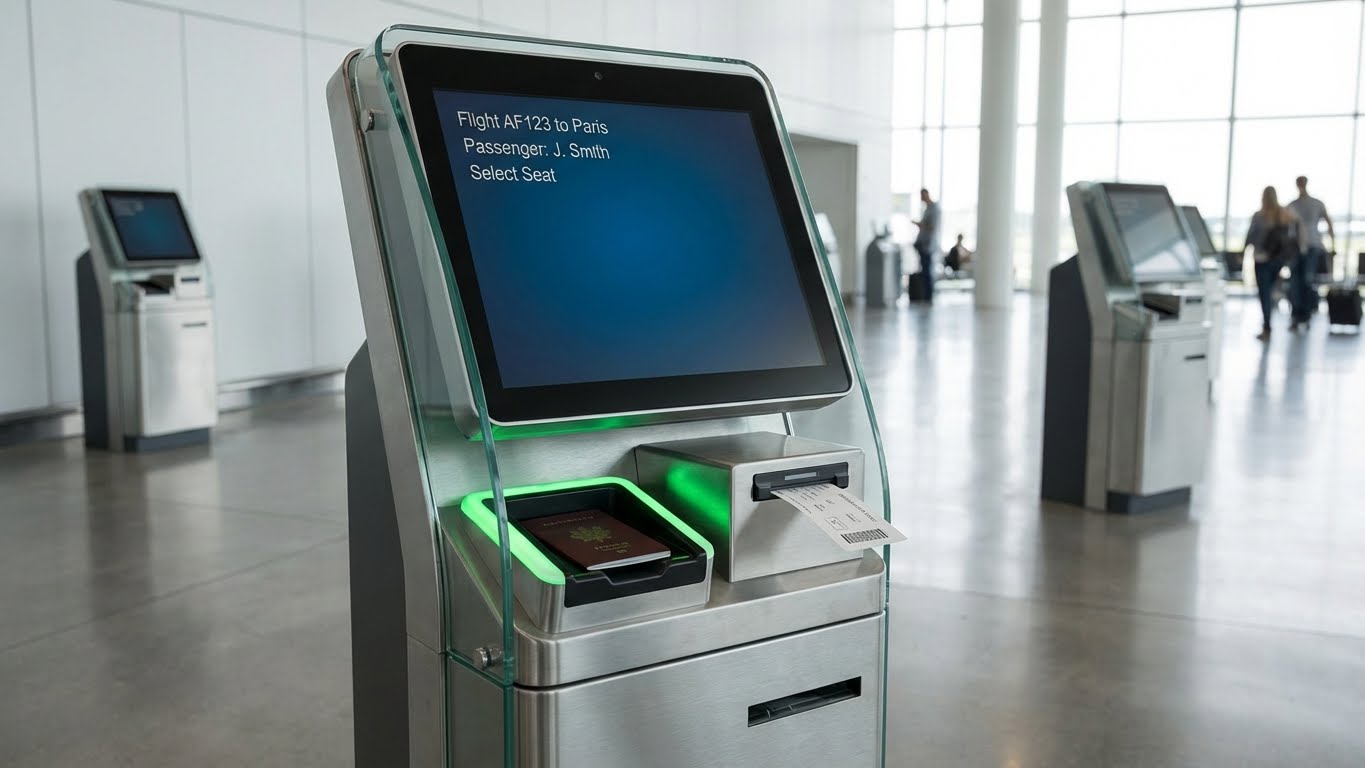
Airport self-check-in kiosks follow a structured and standardized process designed to be simple and intuitive for passengers. The workflow typically begins with passenger identification and ends with the issuance of travel documents.
The general working process includes:
- Passenger identification using booking reference, e-ticket number, or passport
- Retrieval of flight and booking details from airline systems
- Confirmation or selection of seat and travel preferences
- Printing of boarding pass and, in some cases, baggage tags
This process is integrated with airline departure control systems to ensure accuracy and real-time updates.
Key Features of Airport Self-Check-In Kiosks
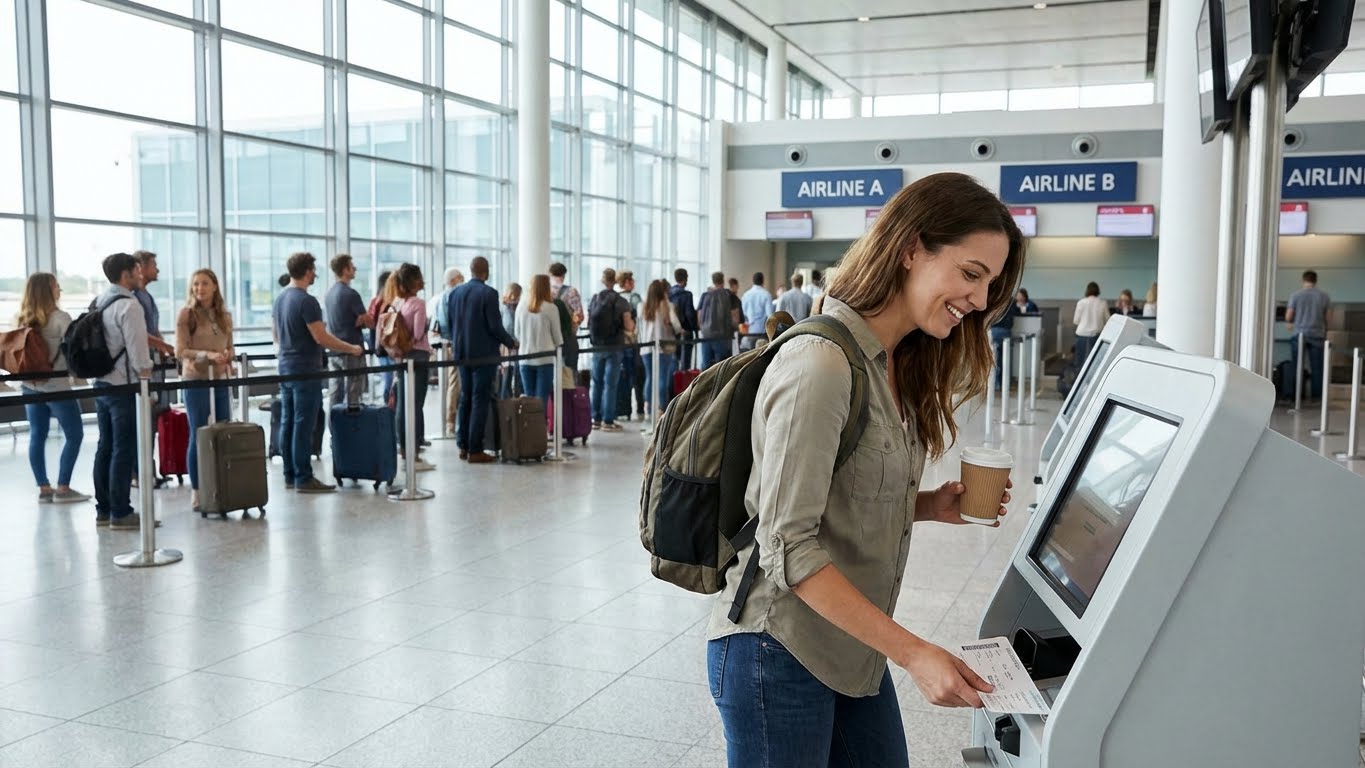
Airport self-check-in kiosks are equipped with multiple features to support a wide range of passengers and airline requirements. These features are designed to make the check-in experience fast, accessible, and reliable.
Common features include:
- Touchscreen interface for easy navigation
- Multi-language support to assist international travelers
- Passport and ID scanning for passenger verification
- Seat selection and seat change options
- Boarding pass printing and digital boarding pass support
These features help standardize the check-in experience across different airlines and airports.
Types of Airport Self-Check-In Kiosks
There are several types of airport self-check-in kiosks, each designed to serve specific operational needs. Airports often deploy multiple kiosk types within the same terminal.
The main types include:
- Common-use self-service (CUSS) kiosks used by multiple airlines
- Airline-dedicated kiosks branded and configured for a single airline
- Baggage-enabled kiosks that support self-tagging of luggage
- Biometric-enabled kiosks that use facial recognition or fingerprint verification
The choice of kiosk type depends on airport size, passenger volume, and airline requirements.
Benefits of Airport Self-Check-In Kiosks for Passengers
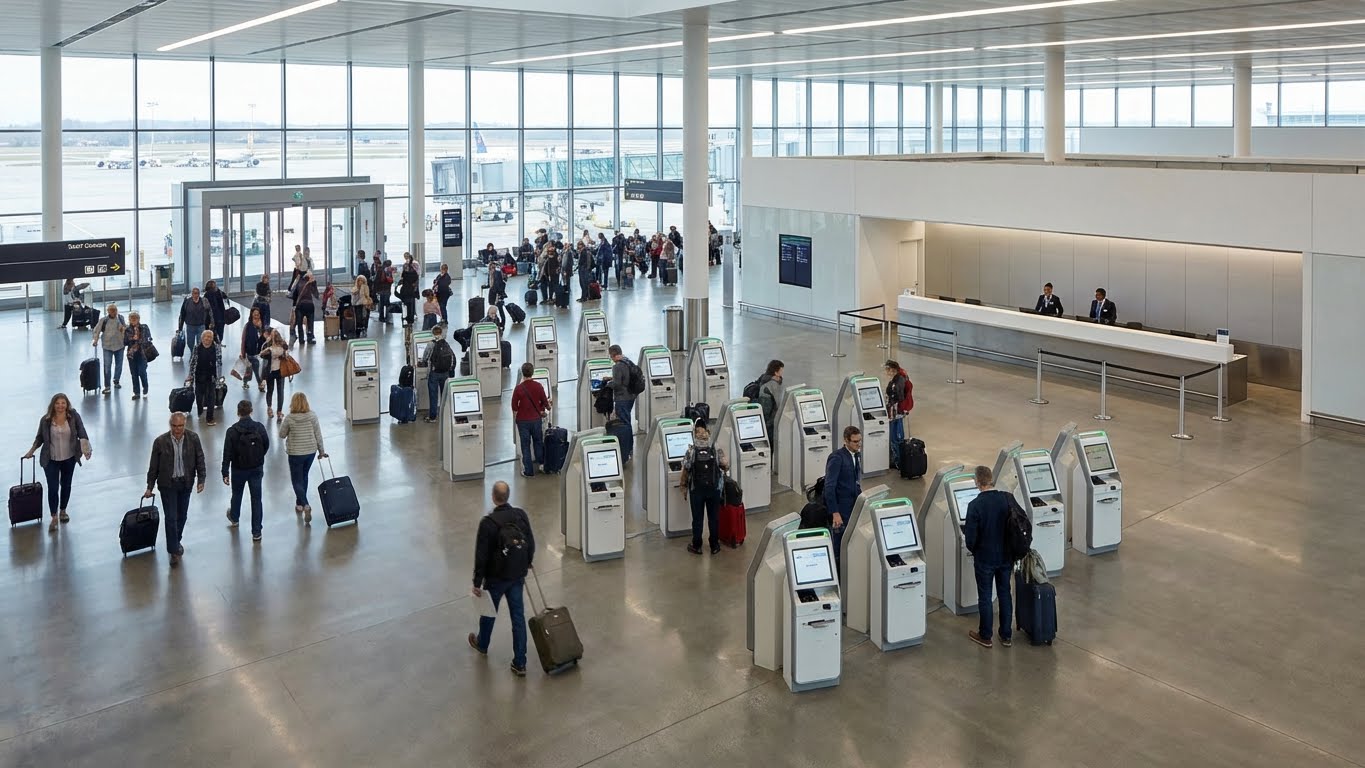
For passengers, self-check-in kiosks offer a more convenient and predictable airport experience. They reduce the time spent waiting in lines and give travelers greater control over their check-in process.
Key passenger benefits include:
- Shorter waiting times during peak travel hours
- Faster movement through the airport terminal
- Flexibility to choose or change seats independently
- Reduced stress, especially for frequent travelers
These benefits contribute to a smoother and more efficient journey from arrival at the airport to boarding.
Benefits of Airport Self-Check-In Kiosks for Airports and Airlines
Airports and airlines benefit significantly from the adoption of self-check-in kiosks. These systems help improve operational efficiency while managing growing passenger volumes.
Major benefits include:
- Lower staffing requirements at traditional check-in counters
- Better passenger flow and reduced terminal congestion
- More efficient use of floor space
- Ability to handle peak traffic without adding physical counters
For airlines, kiosks also support consistent service delivery across multiple airports.
Common Technologies Used in Self-Check-In Kiosks
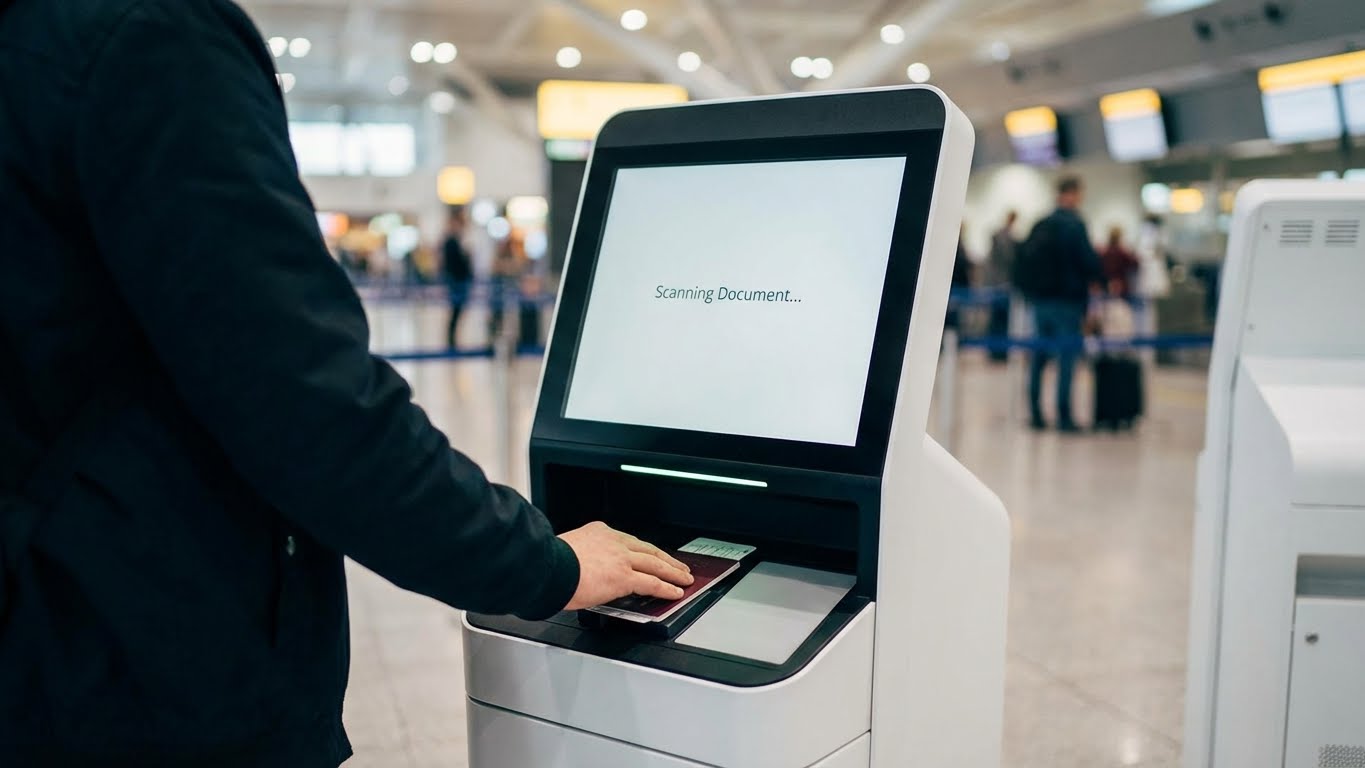
Airport self-check-in kiosks rely on a combination of hardware and software technologies to function accurately and securely. These technologies are designed to meet aviation industry standards.
Commonly used technologies include:
- High-resolution touchscreens for user interaction
- Barcode and QR code scanners for boarding passes and tickets
- Passport readers compliant with international travel document standards
- Integration with airline and airport IT systems
These technologies ensure smooth communication between the kiosk and backend airline systems.
Security and Compliance in Airport Self-Check-In Kiosks
Security and regulatory compliance are critical aspects of airport self-check-in kiosks. These systems must follow aviation, immigration, and data protection regulations.
Key security and compliance measures include:
- Secure handling of passenger data
- Compliance with aviation authority guidelines
- Encrypted communication with airline systems
- Controlled access to kiosk hardware and software
These measures help protect passenger information and maintain trust in self-service systems.
Challenges and Limitations of Airport Self-Check-In Kiosks
Despite their advantages, self-check-in kiosks also face certain challenges. Not all passengers are comfortable using self-service technology, and some situations still require human intervention.
Common challenges include:
- Difficulty for first-time or elderly passengers
- Technical malfunctions or system downtime
- Inability to handle complex travel scenarios such as visa checks
- Need for ongoing maintenance and software updates
These limitations mean kiosks are typically used alongside traditional check-in counters.
Best Practices for Implementing Self-Check-In Kiosks at Airports
Successful kiosk implementation requires careful planning and ongoing management. Airports must ensure that kiosks are accessible, reliable, and easy to use.
Best practices include:
- Placing kiosks in clearly visible and accessible locations
- Designing intuitive user interfaces with clear instructions
- Providing on-site staff assistance during initial rollout
- Scheduling regular maintenance and performance checks
Following these practices helps maximize kiosk usage and passenger satisfaction.
Self-Check-In Kiosks vs Traditional Check-In Counters
Self-check-in kiosks and traditional check-in counters serve the same purpose but operate differently. Each has its own strengths depending on passenger needs and airport operations.
Key comparison points include:
- Faster processing times at kiosks for standard check-ins
- Lower staffing costs for kiosk-based operations
- Greater flexibility at counters for special cases
- Preference for kiosks among frequent travelers
Most airports use a hybrid approach, combining both options to meet diverse passenger requirements.
Real-World Use Cases of Airport Self-Check-In Kiosks
Airport self-check-in kiosks are widely used across different types of airports and travel scenarios. Their role varies based on airport size and passenger traffic.
Common use cases include:
- Domestic airports handling high passenger volumes
- International terminals supporting multiple airlines
- Major hub airports managing peak-hour congestion
These use cases demonstrate the scalability and adaptability of kiosk-based check-in systems.
Conclusion
Airport self-check-in kiosks have become an essential part of modern airport operations. They help airports and airlines manage increasing passenger numbers while improving efficiency and reducing wait times. For passengers, kiosks provide convenience, control, and a smoother travel experience.
As air travel continues to grow, self-check-in kiosks are expected to remain a standard solution alongside traditional check-in counters. Their role in enhancing operational efficiency and passenger satisfaction makes them a valuable component of today’s airport infrastructure.