Fingerprint sensors have become a core component of modern security and authentication systems, powering everything from smartphone unlock to border control and physical access control. By capturing and analyzing the unique ridge–valley patterns of a fingerprint, these sensors provide a convenient yet robust way to verify identity. This blog explains the four main fingerprint sensor types (optical, capacitive, ultrasonic, and thermal), their working principles, pros and cons, and most suitable applications.
What Are Fingerprint Sensors?
A fingerprint sensor is a biometric device that captures the pattern of ridges and valleys on a finger and converts it into a digital representation for identification or authentication. In most systems, the sensor does not store the raw image but a mathematical template derived from distinctive features such as ridge endings and bifurcations, which can later be matched against templates in a database.
In general, fingerprint sensors follow a similar pipeline even though the capture technology differs. First, the sensor acquires an image or signal corresponding to the fingerprint pattern, then onboard or host algorithms enhance the data, extract minutiae or other features, and finally perform matching to decide whether the presented fingerprint corresponds to a stored identity.
Optical Fingerprint Sensors

Optical fingerprint sensors are the oldest and one of the most widely used fingerprint technologies, relying on light and imaging to capture a finger pattern. They effectively take a high‑contrast picture of the fingerprint and then process it to generate a biometric template.
How Optical Sensors Work (Light Reflection and Image Capture)
An optical sensor operates by illuminating the finger and capturing the reflected light using an image sensor such as CCD or CMOS. The ridges of the fingerprint make direct contact with the glass surface and reflect light differently than the air‑filled valleys, creating a contrast pattern that can be imaged and digitized.
Typically, the user places a finger on a glass or acrylic platen, below which LEDs or another light source illuminate the contact area. A prism and lens system then directs the reflected light to the imaging array, and an analog‑to‑digital converter transforms the captured signal into a grayscale image that can be enhanced and analyzed.
Main Components of Optical Sensors
A typical optical fingerprint sensor contains several key hardware elements:
- Glass or protective platen that the user touches, designed to be scratch‑resistant and optically clear
- Illuminating light source, often an array of LEDs, providing consistent lighting of the finger area
- Prism or optical block that directs reflected light from the finger surface toward the imaging path
- Lens system that focuses the reflected light onto a CCD or CMOS image sensor
- Image sensor (CCD/CMOS) that captures the ridge–valley pattern as a 2D image
- Microcontroller or digital signal processor (MCU/DSP) that handles control, analog‑to‑digital conversion, image enhancement, and feature extraction
- Communication interfaces such as UART, SPI, or USB to transmit digital data to a host system
Advantages of Optical Sensors
Optical fingerprint sensors are known for being mature, stable, and relatively cost‑effective. They can provide high‑resolution images and are widely available in modular forms, making them simple to integrate into many systems.
Key advantages include:
- Good image quality under controlled conditions, enabling reliable minutiae extraction
- Competitive pricing due to long‑standing manufacturing experience and economies of scale
- Robustness and durability when equipped with hardened glass, suitable for high‑throughput environments like enrollment stations
Common Applications of Optical Sensors
Because of their affordability and established performance, optical sensors are widely deployed in fixed installations. They are common in law‑enforcement AFIS/ABIS systems, civil ID enrollment, border control kiosks, and time‑and‑attendance terminals.
They are also used in physical access control readers, safe locks, and some PC peripherals where device thickness is less constrained than in ultra‑slim smartphones. These deployments value reliability and cost over ultra‑compact size, which suits optical modules well.
Optical sensors also remain the default choice for budget and mid-range smartphones in 2026, where cost efficiency still outweighs the appeal of ultrasonic accuracy. Optical sensors remain the mainstay for budget and mid-tier devices due to cost efficiencies, though they face growing consumer pressure around speed and reliability compared to flagship-grade alternatives.
Limitations of Optical Sensors
Despite their advantages, optical sensors face some practical constraints. The optical stack—glass, prism, and lens—can make modules bulkier, which is not ideal for ultra‑thin consumer devices.
They can also be more susceptible to issues with very dirty, oily, or highly reflective surfaces, and in some configurations may be at risk of spoofing using high‑quality printed or molded images if liveness detection is not implemented. Proper design and anti‑spoofing algorithms can mitigate these risks but add complexity and processing overhead.
Capacitive Fingerprint Sensors
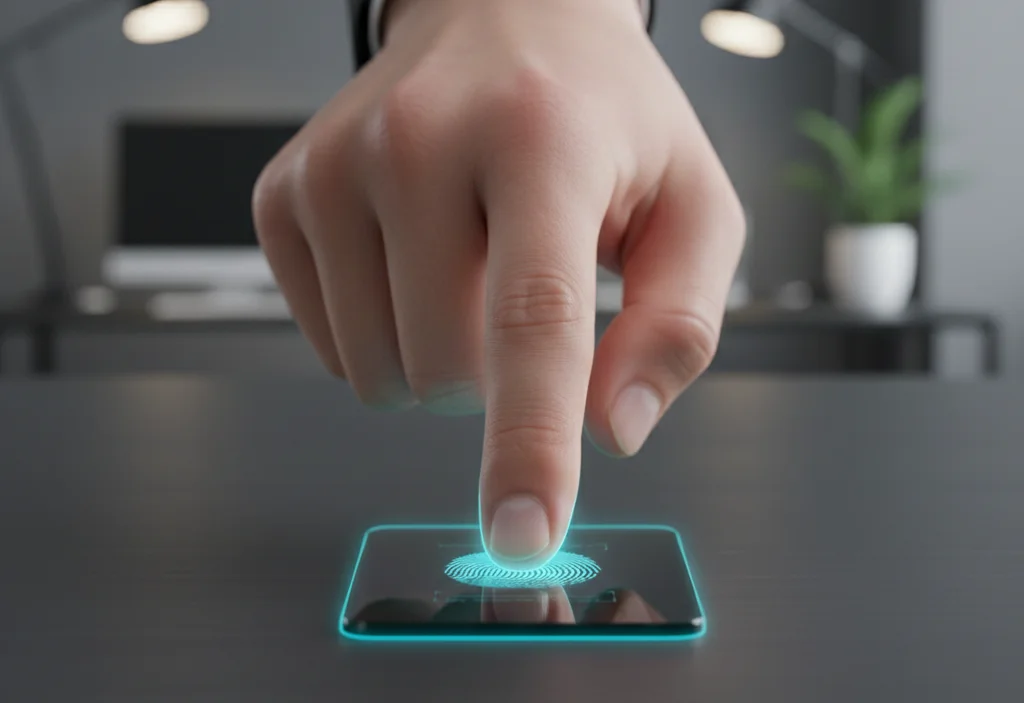
Capacitive fingerprint sensors, sometimes called touch fingerprint scanners, use electrical properties instead of light to capture the ridge-valley pattern. They have become the dominant technology in smartphones and many compact consumer devices due to their small size and high accuracy.
Working Principle (Capacitance Changes from Ridges and Valleys)
A capacitive sensor consists of an array of tiny capacitor plates embedded beneath the sensing surface. When a finger touches the surface, the ridges come into closer contact with the plates than the air‑filled valleys, creating local differences in capacitance across the array.
A readout circuit measures these variations by sequentially scanning the capacitor matrix and converting the analog capacitance changes into voltage signals that represent the ridge–valley structure. An analog‑to‑digital converter then produces a digital image or height map that can be further processed into a fingerprint template.
Key Components of Capacitive Sensors
Modern capacitive modules are highly integrated but still follow a common internal structure:
- Sensor array composed of conductive elements, typically patterned on a silicon substrate
- Dielectric or insulating layer that forms the capacitor structure and protects the conductive electrodes
- Readout circuitry that scans the capacitor array, senses minute changes in charge, and amplifies the resulting signals
- Analog‑to‑digital converter that transforms analog signals into a digital fingerprint image
- Controller or microprocessor that performs tasks such as signal filtering, normalization, image enhancement, and feature extraction
- Interfaces to external hosts or secure elements for template storage and matching
Benefits of Capacitive Sensors
Capacitive sensors are widely regarded for their accuracy and compact form factor. Because they detect electrical properties at the skin surface, they are less easily fooled by simple printed images than purely optical systems without liveness protection.
Key advantages include:
- High spatial resolution and good edge definition, supporting reliable minutiae extraction
- Ease of miniaturization using standard CMOS and silicon processes, enabling very small sensor areas
- Fast response times and low power consumption suitable for battery‑powered devices
Popular Uses of Capacitive Sensors
Capacitive fingerprint sensors are common in smartphones, tablets, and laptops, often integrated into power buttons, home keys, or side frames. They are also widely adopted in payment cards, mPOS terminals, and embedded modules where compactness and low power are critical.
Beyond consumer electronics, capacitive readers appear in logical access control, secure tokens, and industrial control panels that require quick, convenient user verification. These deployments benefit from the sensors’ small footprint and relatively high spoof resistance when combined with secure matching.
Also Check: What Is a Fingerprint? Patterns, Types, Trends (2025)
Challenges and Limitations of Capacitive Sensors
Like any technology, capacitive sensors have operating constraints. Very dry, extremely calloused, or heavily worn skin can reduce capacitance contrast and make capture more difficult, sometimes requiring several attempts.
Excess moisture, sweat, or conductive contaminants may also affect readings if not managed by protective coatings and good signal processing. In addition, because the sensing area is often small in consumer devices, partial prints are captured, which increases the importance of robust matching algorithms and appropriate security thresholds.
Ultrasonic Fingerprint Sensors
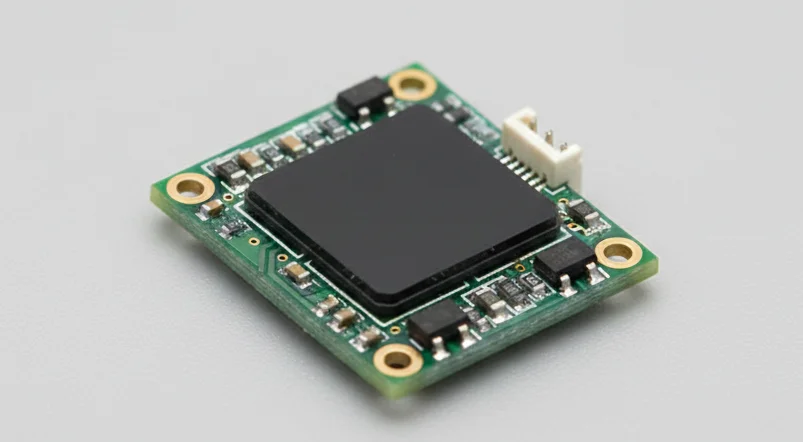
Ultrasonic fingerprint sensors use high‑frequency sound waves instead of light or capacitance to build a detailed three‑dimensional representation of the fingerprint. They are known for strong performance under challenging surface conditions and are increasingly used in in‑display smartphone readers.
Ultrasonic Technology and the Pulse‑Echo Principle
An ultrasonic fingerprint sensor works similarly to a miniaturized sonar system, sending ultrasonic pulses toward the finger and listening for returning echoes. The ridges and valleys, along with pores and other microstructures, reflect the sound differently, allowing the system to reconstruct a 3D contour of the skin surface and subsurface features.
The process typically follows a pulse‑echo principle. A transmitting transducer emits short bursts of high‑frequency sound through a coupling medium; as the waves encounter variations in acoustic impedance at the finger surface and internal structures, part of the energy is reflected back to a receiving transducer array, where timing and amplitude of echoes are analyzed to form an image.
Core Components of Ultrasonic Sensors
Ultrasonic fingerprint modules incorporate acoustical and electronic elements into a compact stack:
- Ultrasonic transducer array that generates and receives sound waves at ultrasonic frequencies
- Acoustic coupling layers and substrates, often including ceramics, to support efficient transmission and mechanical stability
- Driver electronics that excite the transducers with controlled electrical pulses and manage timing
- Signal processing circuitry and a microprocessor that interpret echo patterns and reconstruct the fingerprint’s 3D structure
- Interfaces integrated into chipsets or modules, sometimes embedded directly under OLED or other display panels for in‑screen sensing
Strengths of Ultrasonic Sensors
Ultrasonic technology offers several performance benefits over conventional optical and capacitive sensors in difficult real‑world conditions. Because the sound waves can penetrate thin layers of contamination, these sensors can capture usable images even when the finger is slightly wet, oily, or dirty.
Key advantages include:
- High accuracy and rich 3D information, including ridge height and pore details, supporting strong matching performance
- Better robustness against some types of spoofs since the system measures depth and subsurface characteristics rather than only surface contrast
- Ability to operate through display glass, enabling in‑display fingerprint readers without a separate exposed sensor area
Use Cases of Ultrasonic Sensors
Ultrasonic fingerprint sensors have gained prominence in flagship smartphones with in‑display fingerprint unlock features. Many mobile platforms have integrated ultrasonic sensing into SoCs and display stacks to deliver fast, convenient biometric authentication without dedicated hardware buttons.
Beyond phones, ultrasonic sensors are being evaluated for secure payment cards, door locks, and high‑security systems where resistance to environmental contaminants and sophisticated spoofing is especially important. Their ability to provide consistent performance across varied conditions makes them attractive for demanding applications.
This shift has accelerated through 2026, with premium smartphone makers increasingly moving away from optical in-display sensors toward 3D ultrasonic modules for their flagship lines. Qualcomm’s latest 3D Sonic Max transducer, for example, can capture a 600 mm² fingerprint image in 250 milliseconds and continues to work reliably even with damp or oily skin, a gap that keeps widening between premium and budget-tier authentication hardware.
Cost Considerations and Limitations
Ultrasonic fingerprint sensors tend to be more complex and expensive than basic optical or small capacitive sensors. They require careful integration with displays or housings and sophisticated signal processing, which can increase development and unit costs.
In some implementations, capture speed and power consumption may be higher than simpler technologies, although ongoing optimizations continue to narrow these gaps. As with any biometric system, performance can still be affected by extreme environmental conditions or user behavior, necessitating careful tuning.
Thermal Fingerprint Sensors
Thermal fingerprint sensors rely on temperature differences between fingerprint ridges, valleys, and surrounding air to form an image rather than optical reflection or electric fields. They are less common than optical or capacitive sensors but are used in specific security and industrial applications.
Operation Based on Temperature Differences
A thermal sensor detects the heat flow or temperature contrast created when a finger contacts the sensing surface. Ridges touch the sensor directly and transfer more heat, while valleys remain partially separated by air, resulting in cooler regions.
By mapping these temperature variations over an array of thermal sensing elements, the device reconstructs the ridge–valley pattern. Some designs operate passively, relying on natural temperature differences, while active types may briefly heat or pulse the surface to enhance contrast between skin and background.
Structure and Use of Pyro‑Electric Materials
Many thermal fingerprint sensors integrate pyro‑electric or thermally sensitive materials on a silicon die. Pyro‑electric materials generate an electric charge in response to changes in temperature, which can be measured by associated circuitry.
Inside the die, transistor structures and readout electronics convert these temperature‑induced charges into signals that correspond to the local heat pattern across the array. A microprocessor processes these signals, creates a digital fingerprint image, and extracts features to build a biometric template.
Advantages of Thermal Sensors
Thermal sensors offer several security and usability benefits under specific conditions. Because they measure temperature gradients, they can be relatively insensitive to ambient lighting and may be harder to spoof with flat, room‑temperature images or replicas.
They can also function in both wet and dry environments when properly designed, as the thermal contrast between skin ridges and surrounding regions can still be detected even when moisture is present. These properties make them attractive for certain high‑security or harsh‑environment applications.
Environmental Sensitivity and Processing Speed
A key consideration with thermal sensors is their sensitivity to environmental conditions. Large ambient temperature swings, strong airflow, or rapidly changing surface temperatures can affect the stability of the thermal image and may require compensation techniques.
Thermal image formation and stabilization can also take longer than purely electrical or optical capture, potentially increasing the time needed to acquire a high‑quality fingerprint. As a result, these sensors can be slower than some alternative technologies in certain implementations.
Typical Applications of Thermal Sensors
Thermal fingerprint sensors have been used historically in swipe‑type readers and secure access systems, where users slide a finger over a narrow sensing strip. They appear in some biometric access control products and secure login solutions for computers and terminals.
These deployments leverage the sensors’ resistance to some spoofing methods and their ability to operate in varied conditions, provided that environmental influences are managed. However, due to cost and integration complexity compared with more mainstream technologies, thermal sensors remain more specialized.
Comparison of Fingerprint Sensor Types
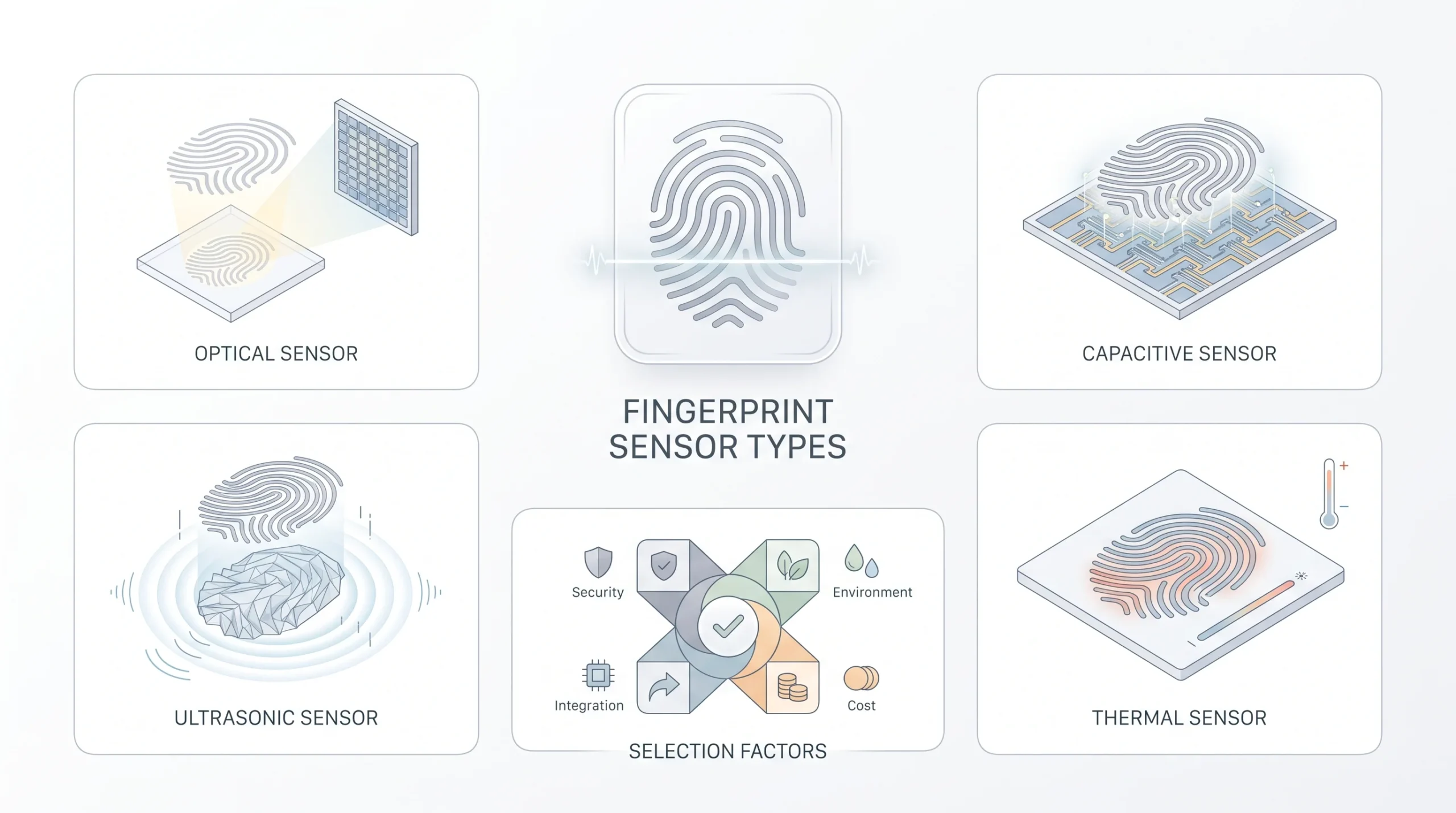
Each fingerprint sensor type brings distinct trade‑offs in technology, performance, cost, and integration complexity. Understanding these differences is essential when selecting a solution for a particular use case.
Below is a simplified comparison aligned with the characteristics discussed above.
| Sensor type | Core technology (capture principle) | Typical accuracy & robustness | Relative cost level | Typical applications |
| Optical | Visible light reflection, 2D imaging with CCD/CMOS | Good quality in controlled conditions; sensitive to surface contamination and simple spoofs without liveness | Generally low to medium | AFIS, enrollment, access control readers, time‑attendance, kiosks |
| Capacitive | Capacitance changes from ridges and valleys across electrode array | High accuracy for contact prints; performance may drop with very dry or very wet skin | Medium in consumer‑scale volumes | Smartphones, laptops, payment cards, compact access devices |
| Ultrasonic | Ultrasonic pulse‑echo, 3D imaging of surface and subsurface | Very high detail and robustness under dirt, oil, and some moisture; strong anti‑spoof potential | Medium to high due to complexity | In‑display smartphone readers, high‑security devices, advanced cards and locks |
| Thermal | Temperature differences between ridges, valleys, and air using thermal or pyro‑electric sensors | Good security under controlled conditions; sensitive to ambient temperature and airflow; slower capture | Often higher due to specialized materials | Niche access control, terminals, specialized industrial or secure systems |
When choosing a sensor type, it is important to consider environmental conditions, required security level, device form factor, and cost constraints. For example, compact mobile devices often favor capacitive or ultrasonic sensors, whereas large enrollment stations and access terminals can efficiently use optical modules.
Fingerprint Sensor Trends to Watch in 2026
The fingerprint sensor market is shifting in ways that matter for anyone specifying hardware for a new device or access control system.
Ultrasonic sensors are steadily displacing optical modules at the premium end. Ultrasonic sensors are increasingly adopted over optical sensors thanks to their superior accuracy and performance across varied conditions, and high-end smartphones are moving toward 3D ultrasonic technology because it is harder to spoof and delivers a more seamless unlock experience. Optical sensors have not disappeared, though. They remain the practical choice for cost-sensitive devices, since ultrasonic modules still carry a meaningful price premium tied to their added manufacturing and signal-processing complexity.
A second trend worth noting is the push into foldable and edge-to-edge displays. Manufacturers are integrating in-display fingerprint sensors into foldable smartphones and edge-to-edge screens, which keeps the full-screen look intact while preserving secure biometric authentication. This has pushed sensor makers to develop flexible sensing membranes that can perform reliably on curved or bendable surfaces, something that was not commercially viable a few years ago.
For teams evaluating sensor types today, the practical takeaway is this: ultrasonic is becoming the default for high-security, high-volume consumer devices, while optical and capacitive technology continue to serve cost-constrained and industrial use cases where a fully in-display footprint isn’t the priority.
Conclusion
Optical, capacitive, ultrasonic, and thermal fingerprint sensors all serve the same fundamental purpose: capturing the unique ridge-valley pattern of a fingerprint. They do so, however, using very different physical principles. Optical sensors emphasize mature, cost‑effective imaging; capacitive sensors deliver compact, high‑accuracy touch sensing; ultrasonic devices add robust 3D imaging and in‑display integration; and thermal sensors provide niche options based on temperature contrast.
Selecting the right fingerprint sensor type depends on application requirements for size, cost, environment, and security, and understanding these trade‑offs enables more informed design and procurement decisions. As biometric adoption continues to grow, these technologies will keep advancing while maintaining their distinct roles across consumer, enterprise, and government solutions.
Frequently Asked Questions
1. Which fingerprint sensor type is the most secure?
Ultrasonic sensors generally offer the strongest resistance to spoofing because they capture 3D depth information, including ridge height and pore structure, rather than a flat surface image. That said, security also depends heavily on liveness detection and how well the matching algorithm is implemented, so a poorly configured ultrasonic system can still underperform a well-designed optical or capacitive one.
2. Why do most smartphones use capacitive or ultrasonic sensors instead of optical?
Capacitive sensors are easy to miniaturize and consume very little power, which suits battery-powered devices. Ultrasonic sensors add the ability to scan through display glass, enabling true in-display unlock. Optical sensors need a bulkier lens and light path, which makes them harder to fit into thin phone bodies, though they’re still common in budget and mid-range models where cost matters more than thickness.
3. Can fingerprint sensors be fooled with a fake fingerprint?
It depends on the sensor type and whether liveness detection is built in. Basic optical sensors without anti-spoofing measures are the most vulnerable to high-quality printed or molded fakes. Capacitive and ultrasonic sensors are harder to fool since they read electrical or acoustic properties that are difficult to replicate with a flat image, but no sensor is completely spoof-proof without proper liveness checks.
4. Do fingerprint sensors work with wet or dirty fingers?
This varies by technology. Optical and capacitive sensors can struggle with excess moisture, oil, or dirt on the finger. Ultrasonic sensors handle these conditions better because sound waves can penetrate thin layers of contamination. Thermal sensors also tend to perform reasonably well in wet conditions since they rely on temperature contrast rather than direct electrical or optical contact.
5. What is the difference between a fingerprint image and a fingerprint template?
Most fingerprint systems don’t store the raw image of your finger. Instead, the sensor extracts distinctive features, such as ridge endings and bifurcations, and converts them into a mathematical template. This template is what gets matched during authentication, and it’s generally not possible to reconstruct the original fingerprint image from it.
6. Why do some fingerprint sensors take longer to scan than others?
Thermal sensors tend to be slower because the temperature contrast between ridges and valleys needs time to stabilize before an accurate reading can be taken. Optical and capacitive sensors are usually faster since they capture data almost instantly, while ultrasonic sensors sit somewhere in between depending on the depth of the 3D scan being performed.
7. Are in-display fingerprint sensors as accurate as physical fingerprint buttons?
Modern in-display ultrasonic sensors have closed most of the accuracy gap with physical capacitive buttons, and in some cases exceed them due to the additional 3D depth data they capture. Optical in-display sensors, which are more common in mid-range phones, are generally a bit more sensitive to screen protectors, low light, and finger placement.
8. Which fingerprint sensor type is best for outdoor or industrial use?
Optical sensors with hardened glass are a common choice for high-throughput industrial and access control settings because they hold up well to repeated use. Thermal sensors are also used in some access control and terminal applications because they’re less affected by ambient lighting, though they can be more sensitive to large temperature swings and airflow.
9. Do screen protectors affect in-display fingerprint sensors?
Yes, particularly with optical sensors, since thick or low-quality screen protectors can interfere with light transmission and reduce scan accuracy. Ultrasonic sensors are generally more tolerant of screen protectors, though manufacturers still recommend using protectors that are specifically rated as compatible with ultrasonic scanning.
10. Why are ultrasonic sensors more expensive than optical or capacitive sensors?
Ultrasonic modules require precision transducer arrays, acoustic coupling layers, and more sophisticated signal processing to reconstruct a 3D image from echo data. This added hardware and processing complexity, along with tighter integration requirements when placed under a display, pushes up both development and unit costs compared to simpler optical or capacitive designs.
11. Can fingerprint sensors be used alongside other biometric methods?
Yes, and this is an increasingly common approach. Many devices now pair fingerprint authentication with facial recognition or PIN-based fallback, so users have more than one way to unlock a device or system. This layered approach helps address situations where a single biometric method might temporarily fail, such as a wet finger or poor lighting for face detection.
12. How do I choose the right fingerprint sensor type for my product or facility?
The right choice depends on your priorities. If cost and proven reliability matter most, optical sensors are a safe option for fixed installations. If you need a compact, low-power solution for a handheld device, capacitive sensors are usually the better fit. If security and performance in tough conditions are the priority, such as with an in-display smartphone reader or a high-security access point, ultrasonic sensors are generally worth the added cost.