School safety has become a top priority for administrators, parents, and policymakers across the world. Educational institutions are no longer just learning spaces; they are environments where hundreds or even thousands of students, teachers, and visitors move daily. Managing who can enter, exit, and move within school premises is critical to maintaining a secure and organized campus.
School access control systems help schools regulate entry points, restrict unauthorized access, and monitor movement in real time. This guide explains what school access control systems are, why they are essential, how they work, and what schools should consider before implementing them.
What Are School Access Control Systems?
School access control systems are security solutions designed to manage and restrict access to school buildings, rooms, and facilities. These systems ensure that only authorized individuals can enter specific areas at specific times.
In a school environment, access control replaces or enhances traditional lock-and-key methods with digital or electronic systems. Access permissions are centrally managed, making it easier for administrators to control and monitor entry.
Key characteristics of school access control systems include:
- Verification of identity before granting access
- Ability to allow or deny entry based on predefined rules
- Recording access events for monitoring and review
Why Access Control Systems Are Essential for Schools
Schools face unique security challenges due to the large number of students and frequent visitors. Open campuses without controlled access can increase safety risks.
Access control systems are essential because they:
- Reduce the risk of unauthorized individuals entering school premises
- Help schools maintain accountability over who is inside the campus
- Support a safer and more controlled learning environment
By managing access points effectively, schools can focus more on education and less on security concerns.
Key Objectives of School Access Control Systems
The main purpose of implementing access control in schools is not surveillance, but safety and organization. These systems are designed to meet specific operational and security objectives.
The key objectives include:
- Preventing unauthorized access to school buildings and restricted areas
- Monitoring movement of staff, students, and visitors
- Supporting quick response during emergencies
- Improving overall administrative control
Common Types of Access Control Systems Used in Schools
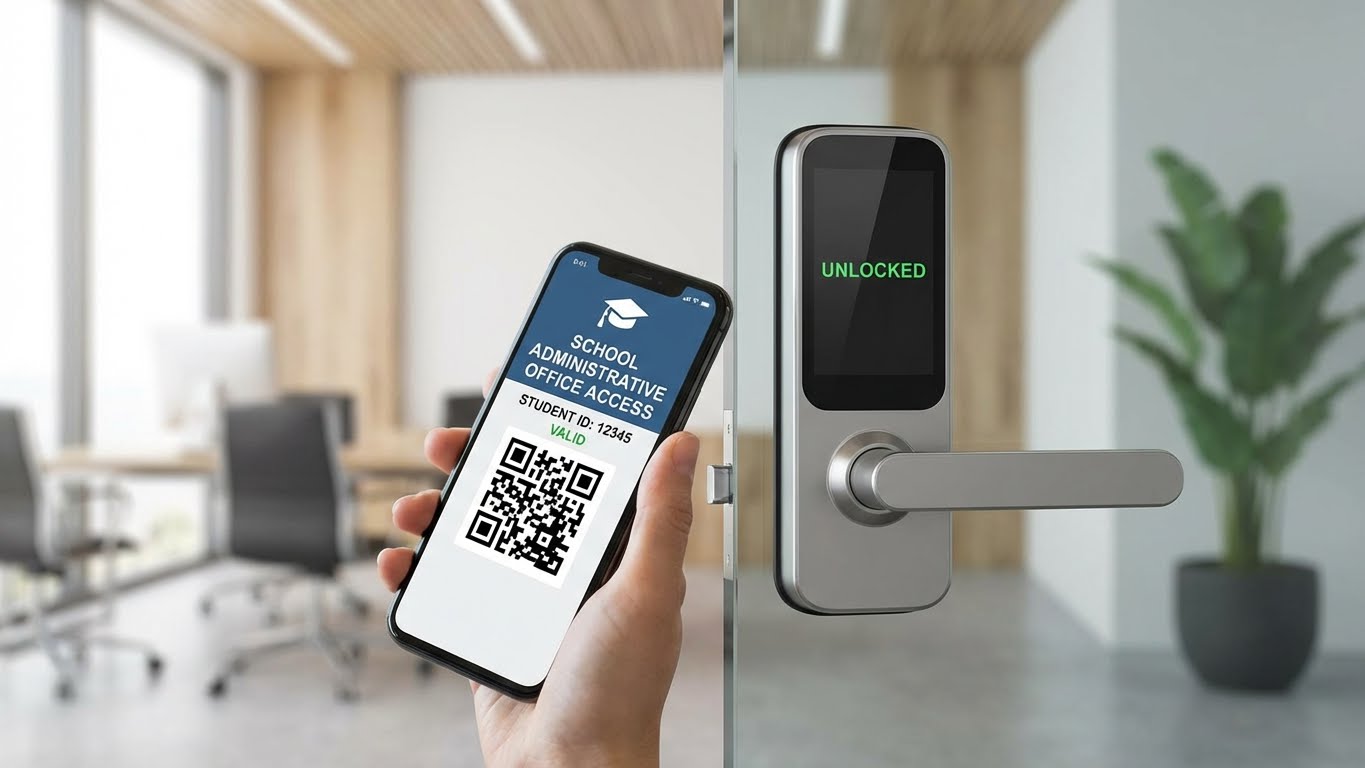
Different schools have different needs based on size, budget, and security requirements. As a result, multiple access control technologies are commonly used in educational institutions.
1. Card-Based Access Control
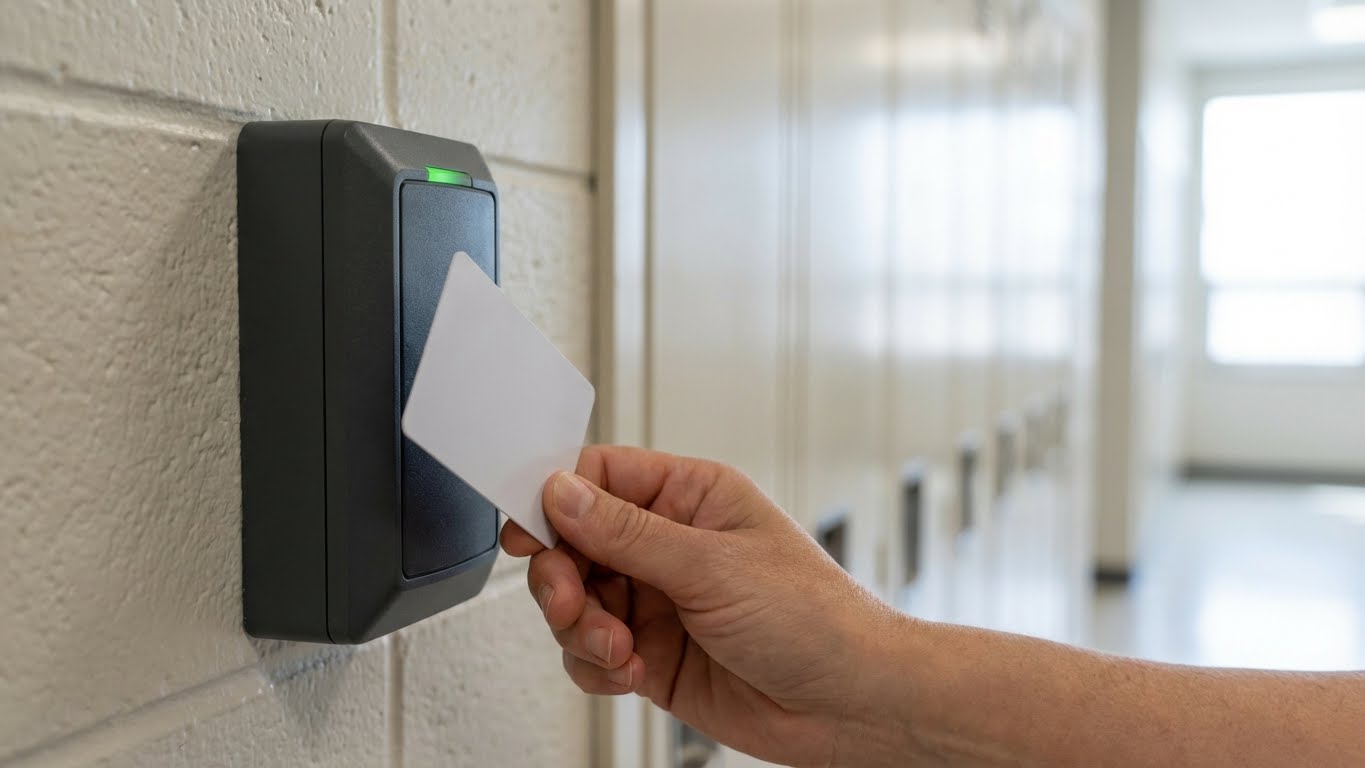
Card-based systems use physical cards that are issued to staff or students. The card is scanned or tapped on a reader to gain access.
Common features include:
- Use of ID cards with magnetic stripe or RFID technology
- Easy issuance and deactivation of cards
- Widely used for staff rooms, libraries, and labs
2. Biometric Access Control
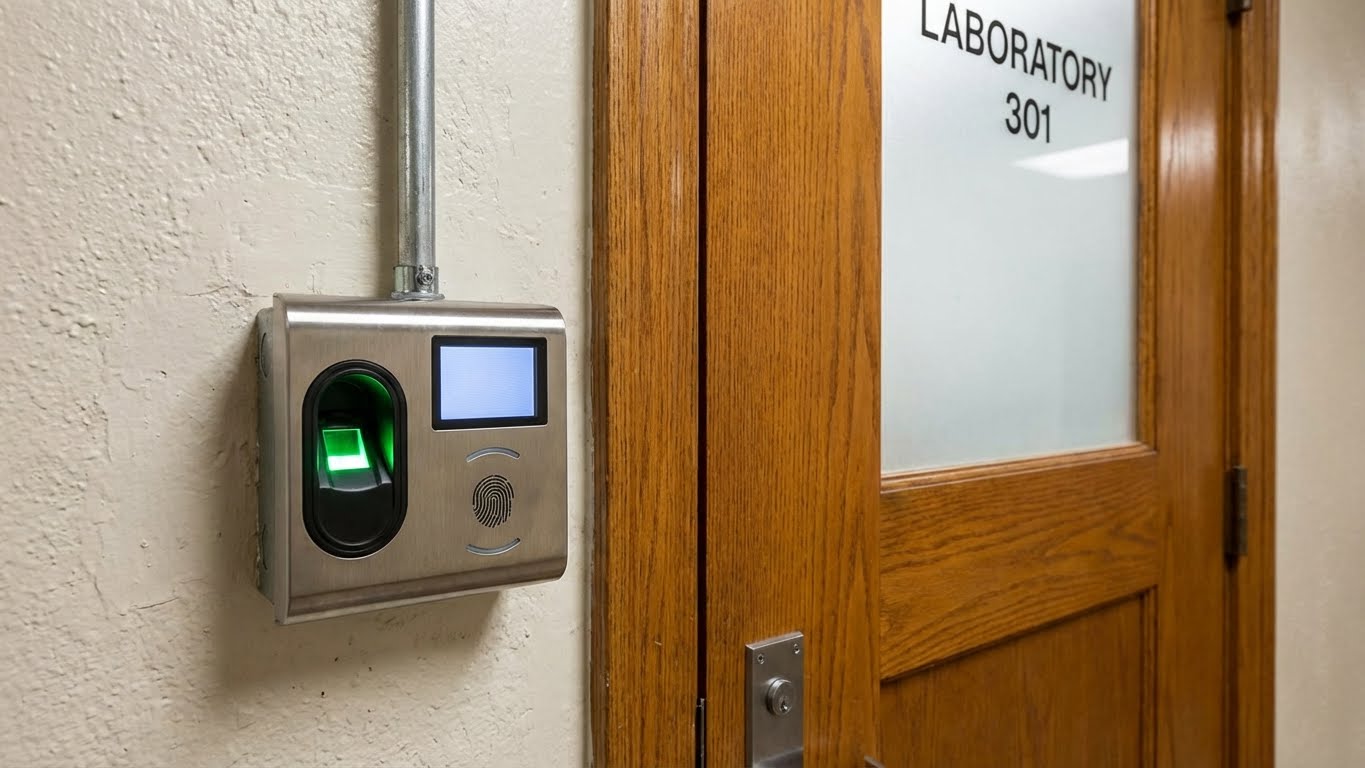
Biometric systems rely on unique physical characteristics of individuals for identification. These systems eliminate the need for physical cards or PINs.
Typical biometric methods include:
- Fingerprint recognition
- Facial recognition
- Iris recognition
These systems are often used in high-security areas where identity verification is critical.
3. PIN and Keypad-Based Systems
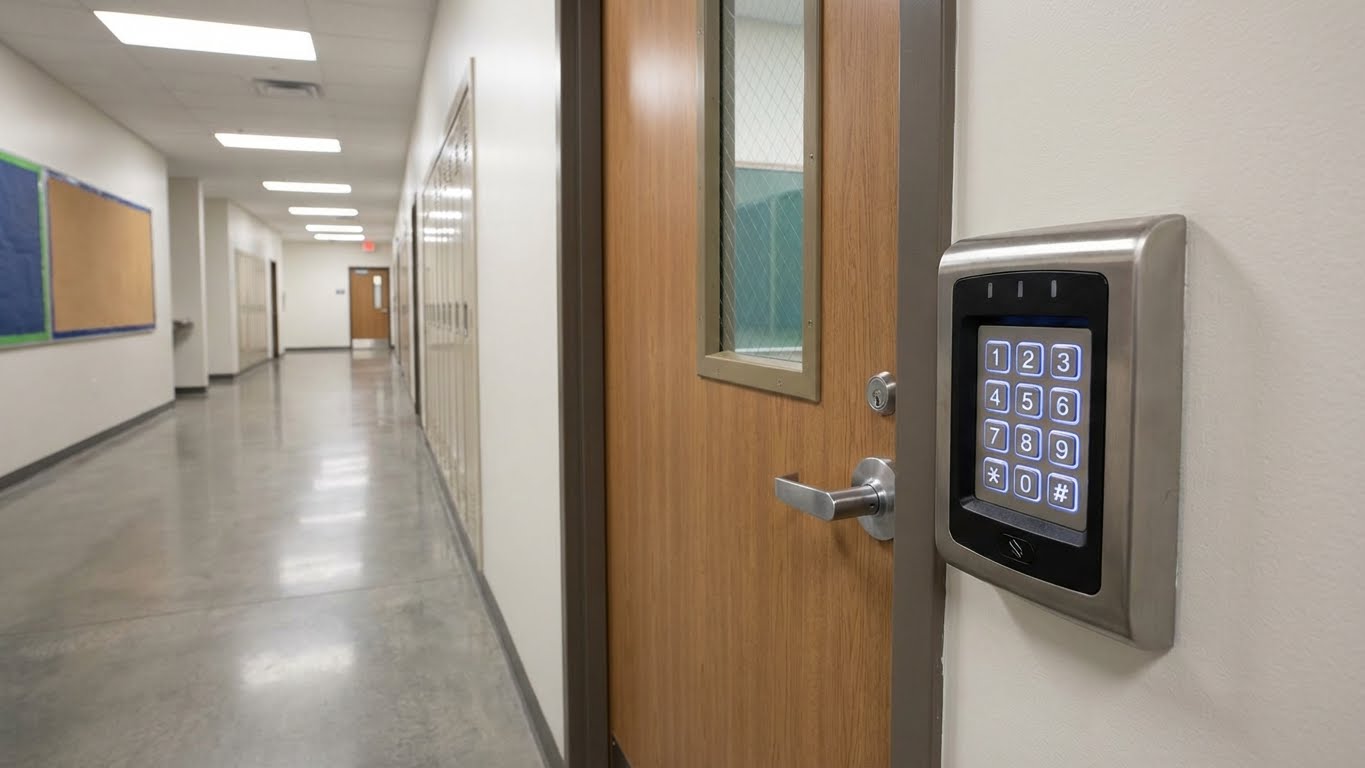
PIN-based systems require users to enter a numeric code on a keypad to unlock doors. These are simpler systems often used where moderate security is sufficient.
Key aspects include:
- Shared or individual PINs
- Easy installation and operation
- Risk of PIN sharing if not managed properly
4. Mobile and Smart Access Systems
Mobile access systems allow authorized users to unlock doors using smartphones or smart devices.
Key features include:
- App-based access credentials
- Remote access management
- Useful for administrators and authorized staff
Key Components of a School Access Control System
A school access control system consists of multiple hardware and software components working together to manage access.
The main components include:
- Access control panels or controllers that process access requests
- Readers such as card readers, biometric scanners, or keypads
- Electronic locks and door hardware
- Centralized software for monitoring and management
Each component plays a role in ensuring secure and reliable access control.
How School Access Control Systems Work
School access control systems follow a structured process to grant or deny access. The process begins when a user attempts to enter a secured area.
The basic working process involves:
- User presents credentials (card, biometric, PIN, or mobile access)
- System verifies the identity against stored data
- Access rules are checked for time and location
- Door unlocks or remains locked based on authorization
All access attempts are logged for monitoring and review.
Areas in Schools Where Access Control Is Commonly Used
Not all areas of a school require the same level of access control. Schools typically apply access restrictions based on sensitivity and usage.
Common areas include:
- Main entrances and exit gates
- Administrative offices
- Laboratories and computer rooms
- Libraries and staff rooms
- Hostels or residential facilities
This targeted approach balances security with accessibility.
Benefits of Implementing Access Control Systems in Schools
Access control systems provide both security and operational benefits for educational institutions.
Key benefits include:
- Enhanced safety for students and staff
- Better control over visitor access
- Reduced dependency on physical keys
- Centralized monitoring and reporting
- Improved accountability
These benefits contribute to a more secure and organized campus environment.
Integration of Access Control with Other School Security Systems
Access control systems are often integrated with other security solutions to create a comprehensive safety framework.
Common integrations include:
- CCTV systems for visual verification of access events
- Alarm systems for unauthorized access attempts
- Attendance and time-tracking systems for staff
Integration allows schools to manage security from a single platform.
Challenges and Considerations for Schools
While access control systems offer many advantages, schools must also consider potential challenges before implementation.
Important considerations include:
- Budget limitations and installation costs
- Ongoing maintenance and technical support
- Data privacy and protection of student information
- Training staff to use the system effectively
Addressing these factors helps ensure successful adoption.
Best Practices for Choosing the Right Access Control System for Schools
Selecting the right access control system requires careful planning and assessment of school-specific needs.
Best practices include:
- Evaluating the size and layout of the campus
- Identifying high-risk and restricted areas
- Choosing scalable systems that can grow with the school
- Ensuring ease of use for staff and administrators
A well-chosen system improves both security and usability.
Compliance, Safety Standards, and Regulations
Schools must ensure that access control systems comply with local safety and data protection regulations. Compliance helps protect students while avoiding legal issues.
Key compliance considerations include:
- Adhering to data privacy laws related to student information
- Ensuring emergency exits remain accessible
- Following fire safety and evacuation regulations
Compliance ensures that security measures do not compromise safety.
Conclusion
School access control systems play a vital role in ensuring a safe and well-managed educational environment. By controlling who can enter and access specific areas, schools can reduce risks, improve accountability, and create a secure learning space for students and staff.
With careful planning, proper implementation, and adherence to safety standards, access control systems can become a long-term asset that supports both security and daily school operations.