In a digital world where passwords are increasingly vulnerable to theft, reuse, and brute-force attacks, organizations and individuals are turning toward more secure and reliable identity verification methods. One of the most powerful solutions to emerge is biometrics.
Biometrics rely on unique physical or behavioral characteristics to identify individuals. Unlike passwords or PINs, biometric traits are difficult to replicate, forget, or share. As a result, biometric systems are now widely used in smartphones, banking, healthcare, border control, workplaces, and cybersecurity.
In this comprehensive guide, we’ll explore what biometrics are, types of biometrics, biometric identification methods, real-world biometrics examples, benefits, limitations, and the future of biometric authentication methods, all explained in simple, easy-to-understand language.
What Are Biometrics?
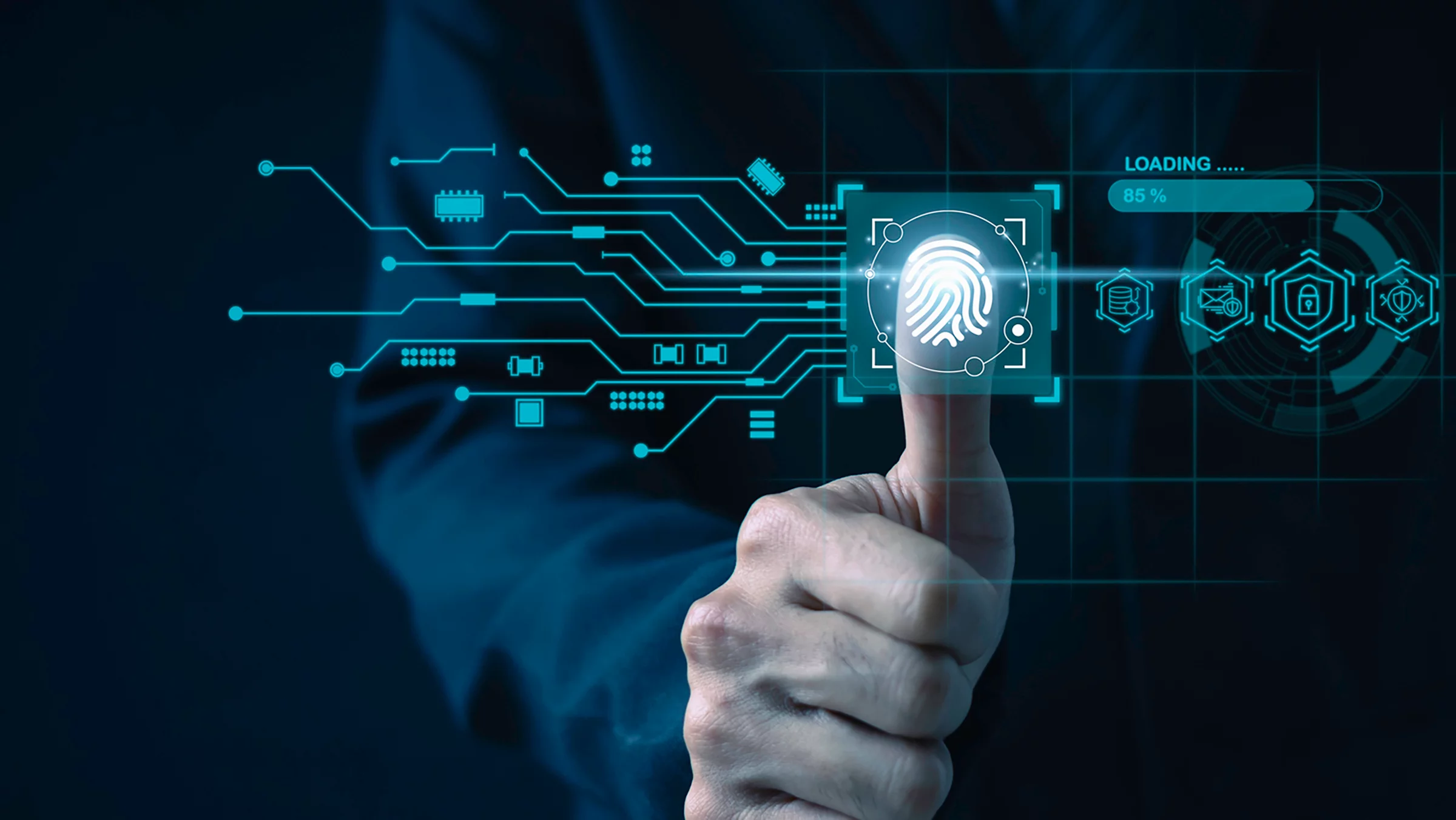
Biometrics refers to the measurement and analysis of unique physical or behavioral characteristics used to identify or verify an individual’s identity. These characteristics are inherent to each person, making them highly reliable for security and access control.
What makes biometrics fundamentally different from a password is that a password is something you know, and knowledge can be shared, guessed, or stolen. A biometric trait is something you are, and that distinction is what makes it so much harder to compromise at scale. When a company’s password database leaks, every affected user has to change their password. When a fingerprint template leaks, the user can’t simply grow a new fingerprint, which is exactly why biometric systems are designed to store irreversible mathematical representations of a trait rather than the raw trait itself.
In general, biometrics are used in two main ways:
Biometric identification: determining who a person is from a database, typically by comparing a captured trait against every record stored in a system (a one-to-many comparison) until a match is found. This is how a fingerprint found at a crime scene gets matched against a national database.
Biometric authentication methods: verifying that a person is who they claim to be, typically by comparing a captured trait against a single stored record tied to a claimed identity (a one-to-one comparison). This is how your phone confirms it’s actually you unlocking it rather than checking your face against every face it has ever seen.
Common Characteristics of Biometrics
Unique to each individual: no two people, aside from rare edge cases like identical twins sharing DNA, produce identical biometric readings.
Difficult to forge or steal: while no system is unbreakable, replicating a fingerprint ridge pattern or an iris texture convincingly enough to fool a sensor requires far more effort than guessing a weak password.
Convenient and fast to use: most biometric checks complete in under a second, removing the friction of typing or remembering credentials.
Non-transferable: you cannot hand your fingerprint to a colleague the way you might share a password, which closes off an entire category of credential-sharing risk.
Biometrics are broadly divided into physiological biometrics (physical traits) and behavioral biometrics (patterns of behavior), and the distinction matters because physiological traits tend to stay fixed over a lifetime while behavioral traits can shift with mood, health, or environment, which affects how each type is best deployed.
Types of Biometrics
Understanding the different types of biometrics helps organizations choose the right biometric authentication method based on accuracy, cost, user experience, and security needs. No single biometric is best for every situation. A hospital verifying newborns has completely different requirements than a bank authorizing a wire transfer, which is why so many distinct methods have developed in parallel.
Physiological Biometrics (Physical Characteristics)
Physiological biometrics rely on physical traits that remain relatively stable over time.
DNA
DNA is one of the most accurate biometric identifiers because no two individuals (except identical twins) share the same DNA profile.
How It Works
DNA samples are collected from biological material such as saliva, blood, or hair. The genetic patterns are then compared to existing records. Laboratory analysis typically examines specific regions of the genome known as short tandem repeats, which vary enough between individuals to produce a statistically unique profile without requiring the entire genome to be sequenced.
Use Cases
Criminal investigations: DNA evidence collected at a scene can be matched against offender databases to identify or rule out suspects.
Disaster victim identification: in mass casualty events where physical identification isn’t possible, DNA comparison against family reference samples is often the only reliable method.
High-security identity verification: some government and research facilities use DNA as a final-tier verification layer for extremely sensitive access.
Limitations
Slow processing time: lab analysis can take hours to days, ruling it out for any real-time use case.
Privacy concerns: DNA reveals far more than identity, including health predispositions and family relationships, which raises serious data protection questions.
Not suitable for real-time authentication: no consumer device or workplace system captures and processes DNA on the spot.
DNA is extremely accurate but impractical for everyday biometric authentication methods.
Ear Biometrics
Ear biometrics analyze the unique shape, structure, and proportions of a person’s outer ear, including the curve of the helix, the position of the lobe, and the overall contour, all of which vary enough between individuals to serve as a distinguishing pattern.
Also Read: What is Digital Forensics?
Why It’s Useful
Ears change very little over time: unlike facial features, which can shift with weight change, aging, or expression, ear shape remains largely stable from adolescence onward.
Can be captured without direct contact: a standard camera can photograph an ear from a distance, which makes it useful in passive surveillance contexts.
Applications
Surveillance systems: security cameras positioned to capture side profiles can use ear shape as a secondary identifier when a face isn’t visible.
Supplemental biometric identification: ear geometry is rarely used alone and typically works alongside facial recognition to improve confidence in a match.
Ear biometrics are often combined with facial recognition for improved accuracy.
Eyes: Iris Recognition
Iris recognition analyzes the unique patterns in the colored part of the eye, including the intricate fibers, furrows, and pigmentation that form during fetal development and remain essentially unchanged for life.
Key Advantages
Extremely high accuracy: the iris contains far more distinguishing detail than a fingerprint, giving iris recognition one of the lowest false-match rates of any biometric method.
Stable over a lifetime: barring injury or certain eye conditions, an iris pattern captured in childhood will still match decades later.
Difficult to spoof: high-quality iris scanners can detect the difference between a live eye and a printed photo or contact lens through infrared illumination and pupil response.
Biometrics Examples
Smartphone unlocking: several flagship devices have offered iris scanning as an alternative to fingerprint or facial unlock.
Airport immigration systems: iris scanning is used in expedited traveler programs to verify identity against pre-enrolled records.
Secure facilities: nuclear plants, data centers, and government buildings often use iris scanning as a high-assurance access control layer.
Iris scanning is one of the most trusted biometric authentication methods in high-security environments.
Eyes: Retina Scanning
Retina scanning maps blood vessel patterns at the back of the eye, capturing an image of the capillary network on the retina using a low-intensity infrared light.
Strengths
Highly secure: the retinal vascular pattern is essentially impossible to replicate or photograph covertly.
Very low false acceptance rates: retina scanning is considered among the most accurate biometric methods available, on par with or exceeding iris recognition.
Limitations
Requires close proximity: the user typically needs to position their eye within centimeters of the scanner, which limits its use in fast-paced or contactless settings.
Less user-friendly: the scanning process can feel intrusive and takes longer than a quick fingerprint or face scan.
Due to its invasive nature, retina scanning is mainly used in specialized security applications, such as military installations and certain government facilities where the highest possible accuracy justifies the friction.
Eyes: Scleral Vein Recognition
This method scans the vein patterns in the white part of the eye, the sclera, capturing the unique branching of blood vessels visible just beneath its surface.
Benefits
Internal biometric data (hard to fake): because the pattern sits beneath the surface rather than on it, it’s significantly harder to replicate with a printed or 3D-printed forgery.
Works even with contact lenses: unlike some iris scanning systems that can be disrupted by certain lens types, scleral vein patterns remain visible and scannable.
Scleral vein recognition is an emerging biometric identification technology with strong security potential, though it remains far less widely deployed than iris or fingerprint systems.
Face Recognition
Facial recognition uses facial features such as distance between eyes, jawline, nose shape, and cheek contours, mapping these points into a mathematical template that can be compared against stored records in milliseconds.
Why It’s Popular
Contactless: no physical touch is required, which became especially relevant during periods where hygiene concerns discouraged shared touchpoints like fingerprint scanners.
Easy to deploy: existing camera infrastructure, from smartphone front cameras to CCTV networks, can often support facial recognition with a software layer rather than new hardware.
Works with cameras: facial recognition can operate at a distance and in real time, unlike most other biometric methods that require deliberate user interaction.
Biometrics Examples
Phone face unlock: most modern smartphones use depth-mapping cameras or infrared sensors to build a 3D facial template resistant to photo spoofing.
Surveillance systems: law enforcement and retail security use facial recognition to identify persons of interest across camera networks.
Attendance tracking: some workplaces and schools use facial recognition to log entry and exit times automatically.
However, concerns around privacy, bias, and misuse make ethical deployment essential. Independent studies from institutions like NIST have documented that facial recognition accuracy can vary across demographic groups, which is why responsible deployment includes regular bias testing and clear policies on where and how the technology is used.
Finger Geometry
Finger geometry measures the shape, length, and width of fingers rather than fingerprint patterns, capturing a simplified structural profile instead of ridge-level detail.
Applications
Workplace access systems: finger geometry scanners are common at building entrances where speed matters more than forensic-level precision.
Time and attendance tracking: employees clock in and out using a quick finger scan instead of a badge that can be lost or shared.
Finger geometry is less detailed than fingerprint scanning but works well for low-to-medium security environments where cost and speed outweigh the need for maximum precision.
Fingerprint (Including Palm Print)
Fingerprint recognition is the most widely used biometric authentication method.
How It Works
It analyzes ridges, loops, and whorls on fingers or palms, identifying minutiae points (the specific spots where ridge lines split, end, or curve) and converting their relative positions into a digital template used for matching.
Why It’s Popular
Affordable: fingerprint sensors have become inexpensive enough to include in nearly every mid-range smartphone and laptop.
Fast: matching typically completes in a fraction of a second.
High accuracy: with a properly calibrated sensor, false match rates are extremely low.
Common Uses
Smartphones: fingerprint unlock has been a standard feature since the mid-2010s.
Laptops: many business laptops include fingerprint readers integrated into the power button or trackpad.
Banking apps: fingerprint authentication is now a standard option for approving mobile banking logins and payments.
Fingerprint and palm print biometrics remain a cornerstone of modern biometric identification, and palm print in particular is gaining traction in retail payment systems because it captures a larger, more detailed surface area than a single fingertip.
Hand Geometry
Hand geometry measures the size, shape, and proportions of the hand, including finger length, width, and the curvature between knuckles.
Strengths
Easy to use: users simply place their hand on a flat plate with guide pegs, requiring minimal training.
Low error rates: for its intended use case of general access control, hand geometry performs reliably.
Limitations
Not as unique as fingerprints: hand shape has far less distinguishing detail than ridge patterns, making it unsuitable for identifying one person out of a large population.
Affected by injuries or aging: swelling, arthritis, or injury can change hand shape enough to cause false rejections.
Often used in controlled environments like offices or factories, where the goal is convenient access control for a known, limited group of people rather than high-precision identification.
Vascular (Vein) Biometrics
This method analyzes vein patterns beneath the skin, typically in fingers or palms, using near-infrared light that’s absorbed by hemoglobin in the blood to render the vein network visible to a sensor.
Advantages
Extremely secure: because the pattern lies beneath the skin, it can’t be lifted from a surface the way a fingerprint can, virtually eliminating a whole category of spoofing attacks.
Internal patterns are hard to replicate: even a detailed photograph of someone’s hand won’t reveal their vein structure.
Vascular biometrics are increasingly used in financial and government systems, particularly in regions like Japan, where palm vein scanning has been widely adopted at ATMs for over a decade.
Behavioral Biometrics (Behavior Patterns)
Behavioral biometrics focus on how individuals act rather than how they look. These methods are generally less precise on a single reading but excel at continuous, passive verification, since they can keep confirming identity in the background without requiring the user to stop and authenticate again.
Gait Recognition
Gait biometrics identify individuals based on how they walk, analyzing stride length, walking speed, and the rhythm of body movement captured on video.
Applications
Surveillance: gait recognition can identify a person from a distance and even from behind, when facial features aren’t visible.
Law enforcement: investigators have used gait analysis to help identify suspects in footage where the face is obscured.
Crowd analysis: gait patterns can help track individual movement through a crowded space for security or research purposes.
Gait recognition works even from a distance but may be influenced by injury or footwear, and factors like carrying a bag or walking on an uneven surface can also reduce accuracy.
Heartbeat (Cardiac Biometrics)
Heartbeat biometrics analyze unique heart rhythm patterns using ECG signals, capturing the distinct timing and shape of the electrical waveform each heartbeat produces.
Emerging Use Cases
Wearable security devices: smartwatches and fitness trackers with ECG sensors are being explored as continuous identity verification tools.
Continuous authentication: because a heartbeat is always present, it offers a way to keep confirming identity throughout a session rather than only at login.
This method offers strong potential for future biometric authentication systems, though it’s still largely in research and early commercial stages compared to fingerprint or facial recognition.
Keystroke Dynamics (Typing Patterns)
This method tracks typing speed, rhythm, and pressure, building a behavioral profile from the timing between keystrokes and how long each key is held down.
Benefits
Continuous authentication: keystroke patterns can be monitored throughout a session, flagging a sudden shift in typing behavior that might indicate someone else has taken over the keyboard.
Works silently in the background: no extra hardware or deliberate user action is required beyond normal typing.
Used in cybersecurity to detect account takeovers or unauthorized access, particularly in corporate environments where a compromised login might otherwise go unnoticed until real damage is done.
Voice Recognition
Voice biometrics analyze pitch, tone, and speech patterns, building a voiceprint from characteristics like vocal tract shape and speaking cadence rather than just the words spoken.
Biometrics Examples
Call center authentication: banks and insurers use voice biometrics to verify a caller’s identity without asking a long list of security questions.
Virtual assistants: some voice assistants can distinguish between different household members based on voice profile.
Banking systems: voice verification is increasingly offered as a faster alternative to PIN-based phone banking authentication.
Voice recognition is convenient but vulnerable to background noise and spoofing attempts, and the rise of AI-generated voice cloning has made liveness detection (confirming a real person is speaking in real time) an increasingly important safeguard.
Signatures
Signature biometrics analyze how a signature is written, not just how it looks.
Key Factors
Speed: the pace at which different sections of the signature are written.
Pressure: how hard the pen presses at different points, captured by pressure-sensitive tablets.
Stroke order: the sequence in which letters and loops are formed, which is far harder to replicate than the final visual shape alone.
Used in legal and financial environments, dynamic signature verification (which captures these behavioral details in real time) is considerably more secure than simply comparing a static signature image, which can be traced or copied.
Odour Biometrics
Odour biometrics identify individuals based on body scent patterns, which are influenced by a combination of genetics, diet, and skin bacteria and can be captured using chemical sensors.
Current Status
Experimental: no widespread commercial deployment currently exists.
Research-focused: most work remains in academic and laboratory settings rather than production systems.
Though unusual, odour-based biometric identification shows promise for specialized applications, including search and rescue and certain forensic scenarios where traditional biometric traits aren’t recoverable.
More About Biometrics
Biometrics have evolved rapidly due to advances in AI, machine learning, and sensor technology. Compared to traditional passwords, biometric authentication methods offer:
Higher security: biometric traits are far harder to guess, steal remotely, or share than a password.
Faster access: most biometric checks take under a second, compared to the time spent typing and often re-typing a forgotten password.
Better user experience: removing the need to remember and manage multiple credentials reduces friction across every login.
However, biometric systems must be designed carefully to address:
Privacy concerns: biometric data is permanently tied to a person’s identity in a way a password never is, which raises the stakes of any misuse.
Data storage security: because biometric traits can’t be reset, a breach of biometric data is far more consequential than a breach of passwords, making encryption and secure storage architecture critical.
Ethical use: how biometric data is collected, who has access to it, and what it’s used for beyond the original purpose all need clear governance.
Responsible Use of Biometrics
While biometrics enhance security, responsible use is critical.
Key principles include:
User consent and transparency: individuals should know what biometric data is being collected, why, and how long it will be retained, and should generally have the ability to opt out where feasible.
Secure storage of biometric data: best practice is to store a mathematical template of a trait rather than the raw image or sample, often encrypted and, in stronger implementations, kept on-device rather than in a central database.
Minimal data collection: systems should collect only the biometric data actually needed for the stated purpose, rather than gathering broader data “just in case.”
Regular audits and bias testing: periodic evaluation helps catch accuracy gaps across different demographic groups before they cause real harm, and helps confirm the system still performs as intended as sensors and populations change over time.
Ethical deployment builds trust and ensures long-term success of biometric systems, since a system users don’t trust, however accurate, will eventually face resistance, regulation, or abandonment.
Conclusion
Biometrics are transforming how identity verification works in the modern world. From smartphones and banking apps to national security systems, biometric identification is becoming the foundation of secure access.
As technology advances, types of biometrics will continue to expand, offering even more accurate, seamless, and user-friendly authentication experiences. However, the future of biometrics must balance innovation with responsibility, ensuring privacy, transparency, and ethical use remain central.
By understanding biometrics, their applications, and their limitations, individuals and organizations can make informed decisions about adopting the right biometric authentication methods for a safer digital future.
Frequently Asked Questions
What are biometrics?
Biometrics are methods of identifying individuals based on unique physical or behavioral characteristics.
What are common biometrics examples?
Fingerprints, facial recognition, voice recognition, iris scans, and typing patterns are common examples.
What are the main types of biometrics?
The main types of biometrics are physiological (physical traits) and behavioral (behavior patterns).
What is biometric identification?
Biometric identification determines who a person is by comparing their biometric data against a database.
What are biometric authentication methods?
Biometric authentication methods verify a user’s identity using traits like fingerprints, face, voice, or iris.
Are biometrics safer than passwords?
Yes, biometrics are generally more secure because they cannot be easily guessed, shared, or stolen like passwords.
Can biometric data be hacked or stolen?
Yes, biometric systems can be targeted, typically by stealing the stored template from a database or attempting to spoof a sensor with a fake fingerprint, photo, or synthetic voice. Well-designed systems reduce this risk by encrypting templates, storing them locally on a device rather than centrally, and using liveness detection to confirm a real, present person is providing the sample.
What happens if my biometric data is compromised, since I can’t change my fingerprint?
This is one of the core risks of biometric authentication. Unlike a password, you can’t reset a fingerprint or iris pattern, which is why many systems pair biometrics with a secondary factor, such as a PIN or device-based key, so a compromised template alone isn’t enough to grant access. Organizations handling biometric data are also expected to follow strict encryption and access-control standards to reduce the chance of a breach in the first place.
Is facial recognition accurate for everyone?
Accuracy can vary depending on the system and factors like lighting, camera quality, and, in some documented cases, demographic differences in training data. Independent testing bodies such as NIST regularly evaluate facial recognition algorithms for accuracy across different groups, and reputable vendors use this testing to improve and calibrate their systems over time.
What is multimodal biometrics?
Multimodal biometrics combine two or more biometric methods, such as fingerprint and face, or iris and voice, to verify identity. Combining methods increases accuracy and makes spoofing significantly harder, since an attacker would need to convincingly fake multiple traits at once rather than just one.
How is biometric data stored?
Biometric systems typically don’t store the raw image of a fingerprint or face. Instead, they extract distinguishing features and convert them into a mathematical template, often encrypted, that’s used only for comparison purposes. This approach reduces the risk of a stolen dataset being reverse-engineered back into a usable image.
What is liveness detection in biometrics?
Liveness detection is a set of techniques used to confirm that a biometric sample is coming from a real, live person rather than a photo, video, mask, or recording. Methods include checking for pupil response to light, requiring blinking or head movement during a face scan, or analyzing subtle skin texture and depth information that a flat image can’t replicate.
Do biometrics work with disabilities or physical differences?
Most biometric systems account for common variations, but accessibility can vary by method. Someone with limited hand mobility might find hand geometry or fingerprint scanning difficult, while voice or iris recognition may work better for them, which is why many security systems offer multiple biometric or non-biometric options rather than relying on a single method.
Which biometric method is the most accurate?
Iris and retina scanning are generally considered the most accurate physiological biometric methods due to the amount of unique detail they capture and their low false-match rates. DNA is even more precise but far too slow for everyday authentication, which is why it’s reserved for forensic and specialized identification rather than routine access control.
Are biometrics used in everyday devices?
Yes. Fingerprint sensors and facial recognition are now standard in most smartphones, laptops, and many payment cards and terminals, making biometrics one of the most widely adopted forms of everyday authentication despite being a relatively recent addition to consumer technology.