Fingerprints have fascinated humans for hundreds of years, appearing everywhere from crime scenes to the phones in our pockets. But what exactly is a fingerprint—and why is it such a powerful tool for identification? This blog dives into the science of fingerprints, their distinct patterns and types, recent trends in biometric research, and why fingerprints matter more than ever in 2025. Whether you’re curious about forensic science or the latest biometric technology, this guide will provide a comprehensive understanding.
What Is a Fingerprint? – Definition & Basic Science
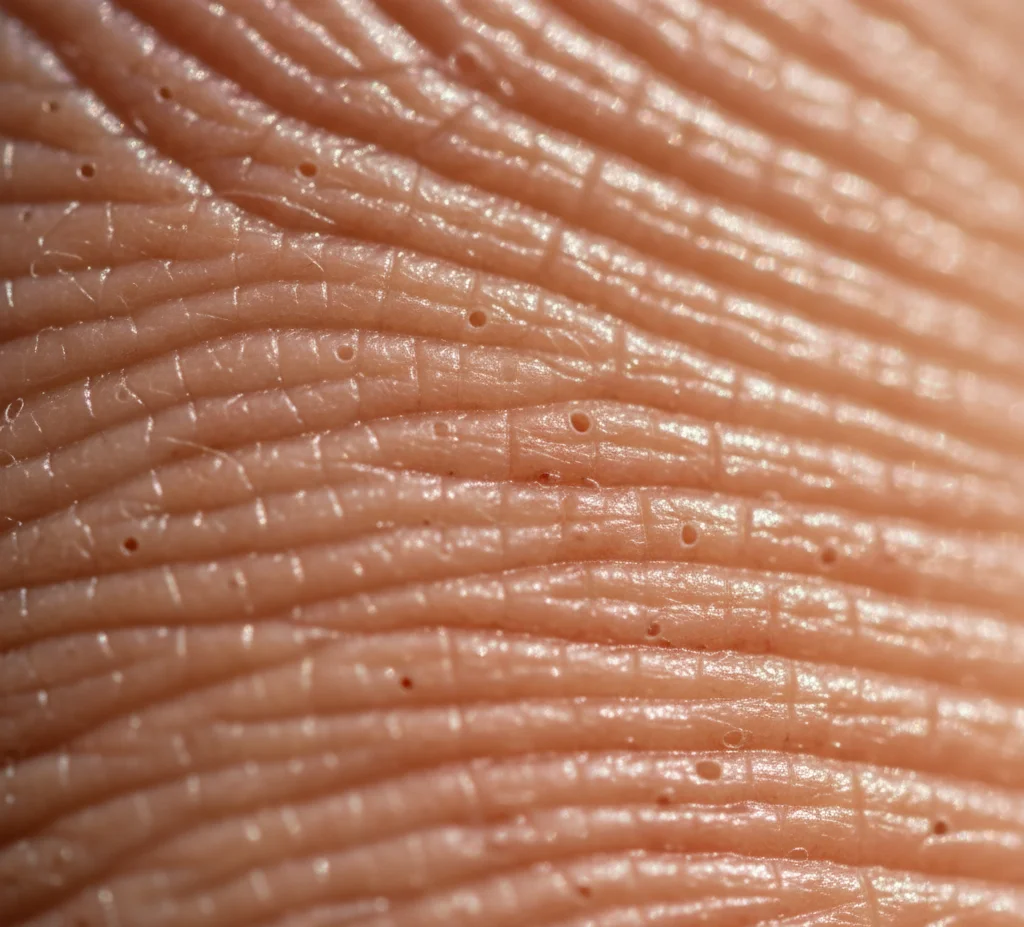
A fingerprint is an impression of the friction ridges found on the pads of your fingers. These ridges form unique biometric patterns shaped by the layers of skin and natural oils on your fingertips, making each fingerprint uniquely yours.
The Science Behind Fingerprints
Fingerprints consist of raised ridges and tiny valleys enriched with sweat pores beneath the skin’s surface. This combination creates a pattern that is exclusive to each individual. Even identical twins—who share DNA—have different fingerprints. The unique formation results from genetic factors combined with environmental influences during fetal development.
- The raised ridges help with grip and tactile sensitivity.
- Patterns form before birth and remain unchanged throughout life, providing a permanent biological signature.
- Pores on ridges secrete sweat that aids in leaving fingerprint impressions on objects.
Why Fingerprints Don’t Change Over Time
Unlike behavioral traits or voice patterns that can vary, fingerprints are permanent identifiers. While the surface features like scars may alter a print temporarily, the pore and ridge patterns remain stable, making fingerprints reliable for lifelong identification.
The Three Main Fingerprint Patterns
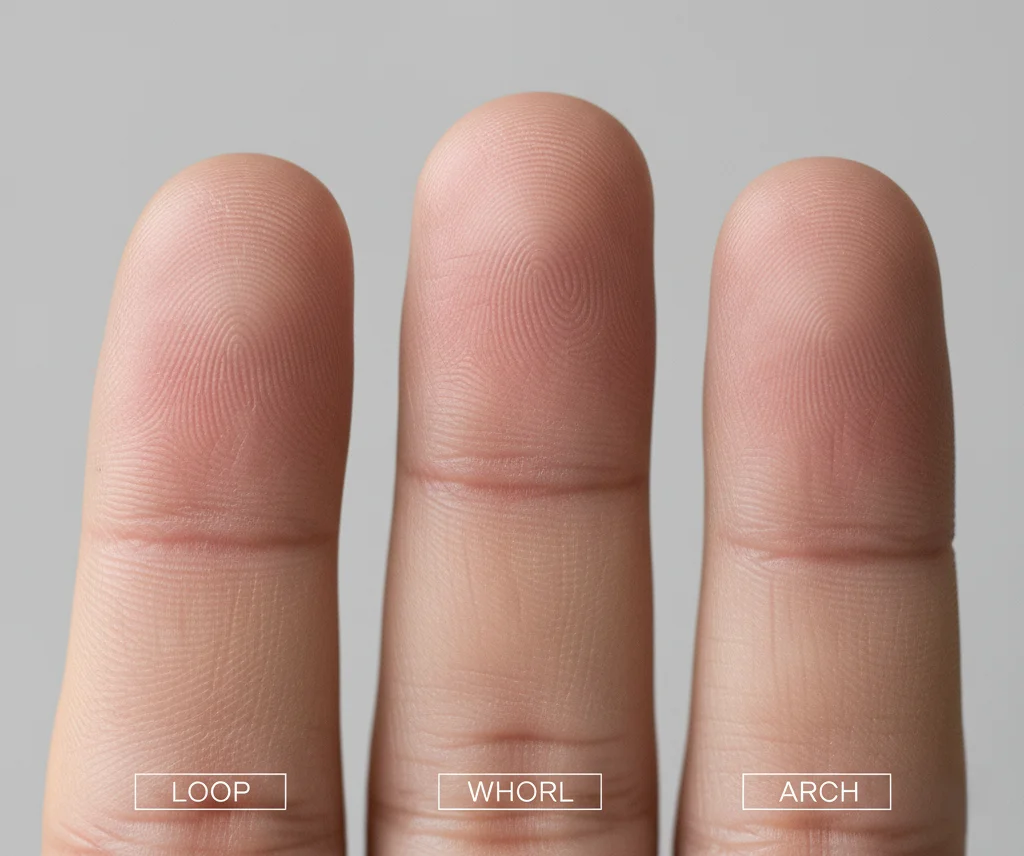
Fingerprints are generally classified into three main types: loops, whorls, and arches.
1. Loops (60-65% of the population)
Loops have ridges that enter from one side of the finger, curve around, and exit the same side. They are the most common fingerprint type.
- Ulnar loops: Open toward the little finger (ulnar side).
- Radial loops: Open toward the thumb (radial side).
Loops are often the easiest to identify due to their distinctive hooked shape.
2. Whorls (30-35% of the population)
Whorls exhibit circular or spiral ridge configurations and are more complex than loops.
- Plain whorls: Basic circular patterns.
- Central pocket loops: Circular loops with an indentation.
- Double loops: Two loops side-by-side.
- Accidental whorls: Irregular or mixed pattern whorls.
These patterns are commonly used in forensic examinations for their complexity.
3. Arches (5% of the population)
Arches have ridges that enter from one side, rise in the center, and exit the other side. They are the rarest pattern type.
- Plain arches: Smooth, wave-like ridges flowing across the finger.
- Tented arches: Feature a central spike or tent-like appearance.
Due to their rarity, arches have specialized uses in forensic analysis.
Advanced Fingerprint Classification Elements
1. Minutiae Points
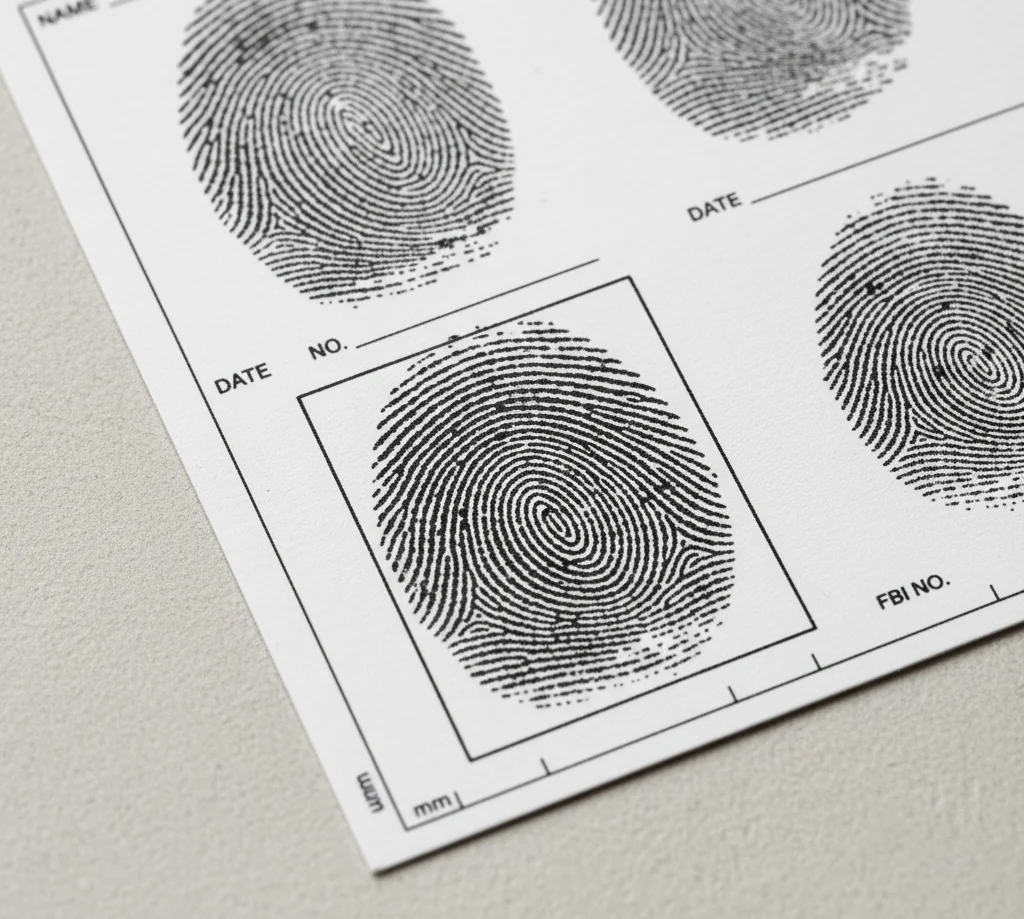
Minutiae are tiny ridge characteristics examined during fingerprint analysis.
- Ridge ending: Where a ridge abruptly stops.
- Bifurcation: A single ridge splits into two.
- Dot or island: A small isolated ridge.
- Spur: A bifurcation with a short ridge branching off.
- Lake (ridge enclosure): A ridge splitting and recombining.
- Delta: A Y-shaped meeting of ridges.
- Core: The central point of the fingerprint pattern.
Analyzing these features—often more than 150 per print—greatly improves identification accuracy.
2. Other Classification Features
Additional fingerprint elements crucial for classification include:
- Ridge flow direction and pattern orientation.
- Location on the fingertip, such as tip versus side.
- Ridge density: number of ridges per unit area.
- Special formations like spirals or circular arches.
The Uniqueness Question: Research and Trends (2024-2025)
1. Traditional Perspective
For generations, fingerprint uniqueness has been accepted as a foundational forensic principle: no two individuals share identical fingerprints.
2. AI-Based Research Findings
A 2024 AI study by Columbia University challenged this by showing fingerprints from different fingers of the same person share notable similarities, with AI achieving 77% accuracy in matching prints across fingers. While this study doesn’t dispute traditional uniqueness between individuals, it introduces new dimensions for identification.
3. Forensic and Biometric Implications
These findings are steering forensic science to consider multi-finger profiles and advance AI biometric models, enhancing the accuracy and scope of fingerprint identification systems.
How Fingerprints Are Captured & Recorded
1. Live Scan Devices
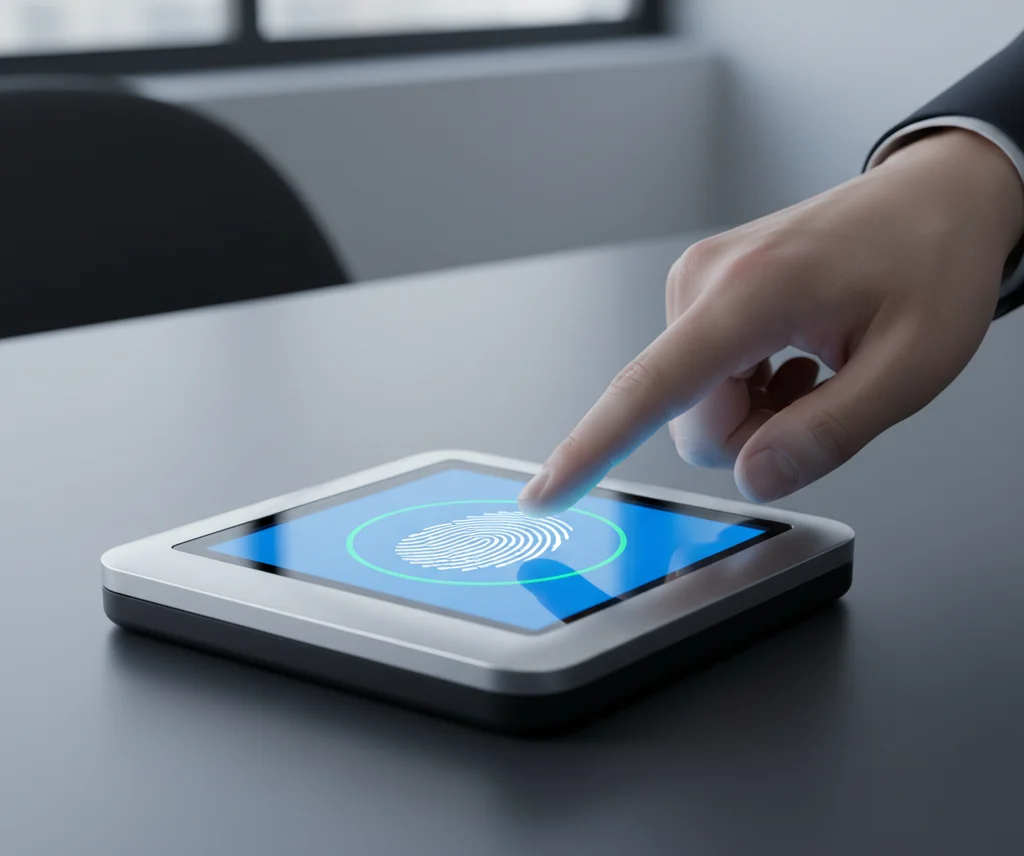
- Use glass plates to capture high-resolution digital fingerprints.
- Common in law enforcement and forensic labs.
- Certified by the FBI for image quality standards.
2. Ink and Paper Method
- Traditional rolling of inked fingers on paper.
- Still used for passports, visas, and archival purposes.
- Followed by digital scanning for integration.
3. Digital Storage & Biometric Templates
- Fingerprint images converted to templates storing ridge minutiae points.
- Templates encrypted and stored in secure biometric databases.
- Enable rapid matching and identity verification.
Factors Affecting Fingerprint Identification
- Chemical exposure can degrade skin ridges.
- Nutritional deficiencies or skin conditions may alter print clarity.
- Physical injuries like cuts, burns, or scars.
- Dirty or damaged fingerprint scanners cause misreads.
Understanding these helps improve scanner technology and error management.
Challenges & Future of Fingerprint Technology (2025 & Beyond)
1. Current Challenges
- Balancing false positives and negatives in fingerprint systems.
- Protecting biometric data from theft or misuse.
- Spoofing risks where fake fingerprints mimic real ones.
2. Emerging Solutions
- Advanced encryption and biometric data protection.
- AI-integrated anti-spoofing systems.
- 3D fingerprint imaging providing more detailed data.
- Continuous authentication techniques for ongoing security.
3. Global Implementation
Countries like India, Nigeria, and Ecuador are implementing fingerprint biometrics in national ID and banking systems, driving modernization and digital identity reliability.
Conclusion
Fingerprints are one of the most durable, unique, and trusted biometric identifiers worldwide. Their permanence and intricate patterns offer unparalleled accuracy in identification. With advancements in AI and biometrics, fingerprints’ role in security and digital identity will continue to expand, shaping safer and more inclusive futures.
Embrace fingerprint technology today to witness how this timeless identifier protects and empowers personal identity.