In a world where almost every aspect of our lives is connected to the internet, cybersecurity has become a shared responsibility. From online banking and social media to work emails and smart devices, we rely on digital systems daily. Unfortunately, cybercriminal activity is also on the rise. Malware infections, identity theft, and account takeovers are no longer rare incidents—they are everyday risks.
One of the simplest yet most effective ways to protect your digital life starts with something basic: how you secure your accounts. While most people are familiar with passwords, fewer truly understand passphrases—what they are, how they work, and why they matter.
This detailed guide explains what a passphrase is, how it differs from a password, why it plays a critical role in cybersecurity, and how you can create strong, secure passphrases that protect your devices and online accounts.
Why Passphrases Matter in Today’s Digital World

Cybersecurity threats are no longer limited to large organizations. Individuals are equally vulnerable. Malware infections, phishing attacks, and credential theft affect millions of people every year. In many cases, attackers gain access simply because login credentials are weak, predictable, or reused across multiple platforms.
Strong authentication is the first line of defense—and this is where passphrases come in.
A passphrase can significantly improve your security without making your digital life harder. When created correctly, it is easier to remember than a complex password and far more resistant to modern hacking techniques.
What Is a Passphrase?
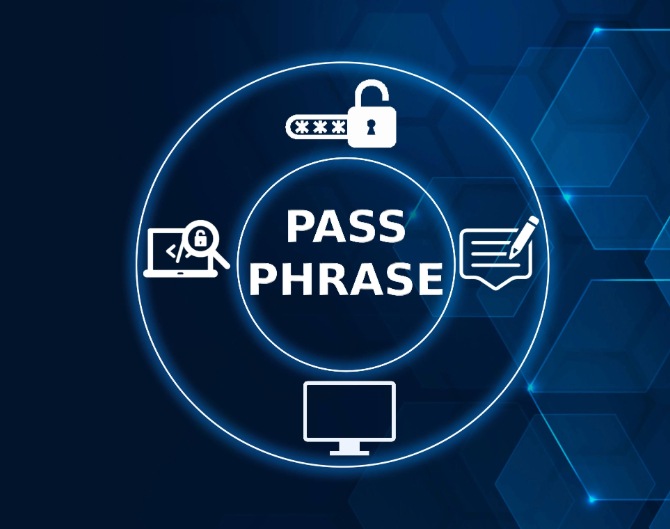
A passphrase is a sequence of words or a sentence used to authenticate access to a digital system, application, device, or online service. Instead of a short string of random characters, a passphrase is usually longer and more memorable.
In simple terms:
- A password is short and complex.
- A passphrase is long and meaningful (but still secure).
Passphrases are widely used to:
- Unlock computers and mobile devices
- Access online accounts (email, social media, streaming services)
- Authenticate users in secure systems
- Verify identity in industries such as banking and customer support
The word passphrase literally means “password phrase”, and it is commonly used in cybersecurity and software environments.
Why Passphrases Are Important for Cybersecurity
Many people underestimate how powerful a well-designed passphrase can be. Cybercriminals rely on speed and automation. Their tools are designed to guess short, predictable credentials quickly.
A strong passphrase:
- Takes significantly longer to crack
- Reduces the risk of brute-force and dictionary attacks
- Is easier for humans to remember
- Improves overall account security
In a time when attackers use advanced software to test millions of combinations per second, length and unpredictability matter more than ever.
Also Read: What is Unified Threat Management (UTM)?
Common Passphrase Examples (And Why They Can Be Risky)
People often create passphrases based on things they can easily remember. While this seems logical, it can also be dangerous.
Common Types of Passphrases People Use
- Popular sayings or idioms
- Childhood memories
- Favorite quotes or song lyrics
- Phrases with alliteration or themes
Examples like:
- A family saying
- A childhood routine
- A sentence describing a memory
Why These Passphrases Are Vulnerable
The problem is that these phrases:
- Use dictionary words
- Follow predictable grammar
- Contain personal information
- Can be guessed using automated tools
Hackers often rely on dictionary attacks, which use massive wordlists combined with software to test common phrases, variations, and substitutions.
Even changing capitalization or adding a number at the end is no longer enough.
How Hackers Crack Passphrases
To understand how to create a strong passphrase, it helps to know how attackers break weak ones.
Dictionary Attacks
Attackers use lists of:
- Common words
- Popular phrases
- Frequently used passwords
Their software can automatically:
- Change uppercase and lowercase letters
- Replace letters with numbers
- Add symbols
- Try different word orders
Brute Force Attacks
These attacks attempt every possible combination until the correct one is found. Short or predictable passphrases are especially vulnerable.
The longer and more unpredictable a passphrase is, the more time and computing power it takes to crack—often making the attack impractical.
Passwords vs Passphrases
Understanding the difference between passwords and passphrases helps you decide when to use each.
What Is a Password?
A password is usually:
- 8–12 characters long
- A mix of letters, numbers, and symbols
- Often generated automatically
Passwords are effective when:
- They are unique
- They are long enough
- They are randomly generated
What Is a Passphrase?
A passphrase:
- Is longer (15–20+ characters)
- Uses multiple words
- Is easier to remember
- Relies on length and randomness
Which Is Better?
- A weak passphrase is less secure than a strong password
- A strong passphrase can be as secure—or more secure—than a password
The key factor is strength, not the format.
What Is a Strong or Good Passphrase?
A strong passphrase combines memorability with security. It should not look like a normal sentence and should not contain obvious personal information.
Characteristics of a Strong Passphrase
- At least 15–20 characters long
- Uses uppercase and lowercase letters
- Includes numbers (non-sequential)
- Contains punctuation or special characters
- Avoids predictable grammar
- Does not rely on personal or public information
The goal is to make the passphrase difficult for machines to guess but easy for you to remember.
How to Create a Strong Passphrase
Creating a secure passphrase doesn’t require technical expertise—just a little creativity.
1. Make It Long
Length is one of the strongest defenses. Longer passphrases take exponentially more time to crack.
2. Be Unpredictable
Avoid proper grammar. Mix word order, spacing, and structure.
3. Use Multiple Languages
Incorporating words from different languages adds complexity and reduces predictability.
4. Add Numbers and Symbols
Replace letters with numbers or symbols—but avoid obvious patterns.
5. Avoid Personal Information
Don’t use names, birthdays, locations, or anything that could be found online.
6. Make Each Passphrase Unique
Never reuse a passphrase across multiple accounts. One breach should not compromise everything.
7. Use Memory Anchors
You can include subtle hints that help you remember where the passphrase is used—without making it obvious to others.
Good Security Passphrase Examples (For Guidance Only)
Strong passphrases often:
- Mix languages
- Use special characters
- Break normal sentence structure
- Replace letters with symbols or numbers
These examples demonstrate structure—not templates to copy. Reusing examples defeats the purpose of security.
The most important rule: your passphrase must be unique.
Managing Passphrases Securely
As you adopt stronger passphrases, remembering them can become challenging—especially if you use unique ones for every account.
Why Password Managers Help
Password managers:
- Store passphrases securely
- Use encryption to protect data
- Allow easy access across devices
- Reduce the temptation to reuse credentials
Using a password manager enables you to create longer, more complex passphrases without relying on memory alone.
FAQs
What is a passphrase?
A passphrase is a long string of words or text used to authenticate access to a digital system, account, or device. It is designed to be both memorable and secure.
What is a strong passphrase?
A strong passphrase contains at least 15–20 characters, includes uppercase and lowercase letters, numbers, and symbols, and avoids predictable words or personal information.
What is a good passphrase?
A good passphrase balances security and memorability. It should be unique, random-looking, and difficult for attackers to guess while still being easy for you to recall.
Are passphrases better than passwords?
They can be. A strong passphrase can be more secure than a weak password, especially due to its length. However, strength matters more than format.
Should I reuse passphrases?
No. Each account should have its own unique passphrase to prevent widespread compromise if one account is breached.
Conclusion
A passphrase is one of the simplest yet most powerful tools in modern cybersecurity. While technology continues to evolve, many cyberattacks still succeed because of weak, reused, or predictable credentials.
By understanding what a passphrase is and how to create a strong one, you take a major step toward protecting your digital life. Length, unpredictability, and uniqueness are your strongest allies.