Cybersecurity threats are constantly evolving. While many people recognize malware, phishing, and ransomware as digital dangers, some cyberattacks are far more deceptive. One such technique is the replay attack. Instead of breaking encryption or cracking passwords, attackers simply copy and re-send a legitimate communication to trick systems into behaving as if the request is real. This quiet yet powerful hacking method can lead to stolen funds, hijacked accounts, and unauthorized system access without the victim even noticing.
Replay attacks are not new, yet they remain a major threat in today’s world of online financial transactions, smart devices, mobile authentication, and secure communication protocols. Understanding them is essential for both organizations and consumers who handle sensitive interactions online.
This article explores what a replay attack is, how it works, real-world examples, security consequences, and recommended defense strategies to stay protected.
What Is a Replay Attack?
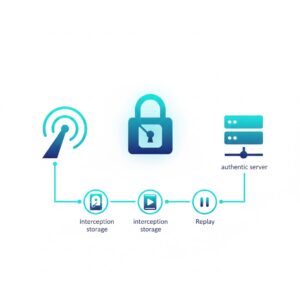
A replay attack occurs when a cybercriminal intercepts valid data sent over a network, stores it, and then maliciously retransmits it later to mislead the receiving system into performing unauthorized actions. The attacker does not need to understand or decrypt the content. The message remains legitimate in form, which makes detection difficult.
A replay attack is considered a form of network attack and man-in-the-middle tactic, but with a different goal. Instead of altering communication, the attacker reuses previously transmitted data to manipulate processes such as authentication or financial authorization.
A simple example:
If a digital signature is reused without validation checks, a hacker could replay the same transaction request multiple times to cause financial loss.
Why Replay Attacks Are Dangerous
Replay attacks exploit one key flaw: trust. Systems trust encrypted messages because they appear valid. But trust without verification creates a loophole. Outcomes can include:
- Unauthorized monetary transfers
- Fraudulent purchases
- Illegal access to secure networks
- Identity theft or account takeover
- Manipulation of critical business workflows
Unlike some cyberattacks, replay attacks do not rely on breaking encryption techniques. Instead, they reuse strong encryption against unsuspecting victims.
This makes them especially dangerous in environments where sensitive requests are automated.
How Replay Attacks Work: Step-by-Step Breakdown
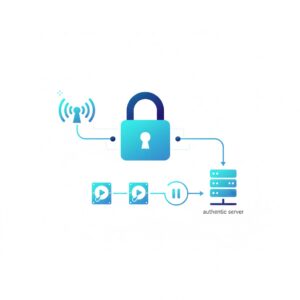
To understand how threatening they are, here is a detailed scenario that commonly occurs in organizations:
Step One: Interception of a Secure Message
A user sends an encrypted communication, such as:
- A login request
- A payment initiation
- A command to a secure system
The attacker eavesdrops on the communication channel and captures the full message packet.
Step Two: Storage of the Original Communication
The hacker saves the message for later use. They do not need technical expertise to decode its content.
Step Three: Re-sending the Captured Data
After some time has passed, the cybercriminal resends the same message to the receiving system.
Step Four: The System Accepts the Message as Authentic
Because it appears valid, the system authorizes the request again.
There is no visible sign of attack unless security validation methods are in place.
Example in a corporate setting
- The finance department receives a legitimate encrypted email requesting a funds transfer.
- The attacker resends that same request.
- If no verification step exists, the finance team may unknowingly process the transfer again, directing money into an attacker-controlled account.
In simple terms: a single stolen communication can be weaponized repeatedly.
Common Targets of Replay Attacks
These attacks frequently target encrypted exchanges related to authentication or financial authorization. Examples include:
- Mobile banking apps
- Secure messaging between servers
- Smart card and RFID-based access systems
- Contactless payments
- Online shopping and digital wallet transactions
- Communication between IoT and automation devices
Any system that does not validate the uniqueness and freshness of communications becomes an easy target.
Why Replay Attacks Are Difficult to Detect
Replay attacks rely on the exact duplication of valid data. Unlike malware, keyloggers, or spyware, they do not modify a system or introduce new malicious code.
Key reasons they remain stealthy:
- Data packets are legitimate and fully encrypted.
- Logging systems see them as routine operations.
- Attackers rarely interact with the system directly.
Users often do not notice anything strange until:
- Unauthorized transactions appear on financial statements
- Systems behave incorrectly
- Duplicate actions are recorded
Without proper security controls, a replay attack can operate silently for long periods.
Also Read: What Is a Digital Footprint? And How to Protect It From Hackers
Types of Replay Attacks
Replay tactics vary depending on the communication environment. Common forms include:
Authentication Replay
Using a previously valid login token to gain access again without authorization.
Financial Replay Fraud
Replicating payment requests to steal funds or make unauthorized purchases.
Session Hijacking
Resending session IDs or cookies to impersonate users in active login sessions.
IoT Command Replay
Sending outdated or repeated device commands to disrupt operations in automation systems.
All forms abuse the absence of unique communication validation.
Replay Attack vs Other Cyber Threats
| Attack Type | Key Goal | Requires Decryption? | Method |
| Replay Attack | Reuse a real communication | No | Resend recorded messages |
| Man-in-the-Middle | Modify communication | Sometimes | Insert malicious data |
| Phishing | Steal credentials via deception | No | Social engineering manipulation |
| Malware | Infect systems to steal or damage data | No | Deploy malicious code |
Replay attacks keep the original message intact, which is why they often pass security checks.
Defense Strategies Against Replay Attacks
Successful prevention requires combining multiple authentication and verification layers. Below are the most effective protection methods:
Use Session Keys
A session key is generated for a single transaction. Once used, it becomes invalid.
Replay attempts immediately fail because:
- Duplicate keys are rejected
- Expired keys are not recognized
This ensures every message is unique.
Use Nonces (Number Used Once)
A nonce is a randomly generated number included in each request.
If the system receives a previously used nonce, the message is automatically blocked.
Nonces eliminate message reuse entirely.
Implement Timestamp Validation
Messages include timestamp markers. If a request is older than a predefined limit (such as a few seconds), the system prevents execution.
This reduces the attack window for intercepted communications.
Enable Strong Multi-Factor Authentication
Additional validation steps make unauthorized logins impossible using old data.
Examples:
- App-based authentication
- Biometric confirmation
- Unique PINs per request
Monitor for Duplicate Requests
Behavior analytics tools detect unusual patterns such as:
- Repeated requests with the same parameters
- Requests outside normal operating conditions
Organizations can quickly block or quarantine suspicious events.
Encrypted Secure Protocols
While encryption alone is not fully protective, secure protocols such as HTTPS, TLS, and token-based authentication help reduce interception risk.
Any sensitive process should use up-to-date encryption standards.
Impact of Replay Attacks on Businesses
Replay attacks can lead to severe consequences:
- Fraudulent loss of funds and resources
- Data breaches and stolen intellectual property
- Unauthorized access to restricted operations
- Violations of industry compliance requirements
- Damage to brand reputation and customer trust
Industries at highest risk include:
- Banking and financial services
- Telecom and networking industries
- Industrial automation and manufacturing
- E-commerce platforms
- Healthcare digital infrastructure
If not prevented, these attacks can create large-scale operational disruption.
Replay Attacks and the Internet of Things (IoT)
As more smart systems become connected, cybercriminals increasingly target devices that lack advanced encryption validation. Without security upgrades, IoT networks are vulnerable to replay manipulation, including:
- Unlocking smart door locks using captured signals
- Tampering with sensor data in manufacturing
- Remote takeover of connected vehicles or medical equipment
Replay attack protection is crucial to prevent physical and industrial sabotage.
How Organizations Can Strengthen Their Defense
To fully protect against replay threats, businesses should:
- Implement token-based authentication for transactions
- Require multi-person approval for high-value financial transfers
- Use randomized identifiers for communication packets
- Conduct security awareness training for employees
- Perform regular audits to detect anomalies
Modern cybersecurity strategies must include replay attack detection mechanisms as standard practice.
Conclusion
Replay attacks are a powerful reminder that encryption alone cannot guarantee security. Even the most advanced encryption can be reused against systems if verification steps are missing. By duplicating genuine communications, attackers gain entry into networks, manipulate payments, and exploit system workflows without breaking through any defenses.
To stay safe, both individuals and organizations must adopt transaction validation methods, real-time monitoring, multi-factor authentication, and strict encryption protocols that enforce message uniqueness.
The more digital systems rely on automation and remote communication, the more essential it becomes to proactively defend against replay attacks.
FAQs
What makes replay attacks so easy to execute?
Attackers do not need to understand encrypted data. Simply resending the entire captured communication is enough to trick systems without technical decryption skills.
Can encryption alone prevent a replay attack?
No. Encryption protects content but does not prevent duplication. Additional validation methods such as timestamps, nonces, and session tokens are required.
Who is most at risk of replay attacks?
Industries handling financial and authentication systems, such as banking, e-commerce, industrial automation, and communication networks.
How can consumers protect themselves?
Enabling multi-factor authentication, monitoring accounts regularly, and ensuring apps and devices always use secure encrypted connections are effective steps.
Are replay attacks always malicious?
In cybersecurity, yes. Even if attackers do not modify the original request, unauthorized repetition is considered criminal exploitation.