The internet is the backbone of modern life. From sending emails and joining video calls to accessing cloud apps, downloading files, and managing payments, nearly every task depends on secure web access. But the web is also one of the most common entry points for cyber threats. One wrong click on a phishing link, one malicious file download, or one compromised website can expose users, devices, and entire business networks to serious damage.
This is where a secure web gateway becomes essential.
A secure web gateway (SWG) acts as a protective barrier between users and the internet. It controls web traffic, blocks harmful websites, prevents malware downloads, and helps organizations enforce browsing policies. In a world where employees work from offices, homes, and public Wi-Fi networks, a secure web gateway is no longer optional. It has become a critical part of digital safety.
In this guide, you’ll learn what a secure web gateway is, how it works, key features, why it matters, and how to choose the right solution for your needs.
What is a Secure Web Gateway?

A secure web gateway is a cybersecurity solution that monitors, filters, and protects internet traffic between users and the web. Its main job is to prevent unauthorized or unsafe web activity and stop threats before they reach devices or internal systems.
Think of it as a security checkpoint for everything that goes in and out of your network through the browser. Instead of allowing open and uncontrolled internet access, a secure web gateway decides what is safe and what is risky, based on security rules and threat intelligence.
A secure web gateway is designed to protect users from threats such as:
Malicious websites
Phishing pages that steal credentials
Drive-by downloads
Browser-based malware
Unsafe file downloads
Fake software installers
Malvertising and harmful redirects
Risky or non-compliant web usage
The importance of a secure web gateway becomes even clearer when you consider how much business communication happens online. Employees open links, download reports, log into dashboards, use web-based tools, and access SaaS platforms all day. Every one of these actions can become a threat path if security is not in place.
Secure Web Gateway vs Traditional Firewall
Many people assume a firewall can handle web security, but the two are not the same.
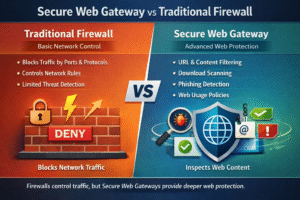
A firewall mainly controls traffic based on ports, protocols, and network rules. It can block unknown connections, but it often cannot deeply inspect web content and detect advanced threats hidden inside legitimate-looking web activity.
A secure web gateway focuses specifically on web-based risks. It goes deeper by inspecting URLs, scanning downloads, detecting phishing attempts, and applying web usage rules. This makes it a more advanced layer of protection for browsing-based threats.
How Does a Secure Web Gateway Work?
A secure web gateway works by sitting between the user and the internet and monitoring every web request. When a user tries to open a website or download a file, the SWG checks it for safety before allowing access.
This process happens in real time. The user experience remains smooth, but behind the scenes, the secure web gateway is constantly analyzing activity for suspicious behavior.
Here’s how secure web gateway protection usually works in practice:
Traffic Inspection and Filtering
Whenever a user visits a website, the SWG evaluates the destination. It checks whether the website is safe, risky, suspicious, or known for malicious behavior.
If the site is considered harmful or inappropriate, access is blocked immediately.
This is one of the biggest reasons organizations use a secure web gateway, because it prevents users from reaching dangerous web pages even if they click a link accidentally.
URL Categorization and Web Control
Also Read: What is Digital Forensics?
Secure web gateway solutions often maintain categories such as:
Phishing and fraud
Malware distribution
Adult content
Gambling
Suspicious newly registered domains
Streaming and entertainment
Social media
File sharing and torrents
Untrusted downloads
Organizations can then create rules based on these categories.
For example, a company may block risky categories like torrents and unknown file-sharing sites, but allow business-friendly categories like cloud productivity platforms.
Download Scanning and Malware Blocking
One of the most common ways malware spreads is through file downloads, such as:
Fake PDF files
Cracked software installers
Browser extensions
Email attachments downloaded from suspicious sources
Invoice documents containing harmful scripts
A secure web gateway can scan downloaded files and prevent users from downloading suspicious or infected content.
Instead of relying on the device to detect the threat after it has already entered the system, the SWG blocks it earlier, reducing risk significantly.
Phishing Prevention and Credential Protection
Phishing is no longer limited to poor spelling and obvious scam emails. Modern phishing pages look almost identical to real login portals.
A secure web gateway helps prevent phishing by:
Blocking known phishing domains
Detecting suspicious login pages
Preventing access to spoofed websites
Blocking dangerous shortened links
Reducing the risk of credential theft
This is especially important for protecting business logins for email accounts, CRM platforms, cloud dashboards, and financial services.
SSL/TLS Inspection
Today, most websites use HTTPS encryption, which is good for privacy but also creates a challenge for security tools. Threats can be hidden in encrypted traffic.
Many secure web gateway tools support SSL/TLS inspection, meaning the SWG can safely inspect encrypted traffic for threats without breaking security policies.
This allows deeper threat detection for malicious content delivered through secure connections.
Policy Enforcement for Remote and Office Users
Secure web gateways are especially useful for remote teams. Employees often work from home networks or cafés where security is weaker than the corporate office.
A secure web gateway ensures policies stay active no matter where the user is located. It prevents risky browsing even when the user is outside the office environment.
This is why many organizations adopt cloud-based SWG solutions that work across locations.
Features of a Secure Web Gateway
A secure web gateway is more than just a website blocker. It’s a full security platform focused on safe internet usage. Below are the key features you can expect in a modern secure web gateway solution.
Web Filtering and Content Control
One of the main features of a secure web gateway is web filtering, which allows organizations to decide what types of content users can access.
This helps reduce threats and also supports workplace productivity by limiting risky and distracting web categories.
It can be applied to:
Specific websites
Website categories
User roles and departments
Time-based browsing rules
Anti-Malware and Download Protection
Secure web gateway solutions often scan files downloaded from the internet. This includes documents, archives, and installers.
This layer helps block:
Malware payload downloads
Trojanized software
Suspicious file types
Hidden scripts and exploit-driven downloads
Since many infections begin with a download, this feature plays a major role in reducing security incidents.
Anti-Phishing and Fraud Detection
Phishing remains one of the most successful cyber attack methods. A secure web gateway can detect phishing in multiple ways including URL reputation, suspicious domain patterns, and known fraud indicators.
A strong SWG reduces the risk of:
Password theft
Financial fraud
Email account takeovers
Unauthorized SaaS access
Data Loss Prevention Support
Some secure web gateway platforms include data monitoring capabilities, helping prevent sensitive data from being shared accidentally through web apps.
This can protect:
Customer data
Payment information
Confidential documents
Employee records
Internal business reports
This matters most for organizations that deal with sensitive industries such as healthcare, banking, education, and enterprise IT.
Access Control and Identity Awareness
A secure web gateway should not treat all users the same. Different employees have different roles and access requirements.
Modern SWG tools can integrate with identity systems so that policies can be applied based on:
User identity
Department
Device type
Location
Security risk level
This ensures stronger control without blocking necessary work.
Reporting and Monitoring
Secure web gateway dashboards help administrators track:
Blocked threats
User browsing patterns
Attempted access to risky sites
Download activity
Policy violations
Repeated phishing clicks
These insights are extremely useful for detecting weak points in security behavior, educating employees, and adjusting policies to reduce risks.
Cloud and Hybrid Deployment Support
Many organizations choose cloud SWG solutions because they are easier to maintain and work well for remote teams. Others prefer on-premise models for compliance reasons.
A good secure web gateway supports flexible deployment so businesses can protect users across different environments.
Why Do You Need a Secure Web Gateway?
A secure web gateway is one of the most effective ways to stop internet-based threats. It protects both individuals and organizations because it works directly where modern risks happen the most: web access.
Here are the main reasons why a secure web gateway is important.
Protection From Modern Web Threats
The web is full of traps designed to exploit user behavior. Attackers don’t always rely on direct hacking. Sometimes they simply need someone to click.
A secure web gateway reduces the chances of that click turning into a disaster.
Defense Against Phishing and Credential Theft
Phishing is often the first stage of a larger cyber attack. Once attackers gain access to employee credentials, they can move deeper into systems.
By blocking phishing pages early, a secure web gateway prevents the chain reaction that leads to ransomware, data theft, and long-term compromise.
Safer Remote Work and BYOD Use
Remote work has increased dramatically, and with it, the number of insecure browsing environments.
A secure web gateway protects users even outside the office, making it a strong solution for remote work security.
Lower Risk of Malware and Ransomware
Ransomware attacks often begin with web activity such as:
Visiting an infected site
Downloading a malicious file
Clicking a fake update prompt
Entering credentials into a phishing portal
A secure web gateway helps block these entry points, making ransomware attacks much harder to execute successfully.
Improved Compliance and Policy Control
Organizations often need to meet internal or legal compliance requirements related to data security and internet usage. A secure web gateway supports compliance by enforcing consistent access rules and providing logs for audits.
Better Productivity and Reduced Risk Behavior
Not all risks are purely technical. Some risks come from web behavior, such as downloading unknown tools or visiting unsafe sites.
A secure web gateway can reduce these risky behaviors, supporting a cleaner and safer browsing environment.
How to Choose a Secure Web Gateway Solution
Every business has different needs, so choosing the right secure web gateway depends on your environment, workforce size, and security goals.
Here are key factors to evaluate before selecting an SWG.
Cloud-Based vs On-Premise Secure Web Gateway
Cloud SWG solutions are easier to manage and ideal for remote teams, while on-premise SWG tools may be used for regulatory requirements.
If your business has multiple locations and remote users, cloud secure web gateway deployment is usually more flexible.
Threat Detection Capabilities
A secure web gateway must be able to block modern threats quickly. Look for features like:
Real-time threat detection
URL reputation scanning
Download inspection
Phishing prevention
Encrypted traffic analysis
The stronger the detection, the safer your web usage becomes.
Policy Flexibility and Custom Control
The best secure web gateway solutions allow flexible policy settings. You should be able to define rules for different user groups and business requirements without making the internet unusable.
A good SWG must balance security and productivity.
Performance and Speed
Web security should not slow everything down. A secure web gateway must provide strong protection without creating delays, especially for cloud-based tools and video platforms used for work.
Reporting and Visibility
Choose an SWG that offers detailed reports and dashboards. This is important for:
Understanding browsing behavior
Tracking threats and blocked content
Improving employee security awareness
Auditing compliance requirements
Integration With Other Security Tools
A secure web gateway works best when it fits into your overall security setup. It should integrate well with endpoint protection tools, identity access systems, and security monitoring solutions.
This creates stronger, unified security across devices and networks.
FAQs
What is a secure web gateway (SWG), and why is it important?
A secure web gateway is a security solution that monitors and filters internet traffic to block threats like phishing, malware downloads, and unsafe websites. It is important because the web is one of the most common attack paths used by cybercriminals, and SWG protection helps stop attacks before they reach users or devices.
Why should I invest in a secure web gateway for my home networks?
A secure web gateway can improve home internet safety by blocking harmful websites, reducing phishing exposure, and preventing malicious downloads. It is especially helpful for households with children, shared devices, or users who frequently download files and browse unfamiliar websites.
How can I choose the right secure web gateway solution for my needs?
To choose the right secure web gateway, evaluate your internet usage, number of users, remote work requirements, and the level of security control you need. Look for strong web filtering, malware detection, phishing prevention, reporting tools, and support for cloud or hybrid environments.
Conclusion
A secure web gateway (SWG) is one of the most effective cybersecurity tools for protecting users from internet-based threats. Since the majority of modern work and communication happens online, securing web access is essential for keeping devices, accounts, and data safe.
A secure web gateway helps block malicious websites, prevent phishing attempts, scan downloads, enforce browsing policies, and maintain safer internet behavior across both office networks and remote users. Whether you are running a business, managing a remote workforce, or simply aiming to browse safely, adding a secure web gateway can significantly reduce your digital risk.
In today’s threat landscape, web security is not just about blocking websites. It is about building a safe, controlled, and reliable path between users and the internet. And that is exactly what a secure web gateway delivers.

Debabrata Behera is a passionate blogger who writes about digital trends, personal growth, and practical insights, helping readers stay informed, inspired, and ready to achieve success in life.