Cyber threats evolve faster than most users and organizations can keep up with. Every year, attackers find new ways to infiltrate computer systems, steal confidential data, and bypass security defenses. Among the most dangerous and unpredictable threats in the cybersecurity landscape are zero-day attacks. These attacks target vulnerabilities that nobody — not even the software’s creators — knows exist. Because of their stealth, potency, and unpredictability, zero-day threats are feared by individuals, businesses, and governments worldwide.
This detailed guide explores what zero-day attacks are, how they work, why they are so dangerous, examples of real-world zero-day exploits, and how you can protect yourself against such advanced threats.
Zero-day Meaning and Definition
A zero-day refers to a security vulnerability discovered before the software vendor becomes aware of it. As a result, there are zero days available to fix or patch the flaw, leaving it completely exposed. Because no patch or update exists, attackers have an open opportunity to exploit the weakness.
To understand the concept clearly, three associated terms need to be defined:
Zero-day Vulnerability
A zero-day vulnerability is the actual security flaw or weakness in software, hardware, firmware, or an operating system that is unknown to the vendor or developer.
Zero-day Exploit
A zero-day exploit is the technique, code, or method attackers use to take advantage of the vulnerability. It is the mechanism used to breach the system.
Zero-day Attack
A zero-day attack occurs when attackers actively use the zero-day exploit to compromise systems, steal data, disrupt operations, or perform malicious actions.
The combination of these three elements makes zero-day threats extremely severe. Since defenders have no knowledge of the vulnerability, the attack usually succeeds before anyone can respond.
How Zero-Day Attacks Work
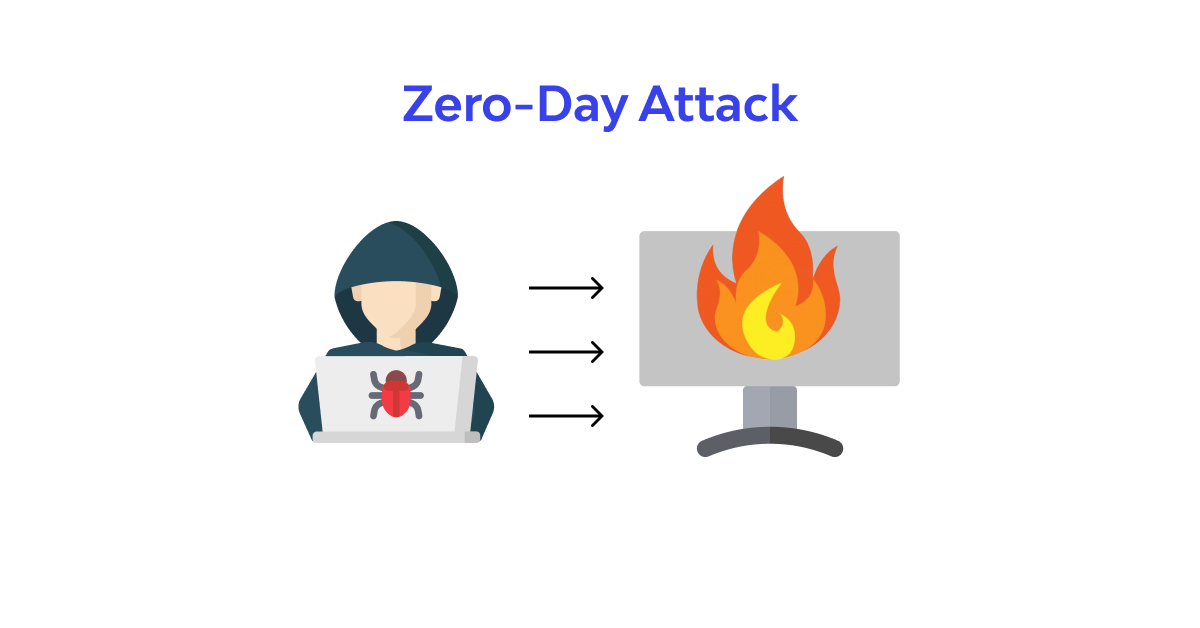
Zero-day attacks often follow a sequence that highlights why they can be so destructive:
Vulnerability Exists
All software contains bugs or small mistakes in its code. Some of these bugs can become security gaps. Developers are constantly fixing vulnerabilities as they learn about them, but they cannot fix what they don’t know exists.
Attackers Discover the Flaw First
Sometimes cybersecurity researchers uncover vulnerabilities, but in the most dangerous cases, hackers find them first. When that happens, they gain a powerful advantage. They know the flaw exists, while the vendor remains unaware.
Exploit Code is Created
Once an attacker identifies a vulnerability, they develop an exploit — malicious code that will take advantage of the weakness. This could allow them to install malware, run unauthorized commands, or access sensitive information.
Delivery of the Exploit
To launch an attack, hackers need to deliver the exploit to the target system. They often use:
- Phishing emails
- Malicious attachments
- Fake websites
- Infected downloads
- Compromised ads
- Drive-by downloads
One of the most common delivery methods is a social engineering email, designed to trick users into opening a file or clicking a link.
Exploitation Occurs
Once the user interacts with the malicious file or link, the exploit runs silently in the background, giving attackers access. They might:
- Steal data
- Install spyware
- Control the system remotely
- Spread malware across an organization
- Stay hidden for months
Developers Respond
Once the vulnerability becomes known—often only after attacks have already happened—the software vendor races to create and release a patch. However, patching is only effective if users actually install the update, which many delay.
Because attackers typically strike before anyone knows the vulnerability exists, zero-day attacks are extremely potent.
Why Zero-day Attacks Are So Dangerous

Zero-day attacks are considered one of the biggest cybersecurity challenges for several reasons:
No Existing Defense
Security tools often rely on known threat signatures. Since zero-day malware is new and unknown, most traditional defenses fail to detect it.
No Patch Available
There is no update, no fix, and no protection available when these vulnerabilities are discovered.
High Success Rate
Because the flaw is unknown, attackers can exploit it without triggering alarms or detection systems.
High Value in Cybercrime Markets
Zero-day exploits are extremely valuable and are often sold on the dark web for large sums of money because they can bypass nearly any system.
Potential for Widespread Damage
Zero-day attacks often affect widely used software, meaning millions of users may be unknowingly exposed.
Attackers Can Remain Hidden
Attackers frequently infiltrate a system and wait silently before triggering the attack, making for long-lasting damage.
Who Carries Out Zero-day Attacks?
Zero-day attacks are not only carried out by individual hackers. They are often linked to highly sophisticated cyber groups. These groups can include:
Cybercriminals
Their primary goal is financial gain. Zero-day exploits allow them to steal data, install ransomware, or commit fraud without easy detection.
Hacktivists
Hackers motivated by political or social reasons use zero-day exploits to target large organizations or government institutions for attention or disruption.
Corporate Espionage Groups
Businesses or insiders may use zero-day vulnerabilities to spy on competitors, steal intellectual property, or gather confidential data.
Nation-State Actors
Government-backed cyber groups use zero-day attacks for cyberwarfare, intelligence gathering, and sabotage.
These attackers often have significant resources, making zero-day threats more sophisticated and dangerous than standard malware attacks.
Who Are the Targets of Zero-day Exploits?
Zero-day attacks exploit flaws across a variety of systems, including:
- Operating systems
- Web browsers
- Email clients
- Office applications
- Hardware and firmware
- IoT devices
- Cloud platforms
- Mobile operating systems
Potential Victims Include:
- Everyday users running vulnerable software
- Individuals with access to sensitive business information
- Large corporations and enterprises
- Government agencies
- Critical infrastructure organizations
- High-profile individuals
Targeted vs. Non-targeted Attacks
- Targeted attacks focus on valuable, high-risk victims (government agencies, executives, political organizations).
- Non-targeted attacks aim at mass users of vulnerable software, affecting large populations.
Both types can cause widespread damage.
How Zero-Day Attacks Are Identified
Detecting a zero-day attack is extremely difficult because no one knows the vulnerability exists until after exploitation begins. However, there are methods used to identify suspicious activity:
Behavior-Based Detection
Instead of looking for known malware signatures, modern systems analyze how programs behave. If behavior seems unusual or harmful, the system flags it.
Monitoring Network Traffic
Unexpected connections, unusual outgoing data, or suspicious scanning activity may indicate an ongoing zero-day attack.
Machine Learning and AI Models
Advanced detection systems analyze large datasets of malicious and legitimate behavior to establish baselines. When deviations occur, alarms can be triggered.
Hybrid Intrusion Detection Systems
Combining signature-based and anomaly-based methods provides the best chance of detecting zero-day activity.
Despite these methods, identification still remains a challenge, which is why prevention and proactive security practices are crucial.
Also Read: What Is Social Engineering? A Complete Definition and Explanation
Examples of Major Zero-day Attacks
Zero-day attacks have played a major role in some of the most significant cyber incidents in history. Here are some notable examples:
Chrome Zero-day Vulnerability (2021)
A flaw in the Chrome V8 JavaScript engine allowed attackers to bypass browser security and execute malicious code. It led to multiple emergency updates.
Zoom Zero-day (2020)
Attackers found a flaw allowing them to control a user’s computer remotely on older Windows versions. This became a major concern during the rise of remote work.
Apple iOS Zero-day Attacks (2020)
Even one of the most secure mobile operating systems faced multiple zero-day vulnerabilities, enabling remote device compromise.
Microsoft Windows Privilege Escalation (2019)
Government institutions in Eastern Europe were targeted. Attackers exploited a privilege escalation vulnerability that allowed them to install applications and change system data.
Microsoft Word Attack (2017)
A zero-day flaw in Word allowed attackers to steal banking credentials by displaying a fake pop-up that installed malware once a user clicked “yes.”
Stuxnet Worm
Perhaps the most famous zero-day attack ever recorded, Stuxnet targeted Iran’s nuclear program. It used multiple zero-day vulnerabilities to infiltrate industrial systems and sabotage machinery. This event marked a new era of cyberwarfare.
How to Protect Yourself Against Zero-day Attacks
While zero-day attacks are hard to detect, there are proven ways to reduce your exposure.
Keep Your Software Updated
Install updates immediately. Vendors patch vulnerabilities quickly once discovered, but delays in updates leave users vulnerable.
Use Only Essential Applications
The more software you have, the greater the number of potential vulnerabilities. Remove unused or outdated applications.
Use a Firewall
A properly configured firewall blocks suspicious traffic and limits the paths attackers can use to break in.
Educate Users
Many zero-day attacks rely on human error. Teach employees or family members to:
- Avoid clicking unknown links
- Be cautious of attachments
- Recognize suspicious emails
- Use secure browsing habits
Enable Multi-Factor Authentication
Even if attackers breach one layer, MFA can prevent access to sensitive accounts.
Use Strong Passwords and a Password Manager
Weak or repeated passwords help attackers escalate their access after exploiting a vulnerability.
Limit Administrative Privileges
Only trusted users should have administrative access. Even with a zero-day exploit, limited permissions reduce damage.
Employ Advanced Security Solutions
Modern endpoint protection tools using behavioral detection, heuristics, and AI-based monitoring can detect malicious activity even when the exact exploit is unknown.
Conclusion
Zero-day attacks are among the most dangerous cybersecurity threats because they target hidden vulnerabilities and strike before patches exist. Their stealth, unpredictability, and ability to bypass traditional defenses make them powerful tools in the hands of cybercriminals, hacktivists, espionage groups, and nation-state attackers.
Understanding how zero-day attacks work, learning from past examples, and adopting strong protective measures can significantly reduce your risk. While these threats cannot be eliminated entirely, proactive cybersecurity habits — from software updates to network defenses and employee awareness — form the strongest defense.
Staying informed and prepared is the most effective way to protect yourself and your organization from the evolving world of zero-day attacks.

Debabrata Behera is a passionate blogger who writes about digital trends, personal growth, and practical insights, helping readers stay informed, inspired, and ready to achieve success in life.