Biometric payment is reshaping how people authenticate themselves and pay for goods and services in both physical and digital channels. It replaces passwords, PINs, and signatures with something people always carry with them: their unique biological traits. As digital payments grow and fraud risks increase, businesses and consumers are looking for solutions that combine strong security with a fast, low-friction payment experience.
This blog explains what biometric payment is, how it works, and which biometric methods are commonly used. It then explores key benefits, real-world use cases across industries, and the main challenges and risks that organizations must manage before rolling out biometric payment at scale.
What is Biometric Payment?
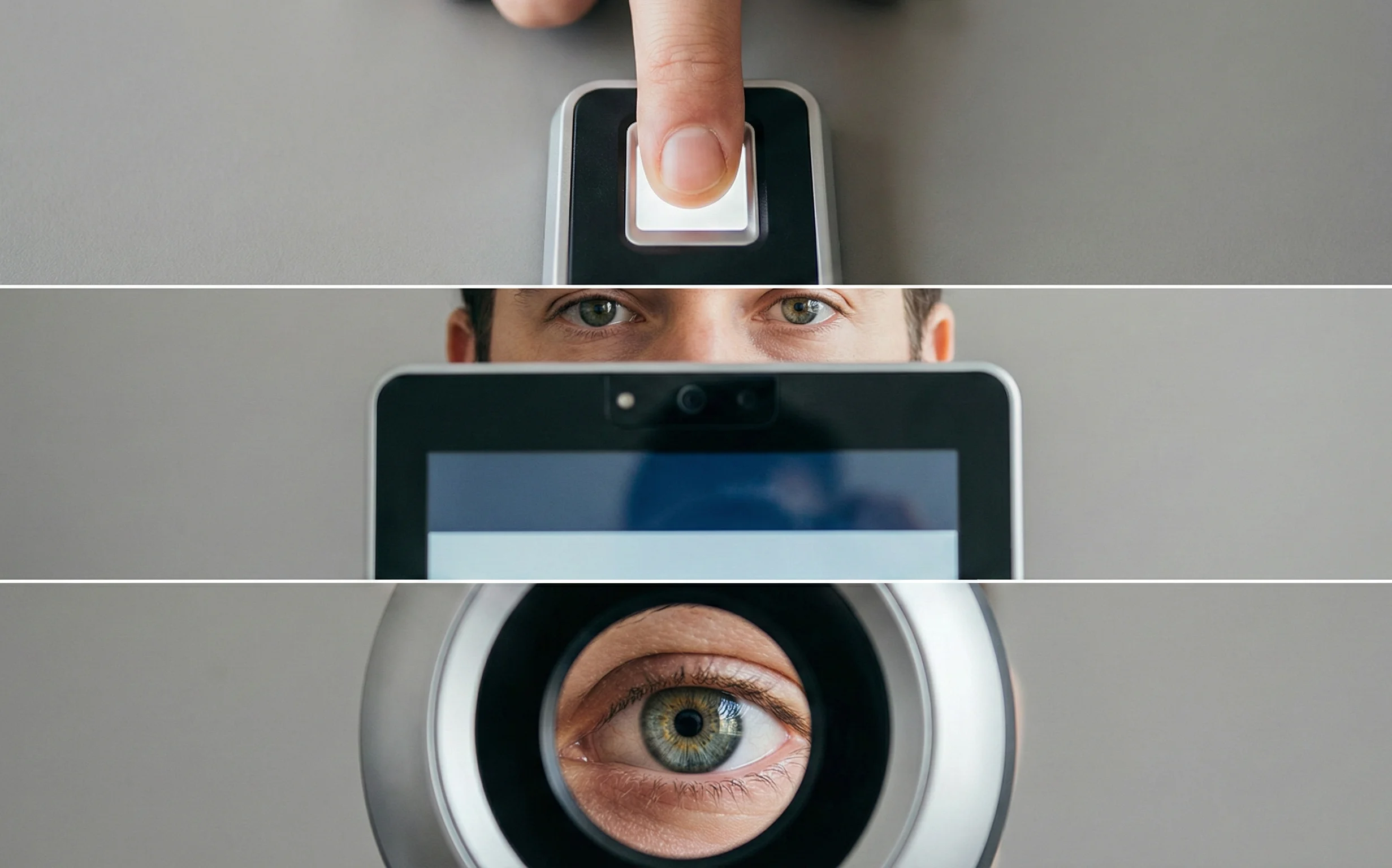
Biometric payment is a type of digital payment where a user’s identity is verified using unique physical or behavioral characteristics, such as a fingerprint, face, or iris, before a transaction is approved. Instead of entering card numbers, passwords, or PINs, users authenticate by presenting their biometric data to a sensor or camera, and the system matches it against a previously enrolled template. This approach removes the need to repeatedly share or type sensitive payment credentials at the point of transaction.
Under the hood, biometric payment systems link biometric identifiers with payment instruments like cards, bank accounts, or digital wallets. When a user initiates a payment, the biometric system confirms that the person present is the legitimate owner of the linked instrument, after which normal payment processing, authorization, and settlement workflows continue in the background.
Common biometric modalities used
In biometric payments, a few modalities dominate because they balance accuracy, user convenience, and available hardware.
- Fingerprint recognition: Uses a dedicated sensor (for example, on a POS terminal, payment card, or smartphone) to capture the ridge pattern of a finger and compare it with the stored fingerprint template created during enrollment.
- Facial recognition: Uses a camera plus algorithms to analyze facial features such as the distance between eyes, nose shape, and jawline to verify whether the live image matches the stored facial template.
- Iris recognition: Uses a specialized camera and infrared illumination to capture the unique pattern in the colored ring around the pupil and compare it with an enrolled iris template.
These modalities are often combined with traditional security layers like encryption and secure elements to protect both biometric templates and payment credentials.
How biometric payment works (high level process)
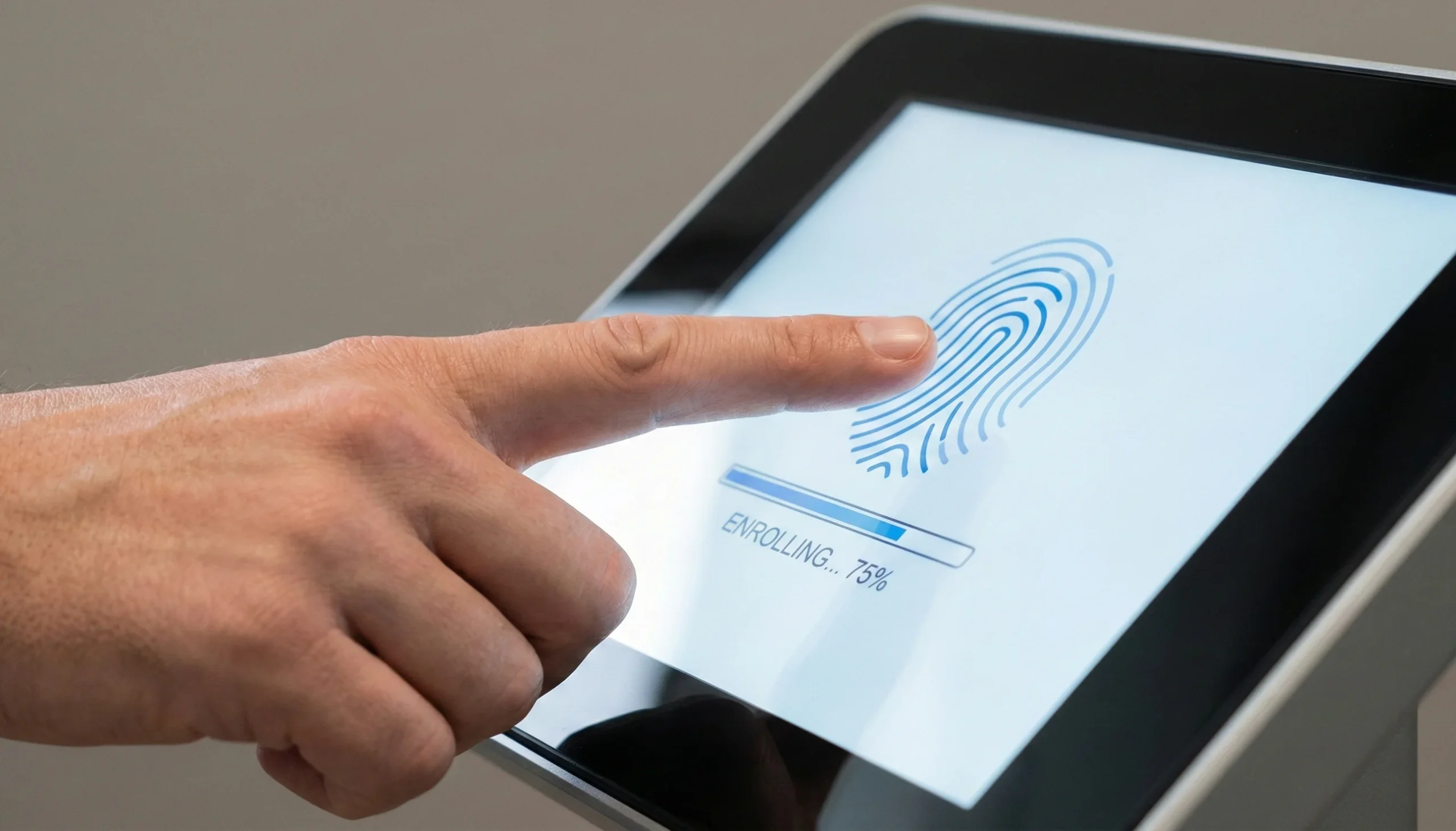
At a high level, biometric payment systems follow a structured flow that separates identity verification from payment authorization while keeping the user experience simple. The system must reliably acquire biometric data, match it against enrolled templates, and then trigger payment processing only when confidence thresholds are met.
- During enrollment, the user’s biometric data (such as fingerprints or facial images) is captured and converted into a mathematical template, which is stored securely, often in a secure element on a device or in protected back-end infrastructure.
- During a transaction, the user presents the same biometric (for example, touching a fingerprint sensor or looking into a camera), and the captured sample is compared to the stored template using pattern-matching algorithms.
- If the match score exceeds a configured threshold, the system treats the user as authenticated and proceeds to verify and authorize the linked payment instrument with the payment processor or bank.
Technologies involved
Biometric payment solutions rely on a combination of hardware, software, and networked infrastructure working together to provide both security and speed. Each component plays a specific role in capturing, processing, and protecting sensitive data.
- Biometric sensors and scanners: Devices such as fingerprint readers, face recognition cameras, and iris scanners capture the user’s biometric traits at POS terminals, ATMs, kiosks, smartphones, or biometric payment cards.
- Algorithms and matching engines: Pattern-recognition algorithms transform raw biometric images into templates and compute similarity scores during authentication, filtering out noise like lighting changes or partial contact.
- Secure processing and servers: Back-end servers and secure elements handle storage and encryption of biometric templates and payment data, and they manage communication with payment processors to complete transactions.
Benefits of Biometric Payment
Biometric payments provide a combination of security, convenience, and operational efficiency that is difficult to achieve with passwords or PIN-based systems alone. These advantages show up in better user experience, lower fraud levels, and new opportunities for financial inclusion.
1. Enhanced security through unique identifiers
Biometric traits are inherently difficult to guess or share, making them stronger authenticators than knowledge-based factors like passwords. When implemented correctly with encryption and secure storage, biometric payment significantly raises the barrier for attackers who rely on stolen credentials or simple credential stuffing techniques.
Because biometric templates are mathematical representations rather than raw images, they can be stored and transmitted in a way that reduces the risk of direct misuse if data is compromised. Combining biometrics with existing security controls, such as tokenization and EMV standards, adds multiple layers that fraudsters need to bypass.
2. Convenience and faster checkout
Biometric payments streamline the checkout process by replacing manual entry steps with quick biometric scans. Users no longer need to remember long passwords or repeatedly type card details when paying in-store or online. This reduction in friction is particularly valuable in mobile commerce and high-traffic retail environments where every second at checkout matters.
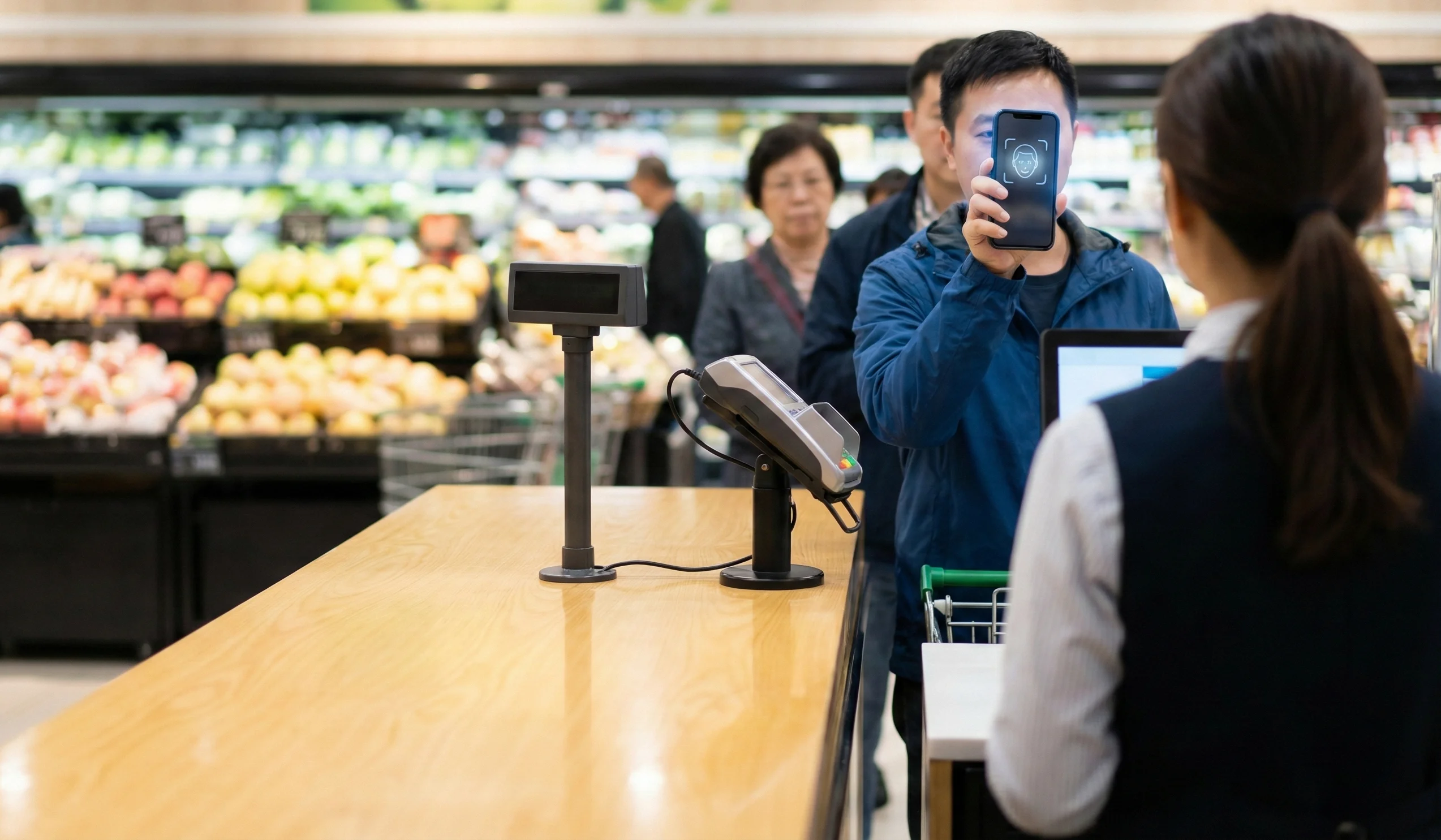
Contactless biometric flows, such as facial recognition at POS or fingerprint sensors on phones and biometric cards, allow customers to complete transactions with a single action. This can shorten queues, reduce cart abandonment in e-commerce, and create a smoother experience in omnichannel journeys.
3. Fraud reduction and prevention advantages
Because biometric data is tied to a specific individual, it is much harder for criminals to impersonate legitimate customers using stolen cards or credentials. Traditional fraud schemes, like shoulder-surfing a PIN or phishing for passwords, become less effective when the system demands a live biometric signal.
Strong authentication methods based on biometrics can help payment providers detect and prevent unauthorized transactions more effectively, leading to fewer chargebacks and lower fraud-management costs. In addition, the presence of biometric checks can act as a deterrent for opportunistic fraud attempts.
4. Improved user experience and privacy protections
Properly designed biometric payment systems minimize the number of steps users must take to verify identity while still protecting sensitive information. This approach can reduce cognitive load, especially for users who struggle with managing multiple passwords across services.
Where biometric templates and payment credentials are stored securely on-device or on hardened servers, users benefit from stronger privacy controls compared with sharing raw card data directly with multiple merchants. Centralized or tokenized handling of payment information means fewer systems need direct access to financial details.
5. Financial inclusion potential
Biometric payments can support financial inclusion by making it easier for people without strong documentation or literacy skills to access digital payment services. For users who struggle with PINs, passwords, or paperwork, a fingerprint or facial scan can be more intuitive and reliable as a way to identify themselves.
In regions where shared devices or low literacy rates complicate traditional onboarding, biometrics can help verify individuals in a more consistent way and simplify access to accounts, wallets, or social benefit disbursements linked to biometric identity. This can reduce exclusion from formal financial systems and digital commerce.
Common Use Cases of Biometric Payment
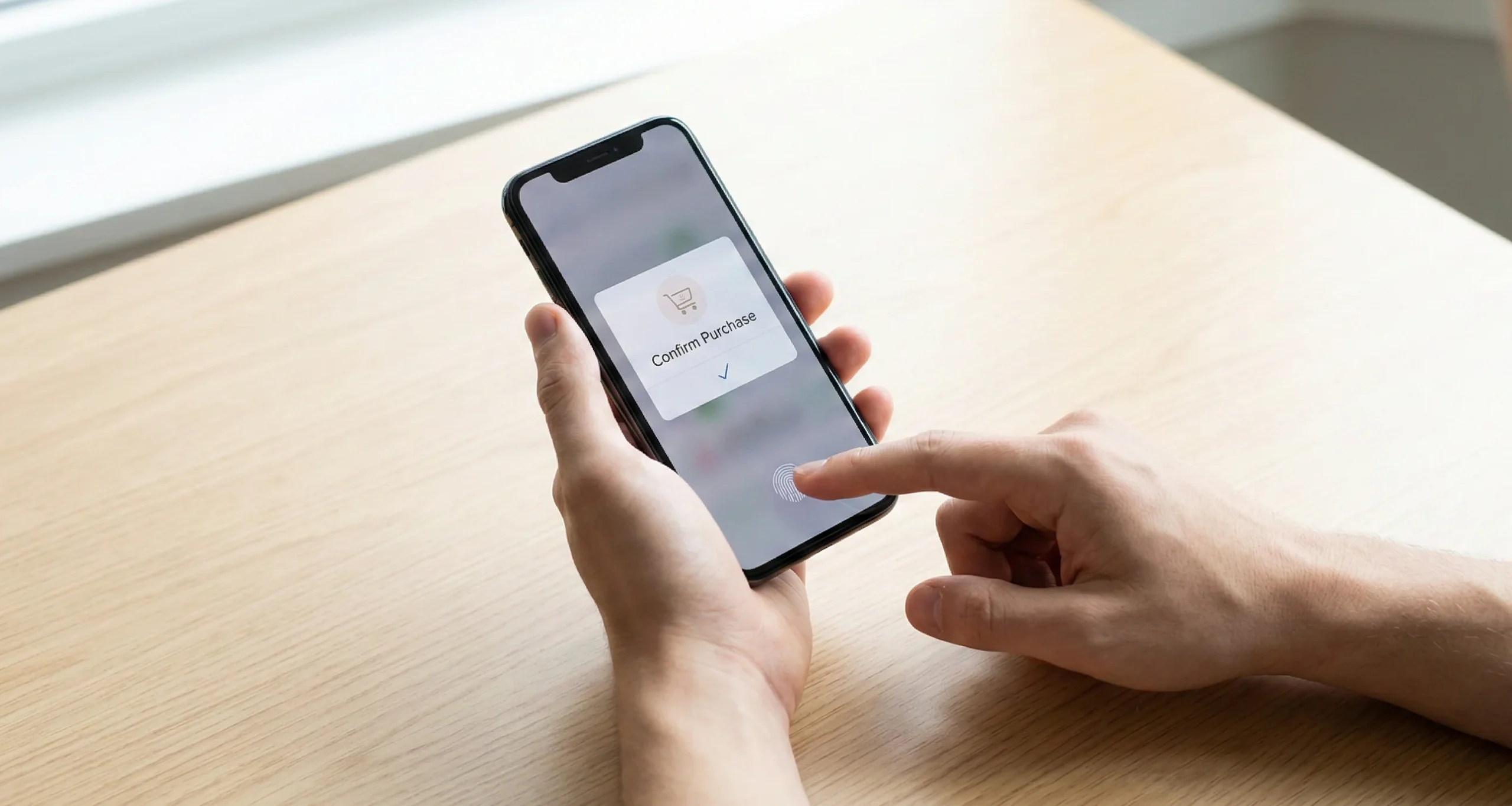
Biometric payments appear across both consumer-facing and institutional settings, from everyday shopping to specialized industry workflows. In many cases, biometrics are integrated into existing payment rails rather than replacing them, adding a secure authentication layer on top.
1. Mobile payments through smartphones
Smartphones equipped with fingerprint sensors or facial recognition systems are a primary channel for biometric payments. Digital wallets and payment apps can use stored biometric templates on the device to confirm that the person initiating a transaction is the authorized owner before transmitting a tokenized card or account credential.
This model enables secure in-app purchases, tap-to-pay at contactless terminals, and browser-based online payments where biometric prompts replace password fields. The combination of secure hardware elements and OS-level biometric APIs helps keep authentication fast while maintaining strong protection of biometric templates and payment tokens.
2. Biometric payment cards with embedded sensors
Biometric payment cards integrate a fingerprint sensor directly into the card body, allowing cardholders to authenticate themselves when tapping or inserting the card at EMV terminals. The fingerprint template is typically stored securely on the card, and the matching process happens locally, so biometric data does not need to leave the card during transactions.
This design adds a biometric factor to contactless or chip-and-PIN payments without requiring major changes to merchant infrastructure. Card schemes and banks have begun piloting and rolling out such biometric cards to provide stronger security with minimal impact on the checkout experience.
3. Online shopping and e-commerce transactions
In e-commerce, biometrics can replace passwords or one-time codes when customers log in to accounts, confirm orders, or authorize stored-card payments. Payment flows can prompt users to authenticate via fingerprint or facial recognition on a paired mobile device or browser-compatible system.
This reduces friction associated with manually entering card details or time-limited codes, which often cause drop-offs during checkout. For merchants, biometric authentication tied to strong customer verification rules can lower fraud exposure and strengthen compliance with security standards.
4. Retail and point-of-sale (POS) environments
Physical retail environments are using biometric payment to speed up checkout and create smoother customer journeys. POS terminals can integrate fingerprint readers or cameras so customers authenticate with a biometric trait instead of swiping a card and entering a PIN.
In high-volume settings like supermarkets or transit hubs, this approach can reduce wait times and help staff manage lines more efficiently. Some deployments also link biometrics with loyalty profiles or personalized offers, so the same authentication step can trigger both payment and customer recognition.
5. Banking and financial services applications
Banks are among the earliest adopters of biometric authentication for high-value transactions and account access. They use biometrics to secure mobile banking logins, authorize transfers, and protect ATM withdrawals through fingerprint, facial, or other biometric checks.
For card issuance and branch services, biometrics can help verify identity in onboarding flows, reducing reliance on passwords or static security questions. Biometric payment cards and biometric-enabled ATMs extend this security layer to physical channels where fraud losses are historically significant.
6. Healthcare and other emerging sectors
In healthcare, biometrics can link patients to billing accounts and insurance details, facilitating quicker and more accurate payment processing at clinics and hospitals. When combined with consent and privacy safeguards, biometric authentication can reduce billing errors and fraudulent use of coverage.
Other emerging sectors, such as transportation, hospitality, and education, are exploring biometric payments for ticketing, room access and charges, or campus payments. These implementations aim to unify identity, access, and payment into a single, streamlined experience for end users.
Challenges and Considerations
While biometric payment offers compelling benefits, it introduces new risks and operational complexities that organizations must manage carefully. Key challenges include privacy, accuracy, inclusivity, cost, and regulatory compliance.
1. Privacy concerns and data protection risks
Biometric data is highly sensitive because it is both unique and difficult to change if compromised. Centralized storage or broad sharing of biometric templates increases the impact of potential breaches, as affected individuals cannot simply “reset” their fingerprints or iris patterns.
Robust data protection measures such as encryption, strict access controls, and minimization of where biometric data is stored are essential to reduce privacy risks. Organizations must also provide transparent information and obtain appropriate consent so users understand how their biometric data will be used and protected.
2. Accuracy and reliability issues
Biometric systems can experience false rejections (legitimate users denied) and false acceptances (impostors granted access) due to sensor quality, environmental conditions, or changes in the user’s physical traits. For example, wet or damaged fingers can cause fingerprint sensors to fail, and low lighting can affect facial recognition performance.
To maintain a good user experience and security balance, providers must tune thresholds, choose quality sensors, and test across diverse user groups and conditions. Backup authentication methods are also necessary so users can still pay when biometric checks fail.
3. Accessibility challenges for certain user groups
Not all users can easily provide reliable biometric samples. Individuals with certain disabilities, injuries, or age-related changes may have fingerprints or facial features that are harder for systems to capture and match consistently.
Biometric-only approaches risk excluding these users if no alternative authentication paths are offered. Inclusive design means providing options, such as assisted flows or fallbacks to PINs and tokens, so that biometric payment remains accessible to a broad population.
4. High setup and implementation costs
Implementing biometric payment requires investment in specialized hardware (sensors, biometric cards, upgraded POS terminals), software integration, and security infrastructure. For smaller merchants or institutions with limited budgets, these upfront costs can slow down adoption.
In addition, organizations need to budget for ongoing maintenance, updates, and compliance activities, which add to the total cost of ownership over time. Cost-benefit analyses must weigh fraud reduction and efficiency gains against these investments.
5. Regulatory and ethical considerations
Biometric data is often covered by stricter regulations than other personal data, and organizations must comply with applicable privacy and data protection laws in their jurisdictions. This includes rules on consent, data minimization, retention periods, and cross-border transfers.
Beyond legal compliance, ethical considerations include preventing misuse of biometric data for unauthorized surveillance, profiling, or discrimination. Clear policies, governance structures, and independent oversight can help build trust in biometric payment deployments.
6. User adoption hurdles and technology maturity
Some users may be hesitant to adopt biometric payment due to concerns about data misuse or unfamiliarity with the technology. Perceptions of risk, especially around facial recognition, can slow adoption if not addressed through transparent communication and strong safeguards.
Because biometric payment is still evolving, standards, best practices, and interoperability are continuing to mature. Providers must stay aligned with emerging industry guidance and continuously improve systems as technology, threats, and user expectations change.
Conclusion
Biometric payment replaces passwords and PINs with unique physical identifiers, offering a powerful mix of stronger security, greater convenience, and streamlined payment experiences across mobile, online, and in-person channels. By linking biometrics with existing payment rails and security controls, businesses can reduce fraud and enhance customer satisfaction while exploring new, inclusive ways to deliver financial services.
However, the same properties that make biometrics powerful also demand careful handling. Organizations must address privacy, accessibility, cost, and regulatory responsibilities to avoid new risks and unintended exclusion. When implemented responsibly, biometric payment has the potential to become a central pillar of the modern payments landscape, supporting secure, user-friendly transactions for a wide range of customers and use cases.