The internet has made information, services, and transactions instantly accessible. However, this convenience comes with risks—many of which exploit human behavior rather than technical flaws. One such threat is Typosquatting, a deceptive practice that takes advantage of simple typing mistakes to mislead users and compromise security.
Typosquatting may appear harmless at first glance, but its consequences can be severe. From stealing login credentials and personal information to distributing malware and damaging brand reputation, typosquatting remains a persistent cybersecurity threat for individuals and organizations alike.
This guide provides a comprehensive explanation of what typosquatting is, how it works, the different types of typosquatting attacks, real-world examples, and effective strategies to protect against it.
What is Typosquatting
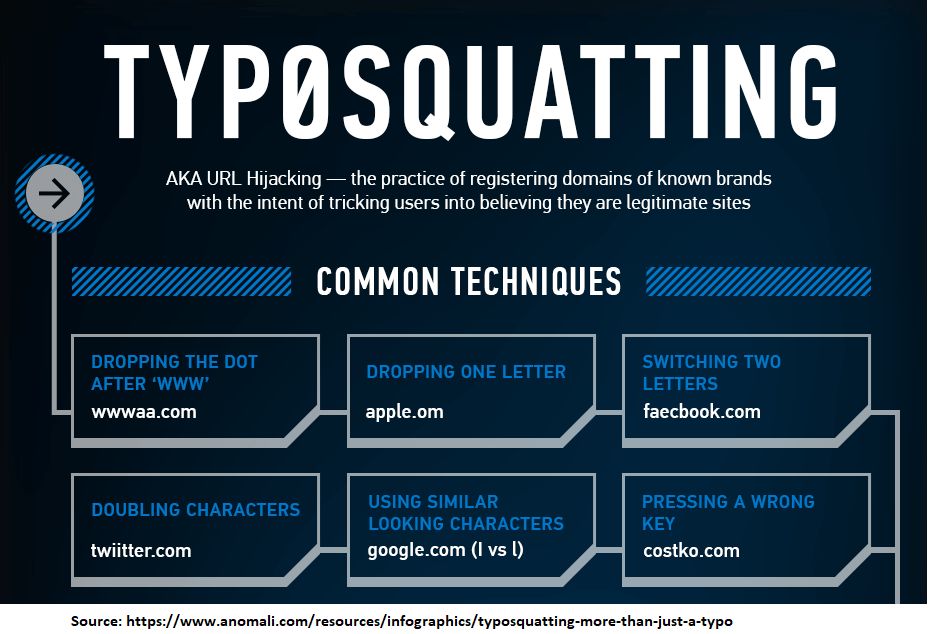
Typosquatting is a malicious practice in which cybercriminals register domain names that are slight variations or misspellings of legitimate website addresses. These variations are designed to capture web traffic from users who accidentally type the wrong URL into their browser.
The concept is rooted in two ideas:
- Typos – unintentional spelling or typing errors made by users
- Squatting – occupying digital space that the attacker does not legitimately own
Unlike many cyberattacks that rely on exploiting software vulnerabilities, typosquatting exploits human error, making it remarkably effective and difficult to eliminate entirely.
To answer the question clearly: what is typosquatting?
Typosquatting occurs when attackers anticipate common typing mistakes and register domain names that closely resemble legitimate websites. When users enter these incorrect URLs, they are redirected to fraudulent, misleading, or malicious websites instead of the intended destination.
Typosquatting targets:
- Well-known brands
- Financial institutions
- Online marketplaces
- Email domains
- Corporate portals
The attackers’ objectives vary and may include:
- Harvesting usernames and passwords
- Collecting financial or personal information
- Displaying intrusive advertisements
- Redirecting users for profit
- Distributing malware
Because users often trust what appears to be a familiar website, typosquatting is especially effective against unsuspecting visitors.
How Does Typosquatting Work?
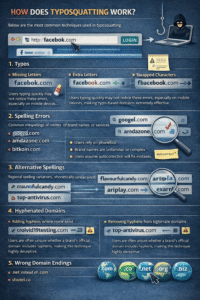
Typosquatting works by predicting user behavior. Cybercriminals analyze popular domains and identify common mistakes users make when typing URLs.
Once these typo-based domains are registered, attackers configure them to serve different malicious purposes. In many cases, the website design closely mimics the original site to avoid suspicion.
Below are the most common techniques used in typosquatting.
Typos
This method relies on simple keyboard mistakes. Examples include:
- Missing letters
- Extra letters
- Swapped characters
Users typing quickly may not notice these errors, especially on mobile devices, making typo-based domains extremely effective.
Spelling Errors
Spelling-based typosquatting targets common misspellings of brand names or services. These errors often occur because:
- Users rely on phonetics
- Brand names are unfamiliar or complex
- Users assume autocorrection will fix mistakes
This form of typosquatting is particularly dangerous because the incorrect spelling may still look “right” to the user.
Also Read: What Is Data Mining and Why Is It Important?
Alternative Spellings
Some attackers use:
- Regional spelling variations
- Phonetically similar words
- Lookalike characters
These alternative spellings create domains that appear legitimate at a glance, increasing the chances of deception.
Hyphenated Domains
Hyphen-based typosquatting involves:
- Adding hyphens where none exist
- Removing hyphens from legitimate domains
Users are often unsure whether a brand’s official domain includes hyphens, making this technique highly deceptive.
Wrong Domain Endings
This technique replaces the original domain extension with another, such as:
- .net instead of .com
- .co instead of .org
Because users focus more on the domain name than the extension, wrong domain endings are commonly overlooked.
Types of Typosquatting
Typosquatting can take many forms depending on the attacker’s intent. Below are the most common types.
Imitators
Imitator sites replicate legitimate websites by copying:
- Logos
- Layouts
- Color schemes
- Navigation menus
The goal is to trick users into believing they are on the official website and entering sensitive information.
Bait and Switch
Bait-and-switch typosquatting redirects users to unexpected content. Victims may:
- Expect a trusted website
- Be redirected to unrelated pages
- End up on scam or competitor sites
This technique relies on confusion rather than direct impersonation.
Related Search Results Listing
Some typosquatting sites are optimized to appear in search engine results. These domains:
- Use brand-related keywords
- Mimic legitimate metadata
- Appear trustworthy in listings
Once users click, they are redirected or exploited.
Monetize Traffic
In this case, attackers generate revenue through:
- Display ads
- Pay-per-click schemes
- Traffic redirection
Even without malware, this type of typosquatting siphons traffic from legitimate brands and damages trust.
Surveys and Giveaways
Fake surveys and giveaways promise:
- Rewards
- Gift cards
- Exclusive offers
In reality, these sites collect personal data or trick users into signing up for paid services.
Affiliate Links
Some typosquatters abuse affiliate marketing programs by:
- Redirecting traffic to affiliate links
- Earning commissions unfairly
- Hijacking legitimate referrals
This form is subtle but still harmful.
Install Malware
Malware-based typosquatting delivers:
- Malicious downloads
- Spyware
- Browser hijackers
This poses serious risks to both individuals and organizations.
Joke Sites
Joke or parody sites may seem harmless, but they still:
- Misuse brand identities
- Normalize unsafe browsing habits
- Create confusion
Over time, joke sites can evolve into more malicious platforms.
Cybersquatting vs Typosquatting
Although related, cybersquatting and typosquatting are different.
- Cybersquatting involves registering exact brand names to resell or exploit trademark ownership.
- Typosquatting relies on misspellings and user errors.
Typosquatting is more deceptive because users often don’t realize they made a mistake.
Typosquatting Examples
Common examples include:
- Fake login pages for popular platforms
- Misspelled shopping websites stealing payment details
- Email domains used for impersonation
These examples highlight how minor errors can lead to serious consequences.
How to Protect Yourself Against Typosquatting
Preventing typosquatting requires a proactive, layered approach that combines technical safeguards, user awareness, and continuous monitoring. Because typosquatting exploits simple human errors rather than software flaws, relying on a single security measure is not enough. Both individuals and organizations must take deliberate steps to reduce the likelihood of users landing on malicious or deceptive websites.
Register Typo Versions of Your Domain Before Squatters Do
Organizations should register:
- Common misspellings
- Hyphen variations
- Alternative domain extensions
This blocks attackers from exploiting predictable errors.
Use ICANN’s Monitoring Service
Monitoring services help detect:
- Suspicious domain registrations
- Brand impersonation attempts
- Emerging typosquatting threats
Early detection enables faster response.
Use SSL Certificates to Signal Trust
SSL certificates:
- Encrypt data
- Enable HTTPS
- Increase user confidence
Users are more likely to trust secure websites.
Notify Stakeholders
Organizations should educate:
- Employees
- Partners
- Customers
Awareness reduces the success of typosquatting attacks.
Get Suspicious Websites or Mail Servers Taken Down
Prompt takedown actions limit damage by:
- Removing malicious domains
- Blocking phishing infrastructure
- Preventing further abuse
Frequently Asked Questions
What is typosquatting?
Typosquatting is the practice of registering misspelled domain names to mislead users and exploit traffic.
Is typosquatting illegal?
In many cases, yes—especially when used for fraud or trademark infringement.
Who is most affected by typosquatting?
Popular brands, online businesses, and everyday users are common targets.
Can typosquatting impact email security?
Yes. Typosquatted email domains are often used for impersonation and phishing.
How can users avoid typosquatting websites?
By bookmarking trusted sites, double-checking URLs, and avoiding suspicious links.
Conclusion
Understanding what typosquatting is is critical in today’s threat landscape. Although it relies on simple human mistakes, typosquatting can lead to severe consequences, including data theft, malware infections, financial loss, and reputational damage.
By recognizing how typosquatting works, understanding its many forms, and implementing preventive measures, individuals and organizations can significantly reduce their risk. In cybersecurity, attention to detail matters—and even a single typo can make all the difference.

Debabrata Behera is a passionate blogger who writes about digital trends, personal growth, and practical insights, helping readers stay informed, inspired, and ready to achieve success in life.